
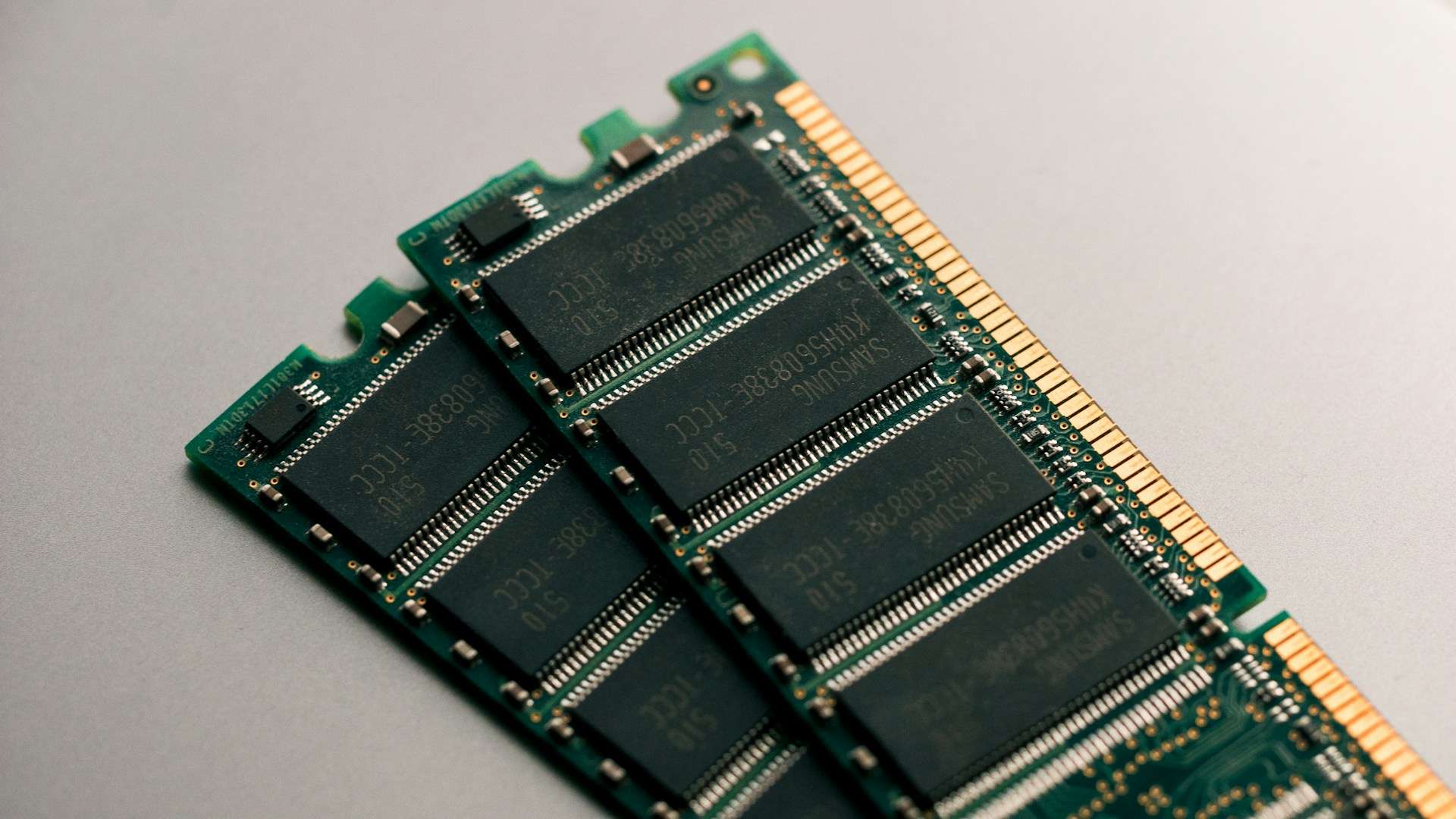
Anyone considering expanding their computer’s RAM or building a new PC in 2026 might want to start shifting their mindset: memory is no longer just moving based on typical consumer market demand. According to an internal slide attributed to SK Hynix shared by analyst BullsLab Jay (and later reported by several industry outlets), the industry faces a scenario of limited supply growth and very tight inventories that could extend pressure on DRAM until 2028.
In other words: this isn’t the usual price fluctuation of “rising this year, falling next.” The diagnosis points to a long cycle, fueled by AI in data centers, the rise of high-margin memory (HBM) for GPUs, and the time it takes to expand production capacity in semiconductor factories.
The important part: why “normal” DRAM is taking a back seat
The document mentions a key nuance: when discussing “traditional” DRAM supply, it excludes HBM and SOCAMM. This is relevant because, if most investment and industrial planning are directed towards the more profitable and AI-demanded products (especially HBM), the “commodity” DRAM market (used in laptops, desktops, and workstations) might see slower expansion.
This thesis relies on three fairly straightforward ideas rooted in common sense:
- New factories take years, and technological transitions (advanced nodes, new processes) slow down the “fast” growth of capacity.
- AI drives demand: not only through GPUs, but also servers, networking, storage, and generally, more memory per system.
- Inventories are being kept at minimum levels, reducing the buffer that cushions price increases when demand spikes.
What could happen with PCs: maybe not many more units sold… but each will have more RAM
Another interesting point from the analysis is its outlook for the PC market: in 2026, shipments might remain similar to 2025, but memory per system is expected to increase.
Why? The rise of called AI PCs (systems with NPU and local AI focus) is pushing configurations toward more generous specs: more RAM for local models, heavier multitasking, more AI-powered creative tools… Even if the average user doesn’t train models, more software is trying to support local inference or hybrid workflows.
This doesn’t mean you’ll be “forced” to buy 64 GB tomorrow. But if market trends shift from 16 GB baseline to 24/32 GB as the new norm for mid-range systems, overall DRAM consumption increases even without more PCs being sold.
The anecdote that fits too perfectly: modules with “absurd” dates (placeholders or a symptom?)
Along with this supply tension narrative, some users have encountered curious cases in retail: for example, a Lexar DDR5 memory module listed for pre-order with shipping date in 2027. Most likely, it’s a placeholder (a default value when the system lacks a real date), but the detail has become perfect ammunition for an existing idea: when supply chains are tight, “strange signals” appear in catalogs, forecasts, and availability.
It’s wise to take this with caution: a strange date in a store doesn’t prove anything on its own. But, as a market noise thermometer, it helps explain why the debate is heating up.
And storage? More QLC and upward pressure if supply doesn’t keep pace
The same analysis also suggests that in consumer storage, spectacular growth isn’t expected, but there will be an expansion of QLC (4-bit cells) products, allowing increased capacity at a lower cost, with trade-offs in sustained performance or endurance (depending on model and usage).
Additionally, if inventories continue to decline and supply remains tight, upward price pressure could persist, especially if a significant portion of industrial investment focuses on more profitable segments (servers, AI, HBM), leaving consumer segments with less priority.
What should the “average” user do to upgrade without overpaying?
Without panicking, there are practical decisions that tend to work well in supply-constrained scenarios:
- Upgrade only if there’s a real bottleneck: if your system is performing well, don’t chase RAM “just in case.”
- Capitalize on price windows: when you see a good promotion on a reasonable kit (e.g., moving from 16 to 32 GB), it might make more sense to buy then rather than wait for “prices to drop,” especially if the market narrative points to a prolonged adjustment.
- Prioritize compatibility and stability: in DDR5, a well-tested kit often beats chasing maximum MHz unless you need it.
- Plan professional purchases with margin: if you depend on hardware for work, buying “just when needed” can end up costing more when the market is tight.
Frequently Asked Questions
Does this mean RAM will inevitably rise until 2028?
Not necessarily continuously, but the scenario suggests a market with less buffer: more periods of price pressure and less certainty of quick decreases.
Is it worth buying DDR5 now “out of fear”?
Only if you were already planning to upgrade soon out of genuine necessity. Panic buying often leads to poor decisions (or oversized kits you don’t fully utilize).
Will AI PCs push the market toward at least 32 GB?
Not guaranteed, but they could push mid-range configurations upward. This influences overall demand, even if individual users don’t notice immediately.
Is QLC “bad” and should I avoid it?
It’s not black and white. QLC can be very useful for bulk storage and general use, but it’s important to check the model details (cache, TBW, sustained performance) if you plan to write large volumes of data.
Source: videocardz.com and X Bullslab