
The memory industry has just received a warning that changes the tone of the debate. Until now, much of the market was talking about a very strong bullish cycle, but still correctional over a few years, SK Group has presented a much more uncomfortable horizon: the shortage of wafers needed to produce memory could last until 2030. This is not a minor nuance. The difference between a temporary tension and a bottleneck that lasts for an entire decade completely alters the perspective on prices, investment, and industrial capacity.
This statement came from Chey Tae-won, chairman of SK Group, during NVIDIA’s GTC conference in San Jose. He explained that the demand for HBM, the high-bandwidth memory that has become an essential component for AI accelerators, is absorbing a huge amount of wafers. According to his forecast, supply shortages could persist until 2030, with the current deficit exceeding 20%. The executive added that expanding capacity is not immediate: establishing new production lines requires at least four to five years.
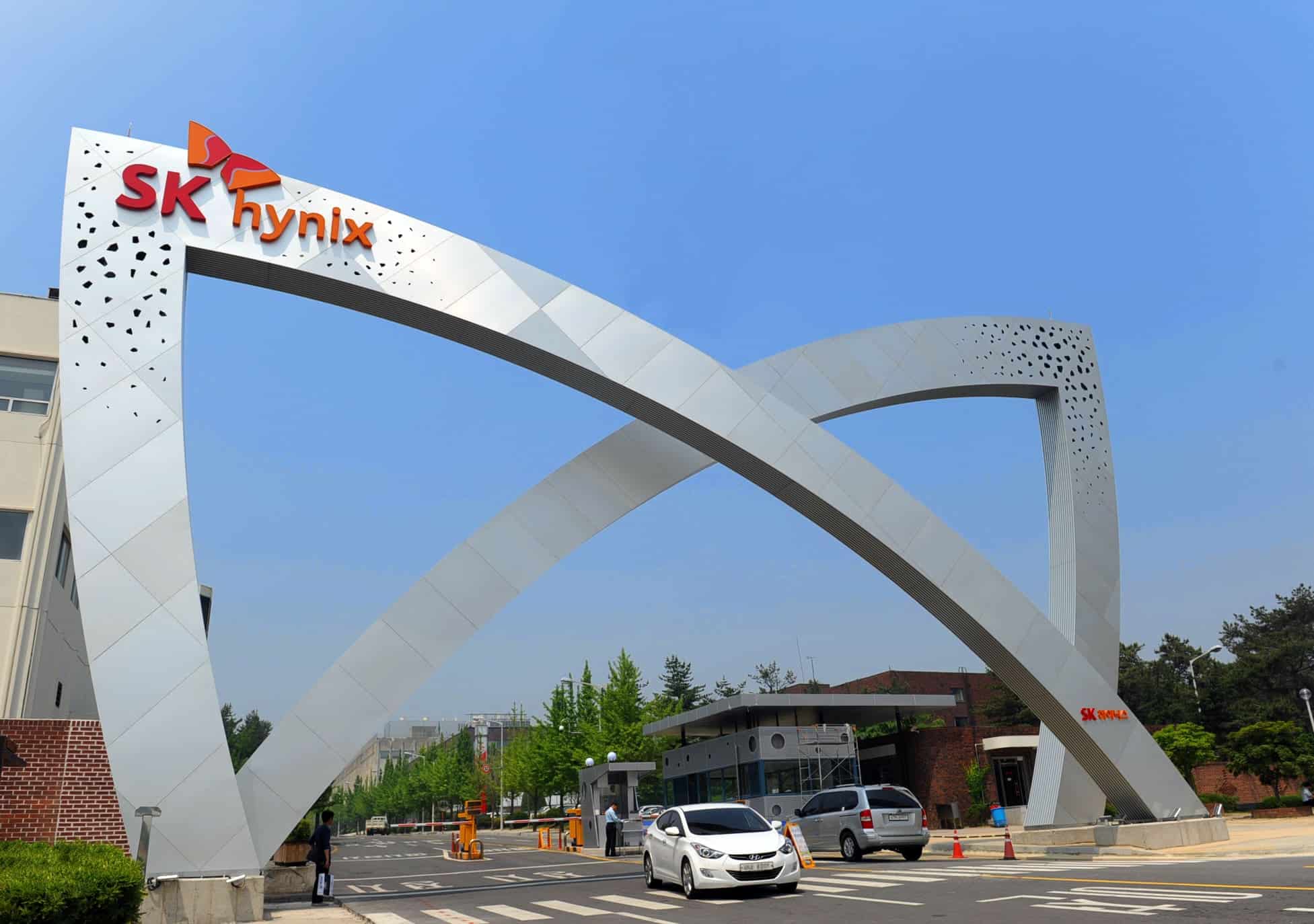
The key point is that this is not an opinion from a minor player. SK hynix, the group’s memory division, is currently the main supplier of HBM for NVIDIA, and according to Reuters with data from Counterpoint, controls 57% of the HBM market and around 32% of the global DRAM market. When a company with such exposure to AI demand anticipates a prolonged imbalance, the market listens.
From chip shortages to wafer shortages
It is important to refine the diagnosis. What SK Group has described is not exactly a general lack of “memory” in the abstract, but a shortage of wafers for its production. This detail matters because it places the problem at the physical manufacturing level. The explosion of AI has driven up demand for HBM, a memory type that is not only more complex but also consumes significantly more industrial capacity than conventional DRAM. Reuters already explained in January that manufacturers were redirecting production lines toward HBM for AI servers, tightening supply of other memory products used in mobile devices, computers, and consumer electronics.
SK hynix has been promoting the idea of a “supercycle” in memory driven by AI for months. In its 2025 annual results, the company reported record figures thanks to the competitiveness of its AI memory and the prominence of HBM in its product mix. The company closed 2025 with revenues of 97.1467 trillion won and an operating profit of 47.2063 trillion, the best in its history, emphasizing that demand for HBM and server memory will continue growing. Its outlook for 2026 suggests HBM3E will continue to dominate while HBM4 begins to gain traction.
Samsung tempers optimism, but not on the same timeline
SK hynix’s warning contrasts with recent reports from South Korean media like Chosun Biz, which indicated that Samsung was internally considering a normalization scenario around 2028 and was concerned about a possible cyclical downturn afterwards. This is not an official stance detailed in a financial statement but a signal that within the sector, not everyone is operating on the same timeline for tightening supply.
Moreover, Samsung has not exactly portrayed a calm market outlook. In its January results, the company warned of a “significant shortage” of memory products and indicated that any expansion of supply would be limited during 2026 and 2027 while demand tied to AI remained strong. In other words, the difference between Samsung and SK hynix is less about whether there is tension and more about how long it will last and when it might start to ease.
This disagreement over timing is significant because it influences investment decisions. After overcapacity following previous memory cycles, major manufacturers are wary of aggressive expansion that could leave plants underutilized in a few years. But this caution also has a cost: if investment is too conservative, supply will react more slowly, and price pressure could persist longer.
Implications for the rest of the industry
The impact extends beyond data centers. When capacity shifts toward HBM, the rest of the market feels the effects. Reuters has pointed out that reallocating production toward HBM is increasing costs and limiting availability of other memory types for smartphones, PCs, and more affordable devices. TrendForce also estimated SK hynix’s global DRAM share at 32.1% in Q4 2025, helping explain why any warning from the company immediately resonates through the supply chain.
There is also a structural factor: announcing new factories is not enough. Energy, water, construction conditions, materials, and skilled personnel must also be secured. Chey Tae-won made it clear that expanding capacity outside South Korea cannot be done “on demand.” In a market where AI is absorbing investment and industrial projects take years to develop, the memory industry risks remaining in a tense balance with tight supply and high prices longer than expected.
The conclusion is therefore not that there is an absolute consensus on a shortage until 2030 but that one of the most visible voices in the business believes the problem could be much more persistent than the market expected just a few months ago. This forces a reevaluation of the idea that waiting a bit longer for the cycle to normalize naturally was sufficient. Today, such normalization appears, at minimum, considerably further off.
Frequently Asked Questions
What exactly has SK hynix said about the memory shortage?
The warning does not refer to a general shortage of all “memory” but specifically to wafer shortages needed to produce memory chips. Chey Tae-won, chairman of SK Group, stated that this issue could persist until 2030 and that the current deficit would exceed 20%.
Why is HBM also stressing conventional DRAM?
Because AI-focused HBM memory consumes an increasing share of manufacturing capacity. Allocating more wafers and production lines to HBM leaves less room for manufacturing other types of DRAM and memory used in mobile, PC, and consumer electronics.
Is Samsung also seeing shortages in the memory market?
Yes, though with a different tone. In January, Samsung warned of a “significant shortage” of memory products and said supply expansion would be limited in 2026 and 2027. South Korean media later reported that the company was considering an internal scenario of normalization around 2028, though this was not issued as an official guidance.
Can this situation continue to push up RAM and other components?
Yes, at least as long as supply remains constrained by AI demand and the slow pace of capacity additions. The pressure affects not only HBM but could also spill over into other memory products if manufacturers prioritize more profitable segments.
via: Bloomberg