
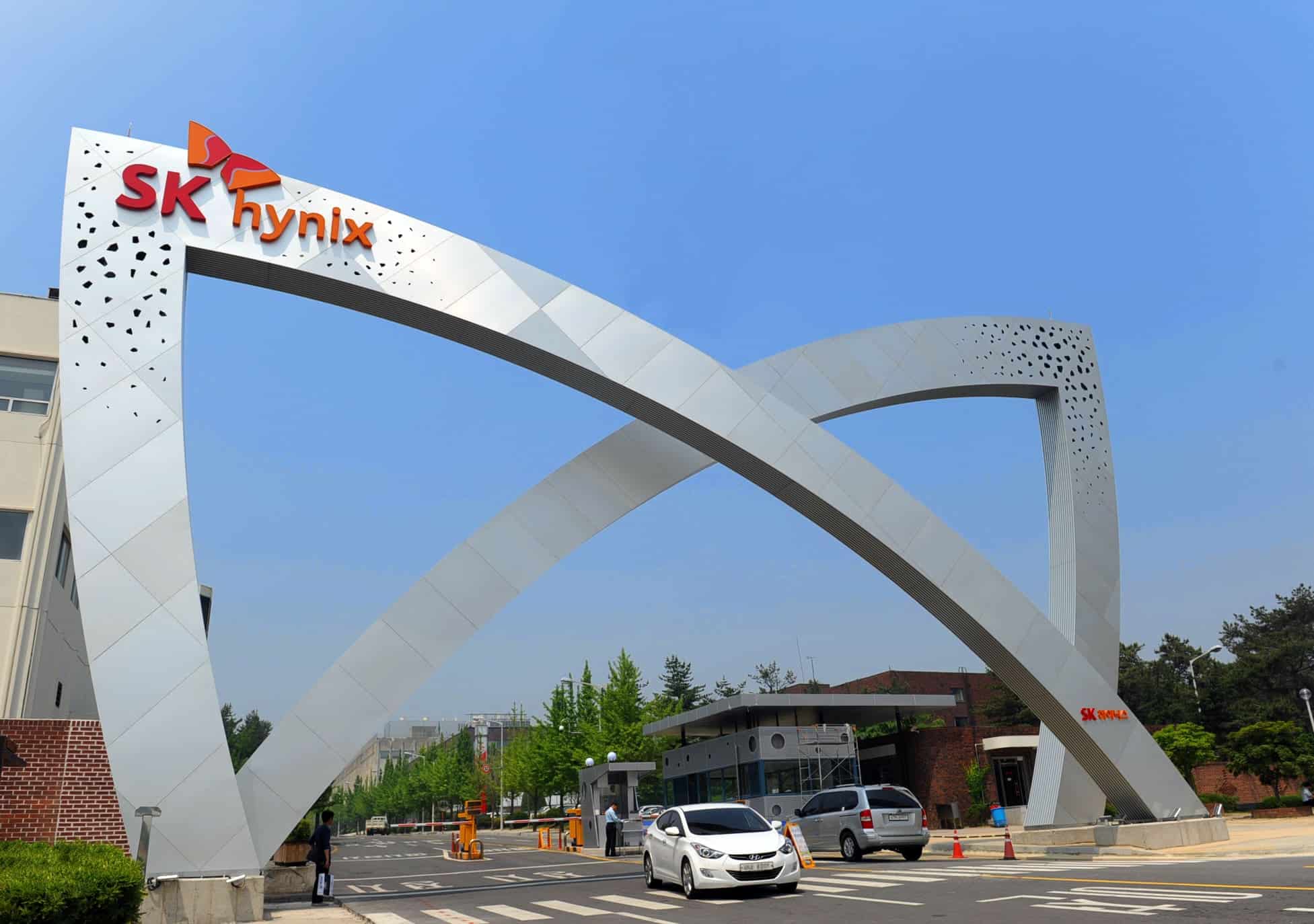
SK hynix is preparing a major expansion of its NAND Flash memory production capacity in China to meet the growing demand from enterprise storage and artificial intelligence data centers. The South Korean company, through Solidigm, is reactivating the second phase of its Dalian factory, which could add between 30,000 and 50,000 wafers per month and potentially increase the complex’s capacity by about 50% if the upper end of that estimate is reached. Production is expected to commence in the first half of 2027.
A quick overview of SK hynix’s NAND expansion in 20 seconds
- SK hynix is resuming operations at the second phase of the Dalian NAND plant after several years of being halted.
- The new line could produce between 30,000 and 50,000 wafers per month.
- Equipment installation is scheduled for the second half of 2026.
- Solidigm will primarily utilize the capacity for enterprise storage NAND products.
- AI is fueling higher demand for high-capacity SSDs in data centers.
This operation is particularly significant because it revives a project that had been virtually on hold for around four years. The decline of the NAND market after the pandemic, along with U.S. export restrictions on certain semiconductor manufacturing technologies to China, had complicated modernization plans for large memory plants established in the country.
TrendForce already reported in July that SK hynix was preparing to restart Dalian Plant 2 during the second half of 2026, with phased equipment deployment and completion through the first half of 2027. The planned capacity ranges from 30,000 to 50,000 wafers per month, and the new line is expected to produce NAND V8 with approximately 238 layers.
This expansion also comes at a time when SK hynix is significantly increasing investments to boost memory capacity in South Korea. The board approved on August 7th investments of 54.3 trillion won (about $38.3 billion) for new facilities in Yongin and Cheongju. The latter will specifically produce NAND, although its commissioning is expected later.
Dalian as a Legacy of Intel’s NAND Business
To understand why SK hynix manufactures NAND in China through Solidigm, it’s important to look back at one of the industry’s major transactions in recent years.
In 2020, SK hynix agreed to acquire approximately $9 billion worth of Intel’s NAND and SSD business, a phased operation that included intellectual property, SSD products, employees, and the Dalian NAND factory.
This acquisition led to the creation of Solidigm, established as a subsidiary of SK hynix to manage the legacy enterprise storage business inherited from Intel.
The Chinese facility is especially notable because it retains parts of the technology developed over the years by Intel. While SK hynix mainly uses charge trap architectures in its latest NAND generations, Dalian continues to be linked to floating gate technology from Intel.
This seemingly technical difference carries significant weight for Solidigm.
The company has specialized in very high-capacity enterprise SSDs based on QLC (Quad-Level Cell) memory, capable of storing four bits per cell. The goal isn’t necessarily to deliver the highest performance per unit, but to store vast amounts of data using fewer servers, drives, and physical space.
Currently, Solidigm markets the D5-P5336 with capacities up to 122.88 TB, designed for intensive read workloads and large datasets. The company positions density as one of its core strategies for data centers and AI applications.
The next generation aims to push this philosophy even further.
AI Needs GPUs, but Also Massive Storage
The expansion of AI is often viewed through the lens of GPUs, High Bandwidth Memory (HBM), and the electrical power needed to run new data centers.
Storage is becoming an increasingly critical component as well.
Training and deploying large models require storing datasets, checkpoints, weights, embeddings, vector databases, and intermediate results. Retrieval-Augmented Generation (RAG) systems, for example, need to maintain enormous collections of accessible information for the models.
Solidigm believes that storage will be one of the key constraints future AI infrastructures must address. The company argues that the growth in GPU power demands parallel improvements in the efficiency and capacity of systems supplying data to these accelerators.
High-capacity QLC SSDs fit particularly well into this picture.
Not all storage tiers in a data center need to offer millions of IOPS. A significant portion of data can be maintained on high-density drives that strike a better balance among capacity, power consumption, performance, and physical space.
That’s why Solidigm has advanced its SSDs from tens of terabytes to currently 122 TB, while developing even higher-capacity generations.
This Dalian expansion provides more wafers to produce precisely this kind of memory without directly competing for the most advanced SK hynix plants in South Korea.
Up to 150,000 NAND wafers per month in Dalian
The existing Dalian complex’s first factory has an approximate capacity of 100,000 wafers per month, according to published expansion plans.
If Dalian Plant 2 reaches the projected 50,000 wafers per month at the upper estimate, total capacity could rise to around 150,000 wafers monthly, an increase of nearly 50%.
This doesn’t happen all at once.
Equipment installation will be phased in, with initial steps beginning in the second half of 2026, and some sources mention November as a key milestone for accelerating equipment deployment. Full-volume production is expected in the first half of 2027.
TrendForce indicates that the initially expected technology is around V8 NAND with 238 layers.
Meanwhile, the current Dalian plant is being modernized. Replacing old equipment and increasing layer count allows for more bits stored per wafer, meaning the actual NAND capacity could grow faster than just the number of wafers processed.
This nuance is crucial.
In 3D NAND memory, the number of wafers per month doesn’t directly translate into TB output. The number of layers, matrix density, bits stored per cell, and manufacturing yields ultimately determine the available memory capacity.
China’s Strategic Importance Despite US Restrictions
The decision also demonstrates that major South Korean manufacturers are not abandoning their Chinese factories.
U.S. restrictions on advanced equipment for semiconductor manufacturing have complicated SK hynix and Samsung’s modernization efforts in China over recent years. U.S. permits and exemptions have allowed some operations and upgrades to continue, but companies must carefully plan their investments within the constraints of allowable machinery.
Dalian remains too important to be left stagnant.
Semiconductor factories require ongoing investment to stay competitive. Using outdated processes for extended periods increases the cost per bit compared to facilities capable of producing NAND with more layers.
SK hynix seems to have identified a specific role for the plant: maintaining and expanding a NAND platform focused on high-density enterprise storage, while reserving other facilities for their latest technologies.
Simultaneously, the company is making significant investments within South Korea.
Besides Yongin, SK hynix approved 19.1 trillion won ($13.5 billion) to build M17 in Cheongju, a new plant that will produce NAND Flash. Construction is expected to start in February 2027, with the first cleanroom expected to be operational by December 2028.
Thus, Dalian can deliver considerable capacity well before that.
More NAND Production Doesn’t Automatically Mean Cheaper SSDs
For consumers and businesses, a key question is whether adding tens of thousands of wafers per month will lead to lower SSD prices.
It might contribute, but there’s no immediate link between this expansion and a price drop in 2027.
First, capacity won’t be fully available until the new lines are operational and achieving good performance levels. Second, a significant portion of these chips will likely be allocated directly to Solidigm’s enterprise SSDs rather than ending up in consumer units.
Third, demand is also increasing concurrently.
Memory manufacturers reduced investments following the significant inventory buildup in 2022-2023. Now, the market is in a different phase: data centers are absorbing increasing amounts of DRAM, HBM, and NAND.
SK hynix expects this trend to continue. Omdia estimates that combined demand for DRAM and NAND could grow around 19% annually through 2030, supporting the large investments announced by memory makers.
Therefore, the Dalian expansion should be viewed more as a response to a structural rising demand rather than an immediate return to NAND oversupply.
The difference compared to the first wave of AI is that spending is now spreading across the entire infrastructure. GPU and HBM investments were first, followed by 400 and 800 GbE networks, liquid cooling, and new power supplies. Storage is now entering the same phase.
SK hynix aims to address both ends: HBM and advanced DRAM from South Korea, and higher-density NAND from Dalian.
If the second plant reaches the expected 50,000 wafers per month, Solidigm will have significantly more silicon to produce enterprise SSDs needed for new AI clusters. The impact on prices for conventional storage will depend on how demand grows simultaneously.
Frequently Asked Questions
How much will SK hynix increase NAND production in China?
Dalian Plant 2 is planned for a capacity of between 30,000 and 50,000 wafers per month. If the upper limit is reached, the complex could go from roughly 100,000 to 150,000 wafers per month, an increase of about 50%.
When will the new Dalian factory start production?
Equipment installation is scheduled for the second half of 2026, with volume production expected to begin gradually during the first half of 2027.
What will this NAND memory be used for?
The capacity is linked to Solidigm, SK hynix’s subsidiary focused on enterprise storage. A key growth area is high-capacity QLC SSDs aimed at data centers, cloud, and AI infrastructure.
Will this expansion lead to lower SSD prices?
Not necessarily. Increasing capacity can ease supply constraints, but demand for NAND in servers and data centers is also growing. Plus, much of Dalian’s production is targeted at the enterprise market.
