
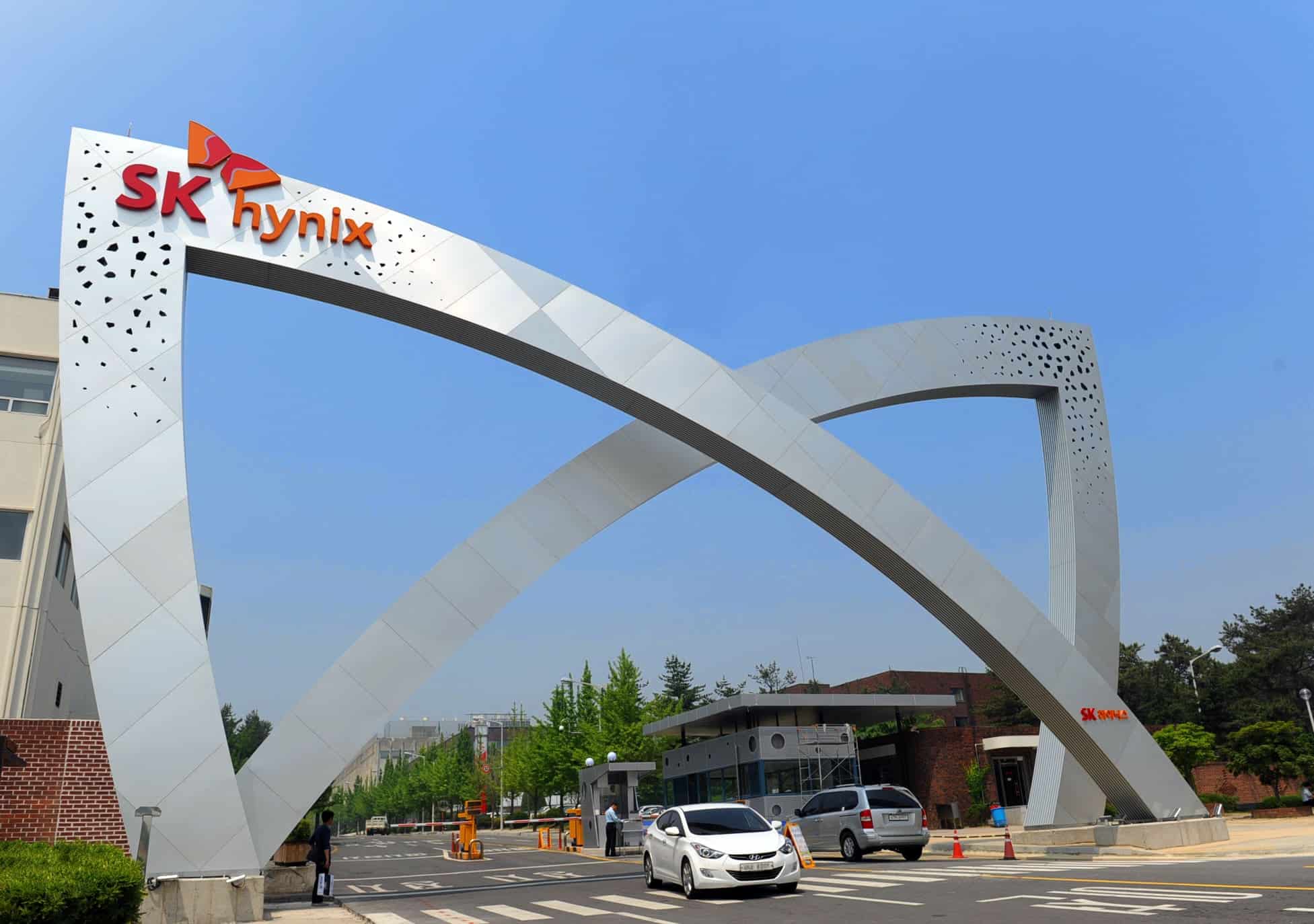
SK hynix has taken a step forward in an operation that, until recently, was more in the realm of stock market speculation than concrete preparations. According to Maeil Business News Korea, the company has sent out proposals to major international investment banks to select coordinators for a possible ADR issuance in the United States, a move that would aim for a placement of between 10 and 15 trillion won and is already being interpreted by the market as one of the biggest financial moves of the year in the semiconductor sector.
However, the operation has not yet been officially detailed by the company in these terms. What is confirmed is that SK hynix is reviewing a quotation via ADR in the U.S. market. Chey Tae-won, chairman of SK Group, publicly stated this during NVIDIA’s GTC 2026: the company is exploring this route to gain exposure not only with Korean shareholders but also with U.S. and global investors, with the goal of becoming a more international company.
This nuance is important. One thing is to acknowledge that the option is on the table, and quite another to confirm the final size, schedule, or definitive structure of the operation. As of today, the most sensitive part has not been backed by a full corporate statement: while South Korean financial media suggest the ADR would be structured through a new share issuance rather than treasury stock, no official decision has been announced by SK hynix. For this reason, any interpretation of the movement should be approached with caution.
A leap to Wall Street to seek a more global valuation
The industrial and financial logic behind this potential U.S. market entry is quite clear. SK hynix recently recorded its best fiscal year ever, driven by demand for advanced memory for Artificial Intelligence. The company closed 2025 with revenues of 97.1467 trillion won, an operating profit of 47.2063 trillion, and a net profit of 42.9479 trillion—all record highs, according to its annual results published in January.
With these figures in mind, the company aims for the market to better reflect this moment of strength. The prevailing thesis among analysts and specialized media is simple: SK hynix wants to align with the multiples that U.S.-based companies in the AI value chain currently receive. A more visible presence on Wall Street could broaden its investor base, facilitate tracking by international funds, and reduce part of the discount that, according to market narratives, still applies to its stock compared to some global peers.
Moreover, this wouldn’t be their first international instrument linked to its shares. The company itself notes in its corporate communications that its shares are listed on the Korean stock exchange, and its global depositary shares are already traded on the Luxembourg Stock Exchange. An ADR in the U.S. would thus be an additional step in the capital internationalization strategy, with a significantly larger scope given the size and liquidity of the American market.
The key question: more visibility or more dilution?
The most delicate point isn’t so much the ADR itself but the chosen method for backing it. In December, the company announced in a regulatory filing that it was studying various measures to enhance shareholder value, including a possible listing in the U.S. using treasury shares, though without a final decision. That initial statement suggested a less aggressive operation for current shareholders.
Now, however, information published in Korea points to a different scenario: the most likely option under consideration is a new share issuance. If this route is confirmed, the market might interpret the operation in two opposing ways: on one hand, as a lever to finance growth, strengthen investment capacity, and give the company a broader global showcase; on the other, as a source of dilution for current shareholders—particularly sensitive given that SK hynix recently announced an ambitious share buyback and shareholder return program.
This contrast explains much of the interest the case has generated. In January, SK hynix announced total dividends of 2.1 trillion won for 2025 and a buyback of 15.3 million shares, roughly equivalent to 2.1% of capital. In other words, the company has positioned itself as focused on enhancing per-share value and shareholder profitability. If it now decides to issue new shares to support the ADR, it will need to explain in detail why that decision justifies any potential dilutive effect.
The upcoming general shareholders’ meeting on March 25 also adds relevance. Among the agenda points is a proposed amendment to the bylaws concerning the potential holding or disposal of treasury shares when necessary for corporate management. While this proposal doesn’t confirm the ADR, it aligns with a moment when the capital structure and treasury share policies are once again front and center in discussions.
Why this operation matters beyond the stock market
The possible U.S. listing cannot be separated from SK hynix’s core business moment. The company is increasing production capacity, accelerating investments, and attempting to consolidate its position in advanced memory for AI servers. In its annual results, the company clarified its intent to quickly maximize the M15X capacity in Cheongju and to ensure medium- and long-term production through the upcoming plant in the Yongin cluster.
This means the debate isn’t solely financial. An ADR on Wall Street could support an intense investment phase during which the memory market, especially HBM, has become a central element in the AI economy. For SK hynix, capturing attention and capital in the U.S. isn’t just about stock market prestige; it can also serve to better align with the financial ecosystem where its major clients, strategic partners, and many sector-driving funds operate.
Therefore, this news should be viewed through two lenses. The first, of caution: the size, final structure, and schedule are still partially based on market information rather than a definitive corporate announcement. The second, of broader context: if SK hynix proceeds with this operation, it won’t be a superficial move just to generate headlines but a signal that it aims to play a more ambitious and global role in the next phase of memory and AI development.
Frequently Asked Questions
What is an ADR and how would it benefit SK hynix?
An ADR is a negotiable certificate traded in the U.S. representing shares of a foreign company. For SK hynix, it would provide easier access to U.S. and international investors without requiring a traditional dual listing.
Has SK hynix officially confirmed the size of the operation in the U.S.?
Not officially. Both the company and Chey Tae-won have stated that the U.S. listing via ADR is under consideration. The estimated size of 10 to 15 trillion won and the selection of underwriters come from reports by South Korean financial media.
Why is there concern about the ADR being issued with new shares?
Because a new issuance could dilute current shareholders’ stakes. This risk is particularly significant given the company’s recent announcements of share buybacks and shareholder returns.
How is this potential listing related to SK hynix’s AI business?
It’s highly relevant. SK hynix has posted record results driven by AI memory and is expanding its industrial capacity. A stronger presence in the U.S. could facilitate access to capital and improve its position among investors amid ongoing growth in HBM and data center memory markets.
via: mk.co.kr