
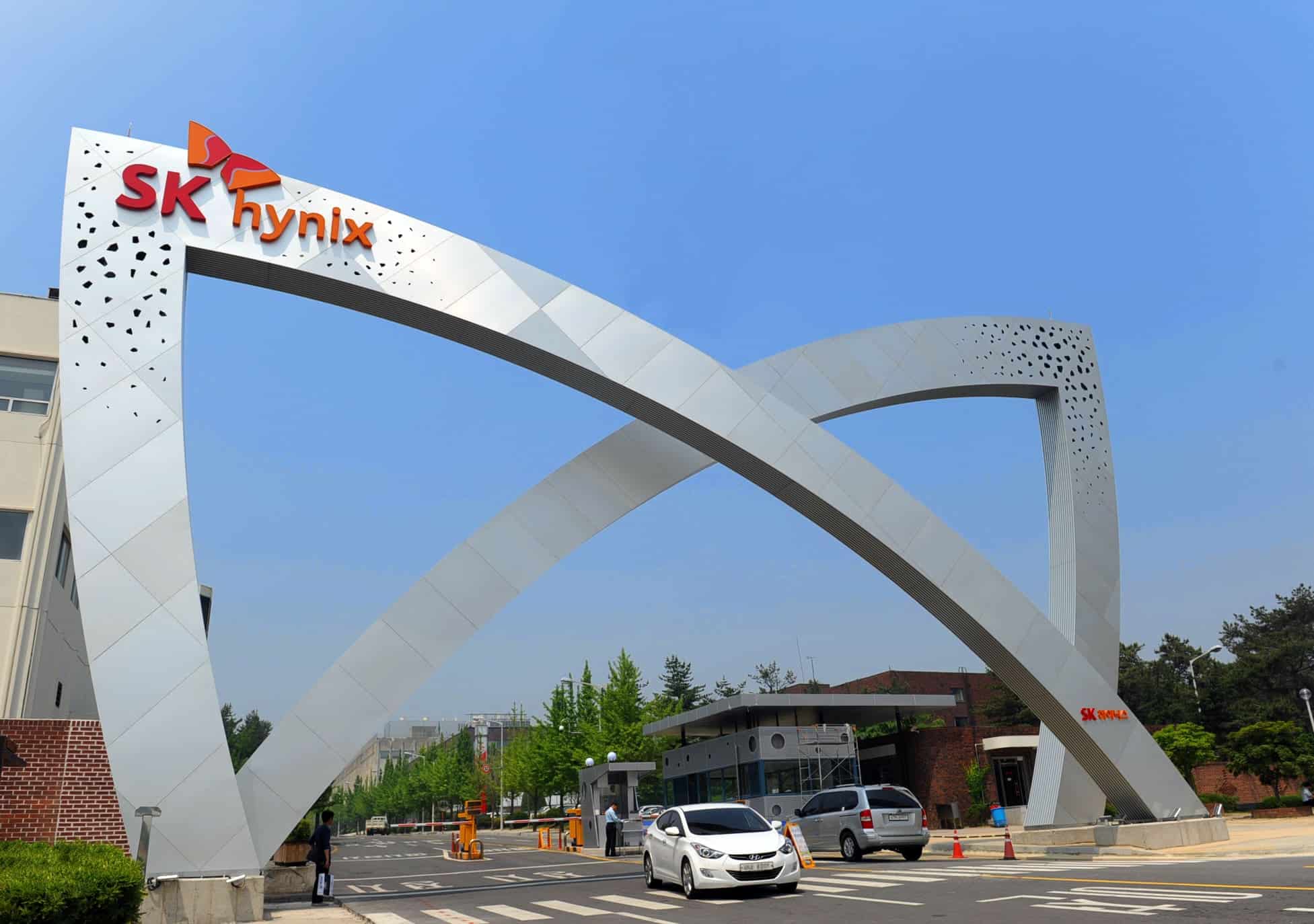
SK Hynix is considering relocating part of its Seoul office and commercial teams to the SK Seorin Building, the symbolic headquarters of the SK Group in the Jongno district, right in the heart of the South Korean capital. The move, reported by Maeil Business Newspaper and covered by Pulse, might seem like a straightforward real estate decision, but in Korea, it’s interpreted as more than that: a confirmation that memory for artificial intelligence has become the new focal point of the conglomerate.
The potential relocation would affect strategy and sales functions, not manufacturing, which remains tied to the company’s large industrial complexes. The distinction is significant. This isn’t about moving wafers or production lines but about bringing the core leadership closer to the areas that negotiate with big clients, manage advanced memory contracts, and coordinate parts of SK Hynix’s most sensitive business amid soaring demand for HBM, server DRAM, and storage for AI data centers.
A small move with great symbolic weight
The SK Seorin Building isn’t just any office within the group. It houses the CEO Chey Tae-won’s office, the SUPEX Council, and key organizations like SK Inc. Therefore, the possible relocation of SK Hynix teams is seen in business circles as a sign of internal power. The memory subsidiary is no longer just one of the group’s major companies; it is currently one of the pieces that most explain its market value, profitability, and future narrative.
According to Maeil Business Newspaper, the space SK Hynix is reviewing has become available due to some teams from SK Energy moving to other regional centers. This detail has its own implications. For decades, SK Group heavily relied on energy, telecommunications, and chemicals. AI has shifted internal hierarchies. High-bandwidth memory, known as HBM, has positioned SK Hynix favorably within NVIDIA’s supply chain and major data centers.
This move is not only organizational. SK Hynix reported its best quarterly results in history in Q1 2026, with revenues of 52.5763 trillion won, an operating profit of 37.6103 trillion, and a 72% operating margin. The company attributed this performance to increased sales of higher-value products, including HBM, high-capacity DRAM modules for servers, and eSSD, driven by demand for AI infrastructure.
| Key Data | Relevant Information |
|---|---|
| Planned move | Seoul office and commercial teams to SK Seorin Building |
| Location | Jongno, Seoul |
| Significance of the building | Symbolic headquarters of SK Group and Chey Tae-won’s office |
| Strategic motivation | Bring SK Hynix strategy and sales closer to top management |
| Business driving the move | Memory for AI, especially HBM |
| Q1 2026 revenue | 52.5763 trillion won |
| Q1 2026 operating profit | 37.6103 trillion won |
| Q1 2026 operating margin | 72% |
| Security concern | Protection of sensitive information and third-party access |
AI has shifted SK Hynix’s importance within the group
The rise of artificial intelligence has made memory a strategic resource. For years, media focus was on GPUs, accelerators, and large models. But the reality of data centers is more complex: without HBM, high-performance DRAM, enterprise SSDs, and storage capable of supporting massive workloads, AI infrastructure loses efficiency.
SK Hynix quickly positioned itself at the top of the HBM market, securing an advantage that has allowed it to improve margins and strengthen its stance against Samsung Electronics and Micron in one of the most profitable memory segments. In its earnings report, the company highlighted that AI’s evolution—from large model training to edge inference with repeated real-time processing—broadens demand for both DRAM and NAND flash.
This context explains why a partial move to Seoul holds strategic value. Commercial teams for AI memory don’t sell generic components; they negotiate limited capacities, supply agreements, delivery schedules, and roadmaps with global clients competing for chip allocation. In this environment, proximity to top executives can accelerate decisions and better align investments, production, and sales.
It can also facilitate closer coordination with other parts of the group. SK isn’t solely about semiconductors; it has assets in energy, telecommunications, batteries, materials, and services. In the AI era, these pieces are more interconnected than ever: data centers, power consumption, advanced materials, networks, cooling systems, and collaborations with global tech giants form a unified industrial conversation.
Security challenges that cannot be ignored
If the move goes ahead, it won’t be without risks. The information published in Korea itself highlights security as a key variable. The semiconductor business for AI handles highly sensitive data: client information, technology roadmaps, supply contracts, and negotiations with major tech companies.
Relocating strategy and sales teams to a corporate headquarters with more traffic, external visits, and cross-unit interaction can boost coordination but also introduces new control challenges. In semiconductors, information is almost as valuable as manufacturing capacity. Knowing ahead of competitors which clients secure HBM, which generation is in production, or what supply constraints exist can impact multibillion-dollar contracts.
This tension between proximity to leadership and internal security will be a key point to monitor. The Seoul office can help SK Hynix stay closer to the president and core SK Group leadership but must do so without weakening controls over commercial and technological information. In an industry characterized by competition among Korea, the US, China, Taiwan, and Japan, that balance is critical.
The move also reflects a broader change within Asian conglomerates. Artificial intelligence is reshaping internal priorities. Units that were once considered cyclical or overly dependent on memory prices are now viewed as strategic assets. HBM and advanced memory are no longer just industrial divisions—they’re entry points for major AI infrastructure contracts.
SK Hynix now faces the challenge of managing a privileged position without overconfidence. Demand remains strong, but memory markets are cyclical. The company is increasing investments, expanding capacity, and developing new products, but it must balance growth, financial discipline, and supply stability. Proximity to group leadership could be an advantage in this balancing act.
The potential move to the SK Seorin Building doesn’t alter SK Hynix’s overall strategy but symbolizes it. The group that once focused on energy, telecommunications, and chemicals as primary sources of value is now seeing AI shift the axis toward semiconductors. In this new landscape, the office’s significance isn’t just about its size but what it represents: memory has taken a seat at the main table.
Frequently Asked Questions
What is SK Hynix studying?
The company is reviewing a plan to relocate part of its Seoul office and commercial teams to the SK Seorin Building, the symbolic headquarters of SK Group in Jongno, Seoul.
Why is the SK Seorin Building important?
Because it houses CEO Chey Tae-won’s office, the SUPEX Council, and key group organizations. Moving SK Hynix teams there would carry strong strategic and symbolic weight.
How does this relate to artificial intelligence?
SK Hynix has become a key supplier of memory for AI, especially HBM. The growing demand from data centers and advanced models has increased its significance within SK Group.
What are the risks of this move?
The main risk involves protecting sensitive information about clients, technology roadmaps, supply contracts, and negotiations with major tech firms.
