
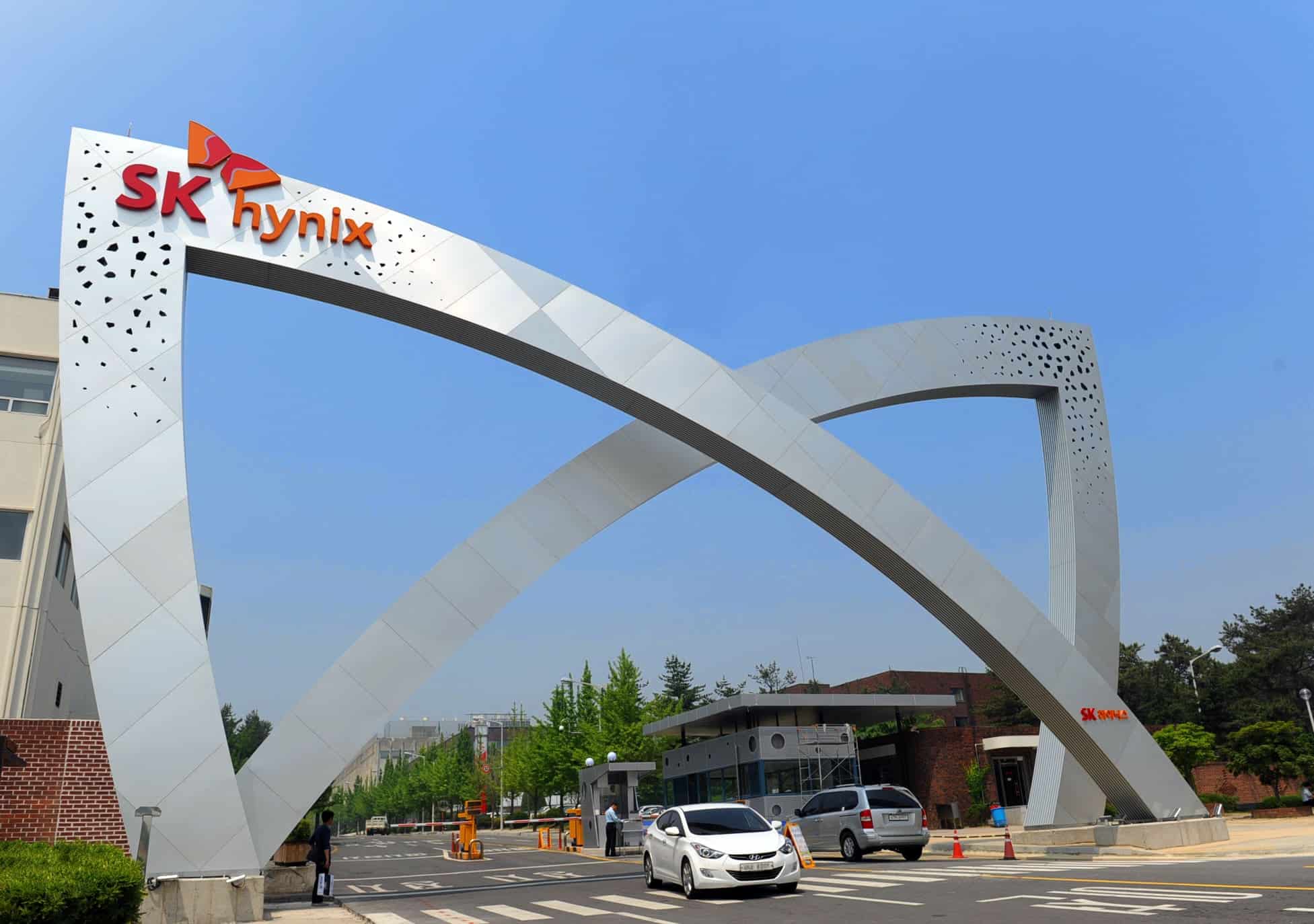
SK Hynix may bring forward its highly anticipated debut on the U.S. market through an ADR as early as mid or late July, according to Korean media reports. The process is reportedly in its final stages, with approval from the U.S. Securities and Exchange Commission (SEC) as the last significant step before the stock market debut.
This move comes at a particularly favorable time for the South Korean memory chip manufacturer. The demand for AI-focused HBM chips has made SK Hynix one of the main beneficiaries of the data center, GPU, and accelerator investment cycle. As a key supplier of high-bandwidth memory for AI platforms, the company aims to expand its international investor base and enhance its visibility among major Wall Street tech funds.
The timing has garnered additional interest because the debut could coincide with the release of the company’s Q2 results, scheduled for late July. This timing is significant: an ADR not only raises capital but can also serve as a powerful financial showcase to investors who compare SK Hynix directly with companies like Micron, NVIDIA, Broadcom, or TSMC.
An ADR to Attract U.S. Capital
An ADR, or American Depositary Receipt, allows U.S. investors to purchase representations of foreign company shares in dollars, facilitating access to foreign equities through familiar structures and markets.
SK Hynix confirmed in March that it was taking steps toward a possible U.S. listing in 2026. Since then, various Korean media outlets have reported progress, including the selection of placement banks and preliminary engagement with institutional investors. According to the latest information from Invest Chosun, the company concluded a series of investor presentations abroad in early June and is awaiting final SEC approval.
| Aspect of the Operation | Known or Published Information |
|---|---|
| Company | SK Hynix |
| Intended Instrument | ADR in the United States |
| Expected Market | Nasdaq, according to international and Korean media |
| Status | Pending final SEC approval |
| Estimated Timing | Mid to late July, per Invest Chosun |
| Banks Cited | Citi, JPMorgan, Goldman Sachs, and Bank of America | Declared Objective | Expand investor base and improve access to global capital | Likely Issuance Type | New share issuance, according to Korean media |
Choosing Nasdaq makes strategic sense. The U.S. tech market houses significant passive and active flows related to AI, semiconductors, and growth sectors. For SK Hynix, listing on Nasdaq via an ADR can help close valuation gaps with international competitors and facilitate inclusion in portfolios more exposed to global tech growth.
The move may also boost liquidity. Greater access for foreign investors often translates into higher trading volumes, increased analyst coverage, and quicker stock response to changes in earnings expectations, margins, or memory demand.
The Scale Could Be Much Larger Than Expected
One of the most striking points from the Korean reports is the potential size of the offering. Invest Chosun suggests that the ADR could represent about 2.5% of SK Hynix’s outstanding shares. Based on current valuations, this stake could be worth up to $27 billion, roughly 40 trillion won.
This figure exceeds earlier estimates, which placed the operation in a lower range. The difference is fueled by SK Hynix’s strong revaluation during the AI boom and the increasing value investors assign to HBM memory. It’s important to note that the final size has not been officially confirmed and will depend on regulatory approvals, market conditions, and the final structure of the offer.
| Published Scenario | Approximate Data |
| Expected Stake | Up to 2.5% of capital |
| Potential Underlying Value | Up to $27 billion |
| Equivalent in Won | Approximately 40 trillion won |
| Likely Structure | Primary issuance | Expected Effect | Immediate cash inflow for SK Hynix | Risk for Existing Shareholders | Limited dilution, according to Korean analysts |
If the offer is structured entirely as a primary issuance, the funds would flow directly into the company. This contrasts with a secondary sale, where funds go to the selling shareholder. For SK Hynix, this cash infusion could bolster its capacity to invest in advanced memory, packaging, HBM capability, and new manufacturing plants.
Some investors are concerned about dilution, but several Korean analysts believe the impact would be manageable if the company uses the liquidity for growth, strengthening its balance sheet, and increasing shareholder returns. The current debate is whether the market will value the capital infusion and international visibility more than the dilution of shares.
Strategic Importance of HBM Behind the Operation
The chosen timing is no coincidence. SK Hynix has positioned itself as a key player in the AI supply chain thanks to HBM memory. This stacked, high-bandwidth memory is crucial for powering AI accelerators, enabling faster data movement between memory and GPU than conventional DRAM.
Demand for HBM has surged with the rollout of training and inference platforms. NVIDIA, AMD, Google, Amazon, and other major players require high-capacity, high-bandwidth memory for increasingly large models. In this environment, SK Hynix’s stature has grown relative to competitors like Samsung and Micron.
| Market Drivers | Impact on SK Hynix |
| AI Demand | Rising orders for HBM and server DRAM |
| Advanced Memory Shortage | Supports prices and margins |
| Relationship with Major Clients | Improves revenue visibility | Nasdaq | Could bring valuation closer to tech peers |
| Primary Issuance | Provides capital for capacity expansion |
| Growing International Base | Enhances liquidity and analyst coverage |
Memory is becoming one of the most critical components of AI infrastructure. During the first phase of the boom, investors focused mainly on GPU designers. Now, attention is shifting toward those who can produce sufficient memory with quality and on time. SK Hynix is trying to leverage this financial window.
Going public on Nasdaq via an ADR can reinforce this narrative. The company will not just be seen as a cyclical memory manufacturer but as a vital part of the global AI infrastructure. This distinction could influence valuation multiples, access to capital, and international perception.
More Liquidity, But Also More Volatility
Entering the U.S. market also brings risks. Increased exposure to international investors can lead to higher volatility. Changes in expectations about HBM, DRAM prices, capital expenditure plans of hyperscalers, trade restrictions, or NVIDIA’s results could be reflected more quickly in the stock price.
Furthermore, the operation is taking place amid a surge of enthusiasm for AI-related stocks. While this can help place the ADR with strong demand, it also raises susceptibility to sector corrections. If the market begins to discount excess capacity, margin pressures, or slowdown in data center spending, SK Hynix could become more vulnerable to the broader cycle.
The size of the offering will also be closely monitored. An overly large placement could induce short-term pressure, while a too-small offering might limit its impact on liquidity and visibility. The optimal size will depend on real institutional demand and SK Hynix’s ability to convince the market that proceeds will be used for profitable growth.
An Industry-Focused Move
Beyond the stock market, the potential Nasdaq listing has strategic implications. South Korea aims to keep its major memory champions at the heart of the AI value chain. Competition with Micron and Samsung extends beyond technology to capital access, global customers, and market recognition.
For SK Hynix, a large U.S. issuance can finance capacity just as the industry needs more HBM, advanced packaging, and investment in production. The challenge is that these expansions take years and require prudent decisions. The memory sector understands cycles of shortages and oversupply well. Investing too late risks losing market share, while rushing could lead to oversupply if AI demand cools.
Currently, the narrative favors SK Hynix. Memory prices remain tight, HBM has become a strategic resource, and investors are seeking companies with direct exposure to AI infrastructure. If the SEC approves the process and July’s schedule is confirmed, SK Hynix’s ADR will be among the year’s most significant sector operations.
The clear message to the market is that artificial intelligence no longer just enhances the valuation of accelerators—it is also reshaping the financial landscape of memory. SK Hynix aims to capitalize on this moment to shift from being an Asian industrial leader to a global technology value company with a direct presence on Wall Street.
FAQs
What is an ADR?
An ADR, or American Depositary Receipt, is a negotiable certificate traded in the U.S. that represents shares of a foreign company. It allows U.S. investors to buy these securities in dollars within their local market.
When might SK Hynix list on Nasdaq?
According to Korean media, the process could be completed between mid and late July, contingent upon final SEC approval.
What size might SK Hynix’s ADR offering be?
Invest Chosun estimates an issuance size of up to 2.5% of SK Hynix’s capital, with a potential underlying value of up to $27 billion. The final figure has not been officially confirmed.
Why is SK Hynix important for AI?
SK Hynix is one of the leading manufacturers of HBM memory, a critical component for AI accelerators and high-performance data centers.
via: Invest Chosun
