
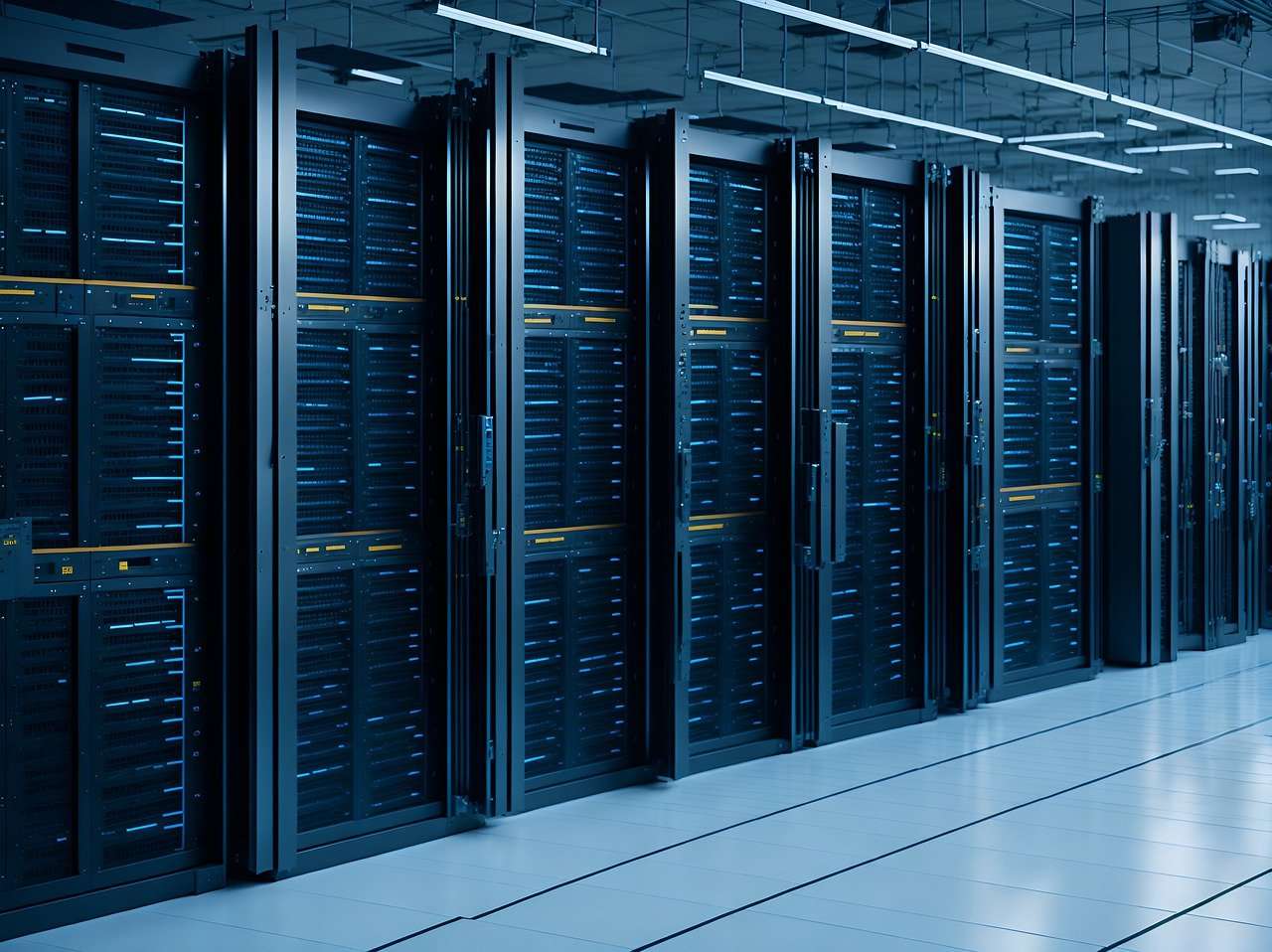
French company Sesterce has announced a project to build an AI-focused data center campus in Jämsä, Finland, with a planned investment of $10 billion. The facility will be located on the grounds of the former Kaipola paper mill and will have an initial capacity of 200 megawatts (MW), with the goal of reaching 600 MW in a second phase. Construction is expected to begin this year, although the announcement doesn’t detail a full construction or commissioning timeline.
Sesterce’s AI campus in 20 seconds
- The French company plans to invest $10 billion in Jämsä, Finland.
- The campus will start with 200 MW of capacity and could reach 600 MW in a second phase.
- The project will reuse the site of the former Kaipola paper mill and some of its infrastructure.
- Sesterce pledges to tie its power consumption to new renewable generation and create a $10 million local fund.
- The company says it has already secured an anchor customer for the facility.
The announcement places Finland among the European countries seeking to attract large-scale infrastructure for developing and operating AI systems. These facilities need a high, stable power supply, as well as cooling systems capable of handling the heat generated by computing equipment.
The scale of the announced investment puts the Jämsä project on a considerable scale. However, the $10 billion figure corresponds to the company’s planned investment, not an amount that has already been spent. The information provided also doesn’t specify the identity of the customer said to have reserved capacity, nor does it detail the energy, financial or construction agreements needed to complete the campus.
From paper mill to AI infrastructure
The chosen site is the former Kaipola paper mill, an industrial complex that Sesterce wants to adapt to host a new technology activity. The company says it will make use of existing infrastructure, including grid connections, water systems, buildings and logistics links.
Reusing industrial facilities can offer advantages over developing a data center on undeveloped land, although the outcome depends on the condition of the buildings, the capacity available on the grid, and the adaptation work required for the new use. The announcement doesn’t specify which elements of the old mill can be kept as-is or which parts of the facility will need to be built from scratch.
Sesterce plans to split the development into two stages. The first would reach 200 MW, while the second would bring total capacity up to 600 MW. The gap between the two phases reflects the scale of growth planned, but the company hasn’t published completion dates for each stage in the announcement, nor the number of servers, AI accelerators or buildings the site will have.
Sesterce’s long-term goal is to exceed 1 gigawatt (GW) of capacity in Finland. That figure refers to its plans for the country as a whole and shouldn’t be read as a confirmed expansion of the Jämsä campus beyond the announced 600 MW.
The company also says it has closed a deal with an anchor customer for the facility. Having a flagship customer can help justify developing infrastructure at this scale, but its name, the volume of capacity contracted and the terms of the deal haven’t been disclosed.
Renewable energy, liquid cooling and heat reuse
One of the commitments announced by Sesterce concerns power supply. The company says it will enable one megawatt of new renewable generation capacity to be added to Finland’s grid for every megawatt the campus consumes, within ten years of the facility coming online.
The commitment establishes a ratio between the data center’s projected consumption and the new renewable capacity the company intends to enable. On its own, it doesn’t amount to a claim that the facility will run exclusively on renewable energy at all times. Assessing its real impact will require knowing how the new generation will materialize, when it will be available, and what mechanisms will tie it to the campus’s actual consumption.
Cooling will be another central part of the design. Sesterce plans to use a closed-loop liquid cooling system, supplemented with collected rainwater and recycled water. This type of solution manages equipment heat through a circuit that recirculates the liquid, although total water consumption will depend on the technical setup, auxiliary systems and the facility’s needs.
The company is also considering studying waste heat reuse. Data centers generate large amounts of heat during operation, and when there’s nearby demand and suitable infrastructure, part of that energy can be used for heating or other thermal applications. For Jämsä, Sesterce presents this as an option to be studied during the design phase, not as a confirmed heat-recovery system.
These measures will need to be fleshed out as the project moves forward. The announcement doesn’t include estimates of annual power consumption, water needs, expected energy efficiency or the volume of heat that could be recovered. Without that data, it isn’t possible to precisely assess the facility’s environmental performance.
A $10 million fund for Jämsä
The project includes setting up a $10 million community fund to finance local initiatives in Jämsä. The company hasn’t specified what types of projects will be eligible for funding, when the money will be distributed, or which entity will manage the fund.
Jämsä’s mayor, Jori Reijula, has described the proposal as an opportunity to attract investment, business activity and jobs. However, his statement also comes with a condition: the project will need to move from planning to execution and meet the applicable requirements. According to him, the municipality will evaluate the initiative as it progresses.
The former paper mill is part of the area’s industrial history. For local authorities, bringing the site back into use through a different activity could open a new economic chapter, although no specific projections for jobs, local suppliers or municipal revenue tied to the campus have been released yet.
Youssef El Manssouri, Sesterce’s CEO, has argued that the company aims to preserve the site’s industrial identity through infrastructure reuse and an energy-efficiency-focused design. The company has also said it wants flexible power consumption operations, a feature that could help adapt part of its demand to grid conditions, although no technical details have been published on how that flexibility would be managed.
The Finnish project comes after Sesterce announced a $52 billion investment plan last year tied to France’s national AI ambitions, and more recently a $471 million investment to develop an AI data center in Valence, France. The new Jämsä initiative represents a much larger economic and energy scale for a single site, but its final scope will depend on execution of the different phases, energy availability and the agreements needed to bring the facility online.
Frequently asked questions
How much will Sesterce invest in the Finland AI campus?
Sesterce has announced a planned investment of $10 billion for the Jämsä campus. The figure corresponds to the announced project and doesn’t mean all the capital has already been spent.
What capacity will the Jämsä data center have?
The first phase is expected to reach 200 MW. The company plans to expand total capacity to 600 MW in a second phase.
Where will Sesterce’s campus be built?
It will be located on the grounds of the former Kaipola paper mill in Jämsä, Finland. Sesterce says it intends to reuse existing industrial infrastructure, including power connections, water systems and buildings.
What environmental measures has Sesterce announced?
The company has committed to enabling new renewable generation capacity matching the campus’s megawatt consumption, within ten years of coming online. It also plans closed-loop liquid cooling, supplementary use of rainwater and recycled water, and studying potential uses for waste heat.
