
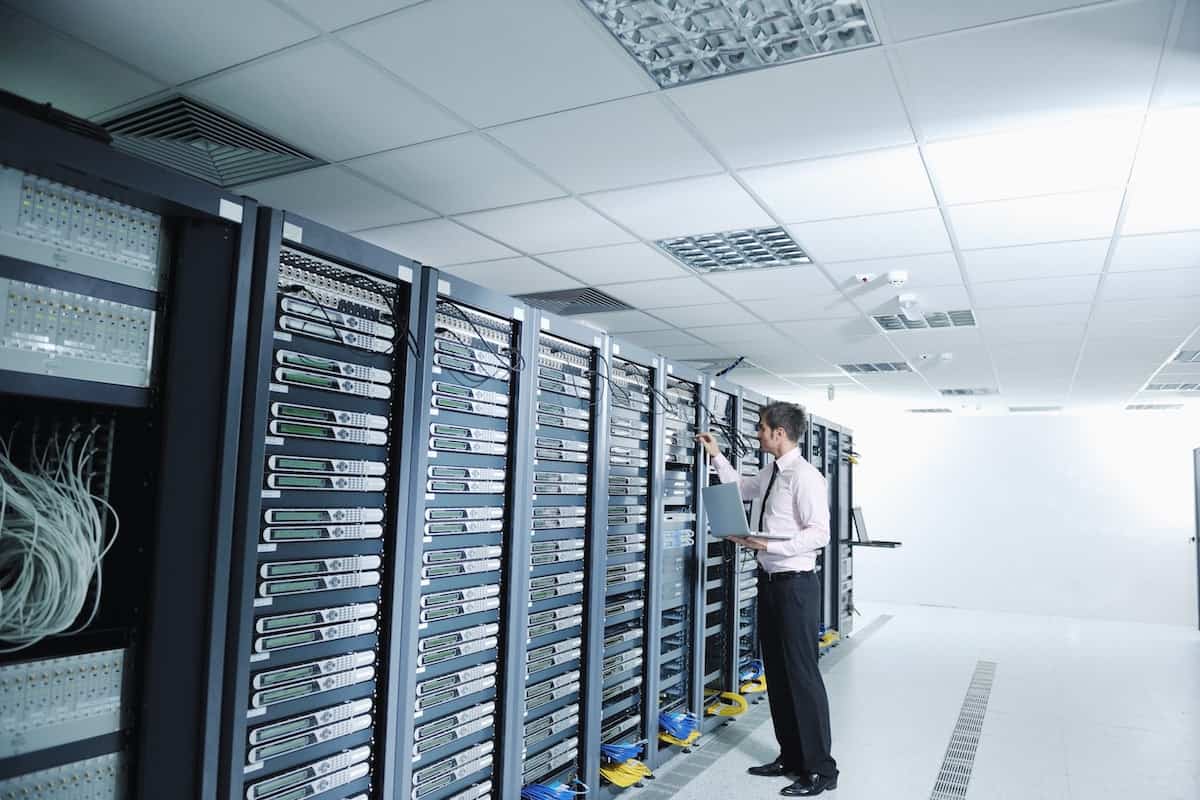
The craze for artificial intelligence servers is no longer an exclusive story about GPUs, HBM memory, and large assemblers. Demand is starting to extend to much less visible parts but essential for a high-performance rack to operate and be maintained: connectors, chassis, cable management arms, and sliding rails. In Taiwan, several manufacturers of these components are recording strong revenue growth driven by the AI data center boom.
Digitimes notes that the demand for AI servers is boosting appetite for mechanical and integration components, including rail kits, a segment where Taiwanese suppliers have a significant presence. This shift is interesting because it shows how investment by hyperscalers is no longer confined to NVIDIA, TSMC, or major OEMs but is filtering down to industrial layers that often go unnoticed.
An AI server isn’t just any piece of equipment within a rack. It’s heavier, more expensive, consumes more power, demands higher thermal density, and often features complex designs with GPUs, accelerators, redundant power supplies, high-speed networks, advanced cooling, and abundant cabling. In this context, a rail stops being a secondary component: it allows for extraction, inspection, and maintenance of systems that can cost more than a luxury car without compromising safety or data center operations.
King Slide and Nan Juen, two names explaining the shift
King Slide Works is probably the clearest example of this transformation. Based in Kaohsiung, the company has become one of the key names in rails for AI servers and high-precision mechanical components. According to CommonWealth Magazine, King Slide counts NVIDIA and major cloud providers among its clients and has accumulated over 3,000 patents related to guiding, extraction, and mounting solutions.
The financial results reflect this scale shift. In Q1 2026, King Slide achieved consolidated revenues of 5.95 billion Taiwanese dollars, approximately $189.8 million USD, up 37.82% year-over-year. Its gross margin reached 77.74%, and net profit after tax was 3.48 billion Taiwanese dollars. The company attributes growth to strong demand for rail kits for AI servers and an improved market share in advanced specifications.
Nan Juen International is also benefiting from the same cycle. In Q1 2026, the company posted consolidated revenues of NT$870 million, up 73.5% year-over-year, with attributable net profit of about NT$137 million and an EPS of NT$3.37. Its server rail business accounted for 74% of quarterly revenue, and the company aims for rails for AI servers to reach 20% of its annual revenue.
| Company | Recent Key Data | Industrial Insight |
|---|---|---|
| King Slide Works | Q1 2026 Revenue: NT$5.95B (+37.82%) | High exposure to advanced rail kits for AI servers |
| Nan Juen International | Q1 2026 Revenue: NT$870M (+73.5%) | Strong influence of server rails with projected growth in AI |
| Foxconn / Hon Hai | Q1 2026 Net profit: +19%, driven by high demand for AI servers | Sign of traction in assembly and complete racks |
| Taiwan component sector | Digitimes reports growth in connectors, chassis, and rails | Demand is spreading throughout the supply chain |
The importance of these suppliers is increasing because new AI platforms require rack redesigns. Systems based on NVIDIA’s GB200, GB300, or future Rubin architectures raise weight, density, and mechanical complexity. Rails must support higher loads, enable quick maintenance, and coexist with cabling, liquid cooling, trays, and high-availability designs.
AI turns rack mechanics into a strategic business
Until recently, much of the data center focus was on the chip, and at most, on the board, memory, or network. AI has changed that perspective. Now, the purchasing unit is not just a server but entire racks and integrated systems. Each rack needs a mechanical structure, power supply, cooling, trays, rails, connectors, cabling, and thermal management solutions designed for loads far exceeding those of conventional enterprise servers.
Foxconn serves as a good reference for understanding the scale of this cycle. The company reported a 19% increase in net profit for Q1 2026, reaching NT$49.92 billion, driven by demand for AI hardware. Reuters also notes that Foxconn expects shipments of AI server racks to more than double this year and plans to increase CapEx by around 30% to expand capacity.
When major assemblers increase production, they pull along specialized suppliers. More racks mean more chassis, trays, cable arms, rails, connectors, and precision parts. In AI, these parts cannot fail: a poorly guided heavy server can damage expensive equipment, cause maintenance delays, or pose risks to operators.
There is also a margin component. In highly standardized mechanical products, price pressure is high. In advanced rails for AI servers, value increases because of more demanding specifications, complex client validation, and patent holdings. King Slide, for example, maintains margins well above many conventional hardware businesses, indicating that it competes not only on volume but on design, reliability, and technical barriers.
Nan Juen is adjusting its industrial footprint. The company began production in Vietnam in 2025 and plans to build a new plant there starting in Q3 2026, with completion expected in Q4 2027. The reason isn’t solely cost; North American clients also seek to diversify supply chains and reduce geopolitical exposure—an increasingly common requirement for data center hardware.
Not all growth will be linear
The AI server boom doesn’t mean all suppliers will automatically gain. Digitimes notes that revenue growth is mainly among large Taiwanese players in the sector, but with exceptions. It’s logical: some components face bottlenecks outside their control, others depend on specific platform schedules, and some have less capacity to pass costs to clients.
For example, Nan Juen acknowledged that April revenues were affected by shortages of electronic components in downstream ODMs, though the company maintained that end-demand remained solid and that shipments in May were accelerating. Such disruptions show that even a highly complex supply chain can grow strongly while experiencing temporary misalignments.
There’s also a risk of concentration. Many suppliers rely on a few key clients, NVIDIA platforms, or main cloud service providers’ orders. Delays in a rack generation, shifts in specifications, or clients splitting orders among multiple suppliers can quickly impact supply. The advantage of being part of the AI chain is enormous, but it requires strict adherence to schedules, certifications, and volumes, leaving little room for errors.
In the medium term, the market for rail kits and mechanical components could continue to evolve. AI servers will become denser, heavier, and costlier. Liquid cooling will expand. Complete racks will gain prominence over standalone servers. Maintenance must become faster, as data centers cannot afford downtime in infrastructure worth billions.
The story of rail kits underscores a broader idea: AI infrastructure is a full industrial chain, not just a single “miracle chip.” The GPU is prominent, but actual deployment in data centers requires substrates, memory, boards, power supplies, optics, cables, chassis, cooling, and precision mechanical parts. Taiwan is capturing a significant share of this value—not only through TSMC or Foxconn but via an extensive network of specialized suppliers that have adapted to new rack demands.
Frequently Asked Questions
What are server rail kits?
They are sets of rails or sliding guides that enable mounting, extracting, and maintaining servers in a rack. For AI servers, they must support more weight, increased mechanical complexity, and demanding maintenance operations.
Why is their demand increasing with AI?
Because AI servers are denser, more expensive, and heavier than many traditional servers. Each new AI rack requires chassis, rails, connectors, cabling, and tailored mechanical management solutions.
Which Taiwanese companies are prominent in this segment?
King Slide Works and Nan Juen International are two of the most mentioned names. Both have benefited from increased demand for rails for AI servers and platforms.
Could there be bottlenecks in these components?
Yes. While less visible than GPUs or HBM memory, mechanical components must also be validated, produced at volume, and adapted to each platform. Delays in ODMs or changes in specifications can affect shipments.
