
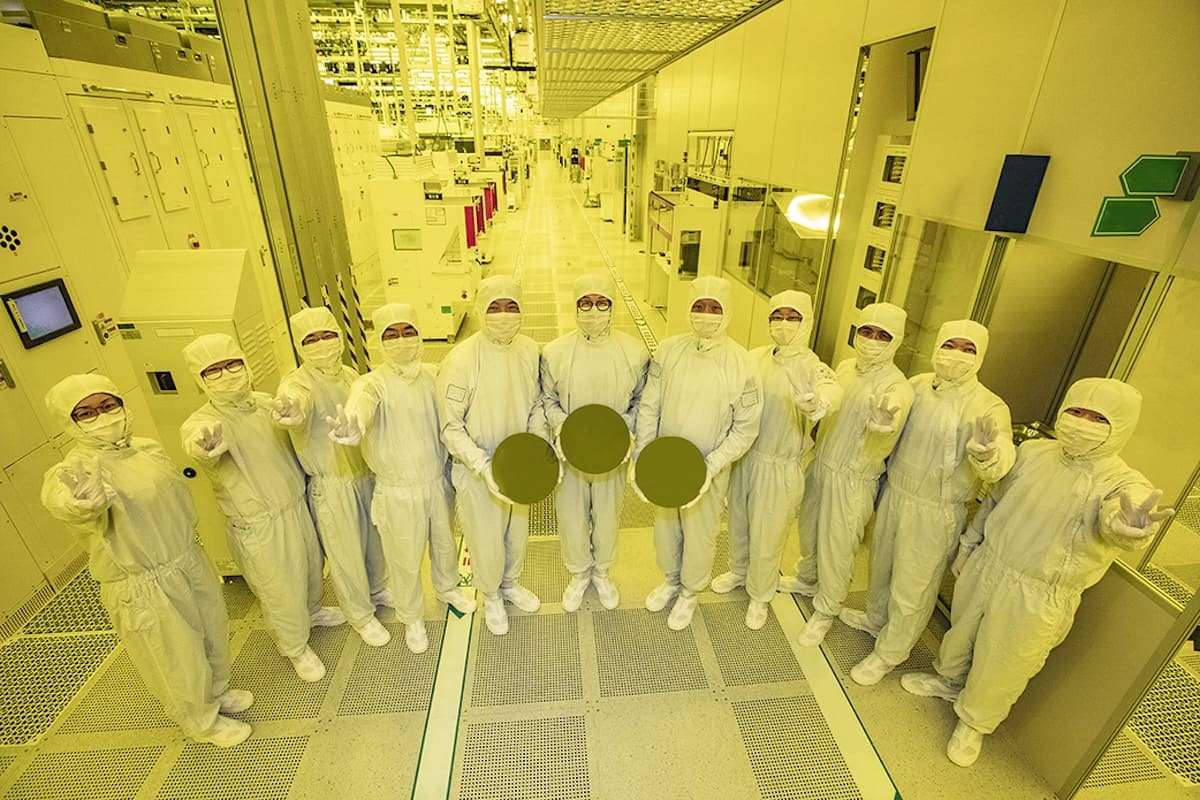
Samsung Electronics’ contract chipmaking division is showing signs of recovery after several years of underutilization, with more orders for advanced processes, higher fab utilization, and improving prices. The big challenge now is turning that pickup in activity into a profitable operation, especially with the 2-nanometer process and the ramp-up of the Taylor, Texas plant.
Samsung’s foundry recovery in 30 seconds
- Samsung Foundry’s revenue rose 1.8% quarter-over-quarter in Q2 2026, to $3.26 billion.
- Its global market share was 5.9%, versus TSMC’s 72.5%, according to TrendForce.
- Orders for advanced nodes, including HBM base dies, are increasing.
- 2nm process yield has improved, though market estimates vary depending on the source.
- Taylor, Texas is gearing up for 2nm production in 2027 and could reach around 50,000 wafers a month.
The recovery comes at a time when demand for AI and high-performance computing semiconductors is filling a large share of the available capacity at the most advanced processes. Samsung is capitalizing on that to boost utilization across its lines and improve manufacturing prices, though it still trails TSMC by a wide margin.
More orders for Samsung, but TSMC keeps a massive lead
TrendForce’s data for the second quarter of 2026 shows improving activity. The top ten contract chipmakers together brought in $53.49 billion, up 11.5% from the previous quarter.
Samsung Foundry took second place with $3.26 billion, up 1.8% quarter-over-quarter. The company saw more orders for advanced processes, including base dies for HBM memory, while manufacturing prices for its 5nm and 4nm nodes and more advanced processes also rose.
The problem shows up when comparing the figures against TSMC. The Taiwanese company posted around $40.2 billion in foundry revenue during the same quarter and captured a 72.5% share. Samsung came in at 5.9%.
Even SMIC, the Chinese contract chipmaker, closed some of that gap during the quarter. Its revenue grew 20%, topping $3 billion, putting its share at 5.4%.
Samsung’s recovery, therefore, doesn’t mean it has closed the gap with its main competitor. The most relevant data point is that utilization of its advanced lines is improving in a market where capacity to manufacture AI chips remains in very high demand.
Pricing has also shifted. According to reports gathered by TrendForce, Samsung reportedly raised prices for certain 4nm, 5nm, and 8nm processes over the summer, amid mounting pressure on TSMC’s capacity and growing AI-related orders.
2nm remains the decisive test
The 2nm process is where most of the expectations for Samsung Foundry are concentrated. The company uses a Gate-All-Around (GAA) transistor architecture, which it had already introduced in earlier generations, but it needs to improve manufacturing performance for the node to be competitive at scale — especially since TSMC’s own 2nm process is already shipping in Apple’s A20 Pro.
Yield estimates aren’t consistent. Tom’s Hardware cited figures near 55% for the first generation of 2nm in August, while reports later gathered by TrendForce suggested yield had topped 70%. Other sources place the improvement at an intermediate stage. Samsung doesn’t publish a detailed yield figure for this process, so these numbers should be treated as industry estimates.
Yield measures the proportion of manufactured chips that meet specifications. An improvement of just a few points can meaningfully change the economics of an advanced fab, because each wafer yields more sellable chips and lowers the effective cost of the units that don’t meet requirements.
Samsung already has its own products built on SF2. In addition, Japanese manufacturer Preferred Networks has been identified as an SF2 customer for AI accelerators with 2.5D packaging. Tesla is also tied to the process through its future AI chips for vehicles and robotics.
There are also negotiations with other customers. Qualcomm is evaluating Samsung’s 2nm processes, though talks could shift to a later generation because of production timelines. Reports about possible deals with other chip designers should be distinguished from contracts Samsung has publicly confirmed.
The 2nm recovery also has an internal dimension. Samsung is preparing the Exynos 2700 for its next generation of phones, and it’s expected to use a second generation of the 2nm process, SF2P. That would let the company use its own processors as a reference point for maturing the node.
Taylor will be the next test
The Taylor, Texas plant is another pending item. Samsung completed initial equipment installation at the first fab in April 2026 and has set 2027 as the start of 2nm chip production for customers.
Industry reports put initial planned capacity at around 50,000 300mm wafers a month. The plant could begin trial operations between late September and early October 2026, before moving toward volume production during 2027.
Demand appears to be taking shape even before the facility reaches commercial production. TrendForce reported that Taylor’s first fab is reportedly earmarked for 2nm production for customers such as Tesla, Broadcom, and Arm. Since this is information based on industry sources, it shouldn’t be read as a complete list of contracts confirmed by Samsung.
Tesla is one of the most significant customers. Samsung announced a deal worth $16.5 billion in 2025 to manufacture Tesla’s chips, with production tied to its AI processors. The timeline for those chips is shaped by the development of the product itself and by how the manufacturing process matures.
Samsung is also considering a second fab in Taylor. In July, it said it was preparing to begin construction of the second facility before the end of 2026 and placed that project’s volume production around 2030. The company has said the expansion will depend on how orders and demand for advanced processes evolve.
That leaves Samsung facing two related goals. First, raising and stabilizing the yield of its 2nm processes. Second, turning Taylor from a massive investment into a fab with enough production volume.
If both elements advance, the division could benefit from the demand for AI and high-performance computing chips that’s driving foundries forward. But growing orders alone aren’t enough: Samsung needs to manufacture those chips at yields and costs that let it compete with TSMC and turn higher utilization into sustainable profits.
Frequently Asked Questions
Is Samsung Foundry recovering?
TrendForce’s data shows rising revenue and more orders for advanced processes during the second quarter of 2026. However, Samsung still holds a much smaller share than TSMC.
What problem does Samsung have with its 2nm process?
The main challenge is raising and stabilizing yield — the proportion of chips that meet specifications after manufacturing. External estimates of the current yield vary, since Samsung doesn’t publish a detailed figure.
When will Samsung manufacture chips at the Taylor plant?
Samsung expects to start producing advanced chips for customers at Taylor during 2027. The first fab is set up for the 2nm process, and initial capacity of around 50,000 wafers a month has been reported.
Which customers are linked to Samsung’s 2nm process?
Names confirmed or publicly linked to the process include Samsung itself for its own chips, Preferred Networks, and Tesla. There are also reports of talks with Qualcomm and other chip designers, though not all of those deals are confirmed by Samsung.
