
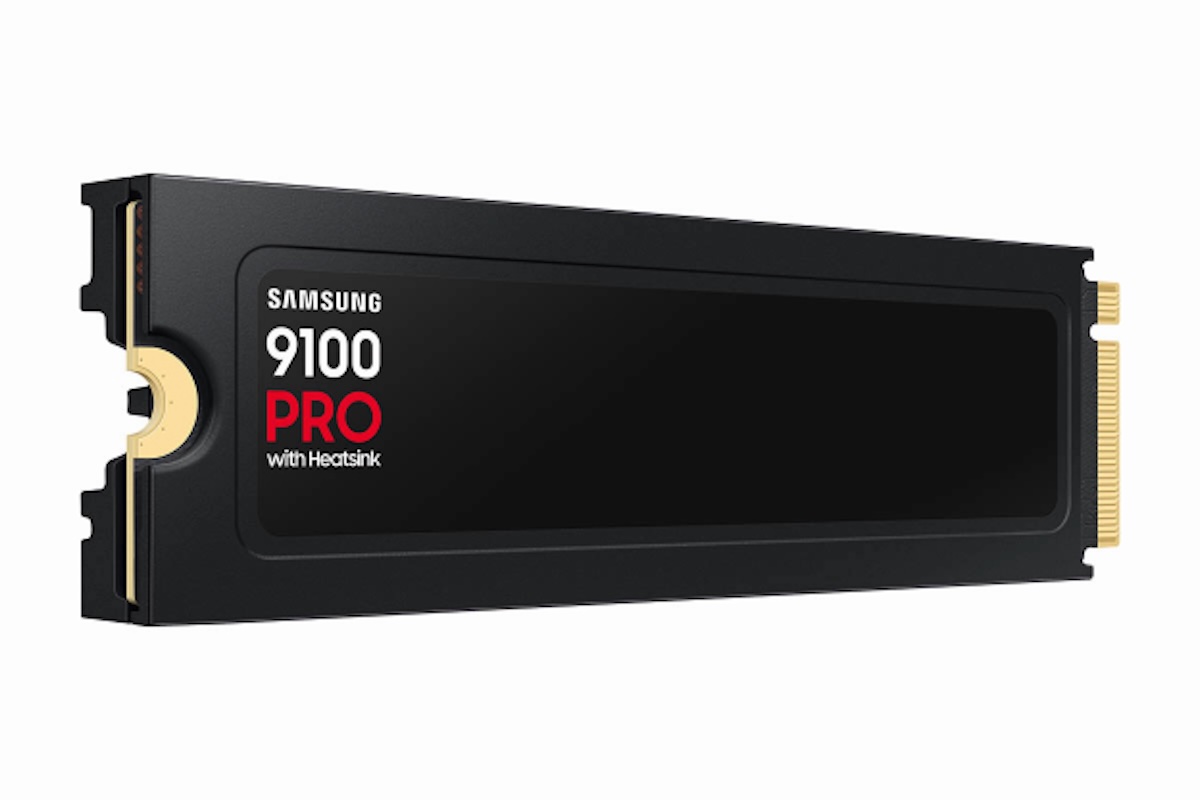
Samsung Electronics closed the second quarter of 2026 with record revenues of 171.5 trillion won and an operating profit of 89.5 trillion, figures equivalent to approximately $119 billion and $62 billion, respectively. The demand for memory for data centers and artificial intelligence enabled nearly a 19-fold increase in year-over-year operating results, but the company warned that supply shortages could worsen in 2027 and last throughout 2028.
The key points of Samsung’s results in 20 seconds
- Samsung reported 171.5 trillion won in revenue between April and June, a 130% increase.
- Operating profit reached a record 89.5 trillion won, nearly 19 times more.
- The semiconductor division contributed nearly all of the profit.
- Samsung expects memory shortages to worsen in 2027 and continue into 2028.
- The rising cost of chips led to losses in the device business.
The results highlight the two sides of the current memory market. Samsung earns exceptional margins selling DRAM, NAND, and high-bandwidth memory to data center operators, but its own mobile, TV, and appliance divisions must purchase these same components at increasingly higher prices.
This situation made the second quarter the best in the group’s history, although with an unusual imbalance. The semiconductor area generated almost all of the operating profit, while the consumer-oriented business segments ended slightly in loss.
The company also confirmed that it is signing long-term supply contracts with major data center clients. These agreements can secure revenue and reduce investment risks in new factories, but they also commit a large share of future capacity and leave less memory available for other markets.
Memory accounts for nearly all of Samsung’s profit
The Device Solutions division, which includes memory, foundry, and System LSI, recorded revenue of 127.5 trillion won during the quarter. This represents a 357% year-over-year increase and a 56% growth compared to the first three months of 2026.
Its operating profit reached 89.2 trillion won, compared to 400 billion won in the same quarter last year. This means that almost the entire 89.5 trillion won consolidated operating profit came from the semiconductor business.
The division’s operating margin was nearly 70%, a very uncommon rate in the hardware industry, reflecting both price increases and sales focus on higher-value products.
Only the memory business alone billed 120.8 trillion won, a 471% increase from April to June 2025. Samsung attributed this result to record volumes of DRAM and NAND, higher average selling prices, and increased demand for server products.
Artificial intelligence is changing the product mix of manufacturers. High Bandwidth Memory (HBM) is installed alongside GPUs and other accelerators to provide the necessary bandwidth during model training and inference. Servers also consume large quantities of conventional DRAM, DDR5 modules, and enterprise SSDs.
Manufacturing HBM requires more capacity per unit of memory sold than other products. Its stacks use multiple layers of DRAM, advanced encapsulation processes, and additional controls. Therefore, increasing HBM production may reduce the volume available to produce other memory types with the same facilities.
Samsung expects to triple HBM4 revenue in Q3 and increase its market share. The company mainly competes with SK hynix and Micron for supplying memory to accelerator manufacturers and large cloud operators.
Samsung anticipates the tension will last through 2028
During the earnings presentation, Samsung’s memory business head, Jaejune Kim, explained that shortages could be more intense in 2027 than in 2026 and may persist in 2028.
This does not confirm that the market will normalize at a specific date. The most cautious interpretation is that Samsung does not expect a clear improvement before 2029, assuming demand and expansion plans evolve as currently forecasted.
The company has already secured supply agreements of at least five years with five of the largest global data center operators and is negotiating similar contracts with five other clients. According to information shared during the presentation, these commitments could represent between 60% and 70% of its memory capacity.
Some contracts include advance payments and minimum pricing. This provides Samsung with better visibility over future revenues before investing tens of billions in new manufacturing lines.
The model reduces part of the risk associated with memory cycles. Historically, manufacturers expanded capacity during high-price periods and suffered drops when supply outpaced demand. Multiyear contracts allow funding factories with committed orders, but they can also reduce the volume available on the open market.
Samsung’s forecast aligns with warnings from other industry players. SK hynix identified 2027 as the most challenging period of the current memory shortage, while Apacer anticipates a significant reduction in supply to independent module manufacturers.
In this case, it’s important to clarify the figure. Apacer’s CEO, C. K. Chang, did not state that global total DRAM production will drop by 70%. He referred to the volume that major manufacturers could supply to independent companies purchasing chips for modules, SSDs, and other products in 2027.
According to Chang, these suppliers might receive less than 30% of the volume supplied in 2026. The difference is significant: Samsung, SK hynix, and Micron can increase total production while allocating more to HBM, servers, and direct contracts with hyperscalers.
Additionally, Apacer is increasing inventories and planning financing to secure purchases. For these companies, the priority has shifted from only securing competitive prices to ensuring sufficient chips to maintain their product lines.
Galaxy mobiles pay the price of component shortages
The memory surge has also impacted Samsung’s device divisions.
Mobile eXperience and Networks, responsible for Galaxy phones and telecom equipment, increased revenue by 14% year-over-year thanks to premium models and the Galaxy A lineup. However, sales fell 13% compared to the previous quarter, and the division recorded an operating loss of approximately 700 billion won, about $487 million.
This correction is important because some reports mistakenly stated the loss as $487,000. The actual amount is around $487 million.
The Device eXperience segment, including mobile phones, TVs, and appliances, billed about 47.9 trillion won, roughly $33.4 billion. Its operating loss was around 800 billion won, approximately $556 million.
The combined TV and appliance business also finished with slight losses. Samsung Display offset part of the decline with about 700 billion won in profit, boosted by OLED demand, while Harman contributed nearly 400 billion won from automotive systems and audio products.
Samsung attributed the profitability decline to higher memory and component costs, as well as commercial expenses related to new devices.
To recover margins in the second half of the year, the company plans to emphasize high-end products, boost foldable smartphone sales, and implement cost-control measures. However, passing the increased component costs onto consumers could limit demand, especially in mid-range and entry-level segments.
This issue also affects manufacturers of PCs, cars, industrial electronics, and more. Major companies can negotiate direct supply contracts, build inventories, or redesign products, but smaller buyers have less leverage over supply continuity.
Factory expansion will ease some pressure, but not immediately. Building facilities, installing equipment, and achieving stable production takes years. If additional capacity is reserved for HBM and AI servers, consumers may experience delays in improved RAM and storage availability.
Frequently Asked Questions
How much did Samsung earn in Q2 2026?
Samsung recorded an operating profit of 89.5 trillion won, about $62 billion. This was nearly 19 times higher than the same quarter in 2025.
How long does Samsung expect the memory shortage to last?
The company expects shortages to worsen in 2027 and continue through 2028. This suggests that a broad normalization likely won’t occur before 2029, though Samsung has not set that as a definitive date.
Will global DRAM production fall 70% in 2027?
Not according to Apacer. Its CEO warned that supply to independent module manufacturers could decrease by more than 70%, but this does not mean total global DRAM production will fall by that amount.
Why is Samsung’s mobile division losing money if it manufactures memory?
Divisions operate as separate businesses and bear the costs of the components they use. Higher memory prices benefit the semiconductor segment but reduce margins for mobile phones, TVs, and appliances.
