
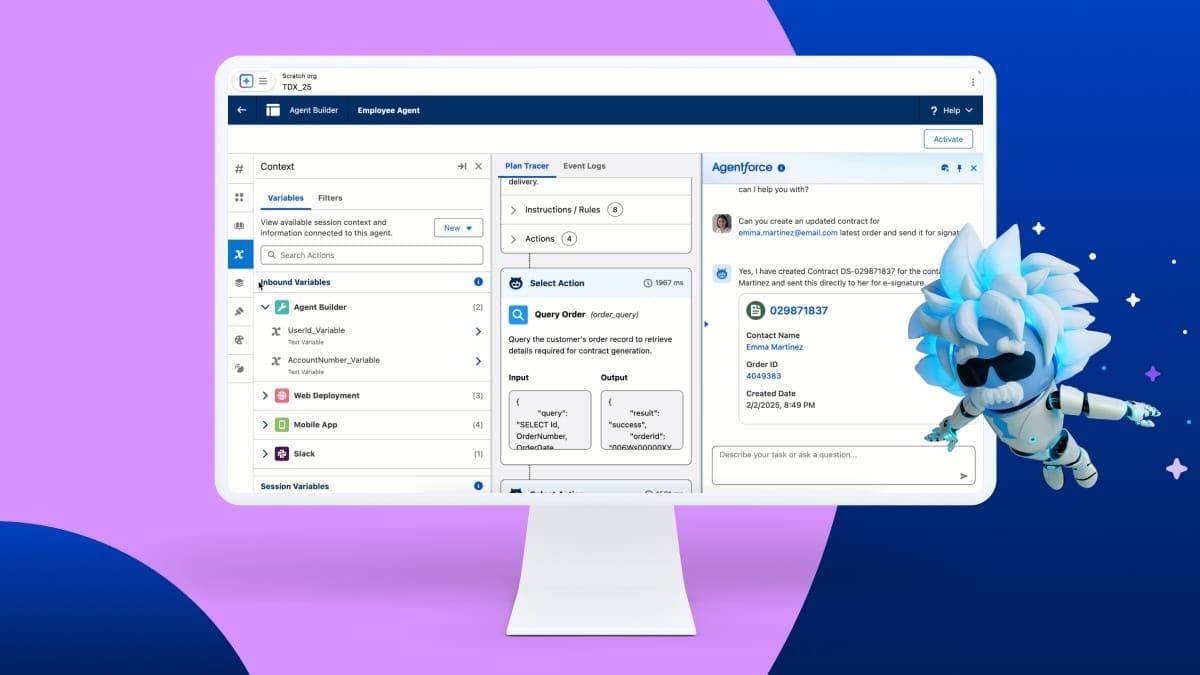
Salesforce has signed a definitive agreement to acquire Loops, an artificial intelligence (AI)-based analytics platform that monitors business indicators, detects anomalies, and aims to explain why a company’s results change. The deal will bring this technology into Tableau, Salesforce’s data analytics platform, with the goal of helping teams spot trends, prioritize decisions, and move from reports to action. The company expects to close the acquisition in early November of its 2027 fiscal year, though it hasn’t disclosed the transaction’s value.
The Loops acquisition in 20 seconds
- Salesforce has signed a definitive agreement to acquire Loops, a company specializing in AI-powered analytics.
- The platform monitors business indicators and detects trends and anomalies.
- Tableau will incorporate Loops’ technology and specialized talent once the deal closes.
- Its features can be triggered from Slack and email to communicate changes and potential opportunities.
- The closing is expected in early November of Salesforce’s 2027 fiscal year, subject to customary conditions.
Salesforce wants analytics to explain why results change
The acquisition responds to a shift in how business intelligence tools are used. For years, much of this software has focused on presenting data through charts, dashboards, and reports. The next step Salesforce is pursuing is to use artificial intelligence to interpret those numbers, identify the factors that might explain their fluctuations, and help decide what to do next.
Loops is designed to continuously monitor a business’s performance through key performance indicators, known as KPIs. The platform uses machine learning models to detect trends, flag anomalies, and explain what might be behind the changes observed.
This approach aims to reduce the manual work needed to analyze data and find the source of a variation. If an indicator changes, the tool is meant to help pinpoint the factors tied to that movement and surface useful information for deciding the next steps.
Salesforce wants to bring those capabilities into Tableau once the deal closes. The company is thus positioning an analytics approach that doesn’t just show what happened, but also helps understand the possible causes and identify where it’s worth taking action. The purchase extends a run of agentic-analytics deals at Salesforce, which previously acquired Spindle AI to bring agentic analytics into Agentforce and Waii to power natural-language data analytics.
The actual scope of this integration is still to be defined. The announcement doesn’t detail which Loops features will reach Tableau first, which AI models the platform will use, or when they’ll be available to customers.
Slack and email as entry points for the analysis
One of the standout elements of Loops is that its features can be triggered directly from Slack and email. That way, monitoring the indicators and communicating the findings don’t have to depend solely on an employee logging into an analytics dashboard.
Salesforce describes this capability through the concepts of headless and agentic analytics. The first refers to features that can be used from other systems without needing a separate interface for every operation. The second refers to using AI to carry out analysis tasks and help guide actions based on the results.
In practice, the idea is for teams to receive information about meaningful changes in their metrics and be able to weigh possible responses from the tools they already use in their day-to-day work. The intent is to bring analysis closer to business decisions, rather than leaving it confined to the professionals who prepare reports.
Mark Recher, executive vice president and general manager of Tableau, says Loops’ technology will help uncover which factors influence a company’s performance and where teams and AI agents can act.
Tom Laufer, CEO and co-founder of Loops, also stresses the idea that analytics should help organizations understand their results and decide what to do next. The integration into Salesforce and Tableau aims to extend that proposition to a much broader customer base.
For now, the company hasn’t detailed how alerts will be managed, what customization options users will have, or what mechanisms will be used to verify the explanations the AI generates. It also hasn’t announced any specific changes to Tableau’s commercial plans tied to the acquisition.
An acquisition still pending closing
Salesforce has signed a definitive agreement, but the purchase isn’t finalized yet. The company expects to close the transaction in early November of its 2027 fiscal year, provided the customary conditions are met.
Once completed, the company plans to bring Loops’ technology and its specialists into Tableau. The announcement doesn’t specify the acquisition price or offer details about the size of the team that will be integrated.
The deal adds to Salesforce’s strategy of incorporating AI capabilities into its business tools. In this case, the focus is on analytics: helping users understand changes in their indicators and connecting those findings to possible decisions.
The outcome will depend on how Loops is integrated into Tableau and which features ultimately reach customers. Until Salesforce publishes more information, the acquisition should be understood as an announced step in its strategy, not confirmation that all of Loops’ capabilities are already available in Tableau.
Frequently asked questions
What is Loops and what is it used for?
Loops is an analytics platform that uses machine learning models to monitor business indicators, detect trends and anomalies, and try to explain changes in performance.
What will Loops bring to Tableau?
Salesforce plans to integrate Loops’ technology and specialized talent into Tableau to help customers better understand their data and spot possible actions.
Will it be possible to use Loops from Slack?
The platform has capabilities that let you trigger its features from Slack and email. Salesforce hasn’t yet detailed how those integrations will work after the acquisition.
When will the Loops acquisition be completed?
Salesforce expects to close the deal in early November of its 2027 fiscal year, subject to customary conditions. The company hasn’t disclosed the transaction amount.
