
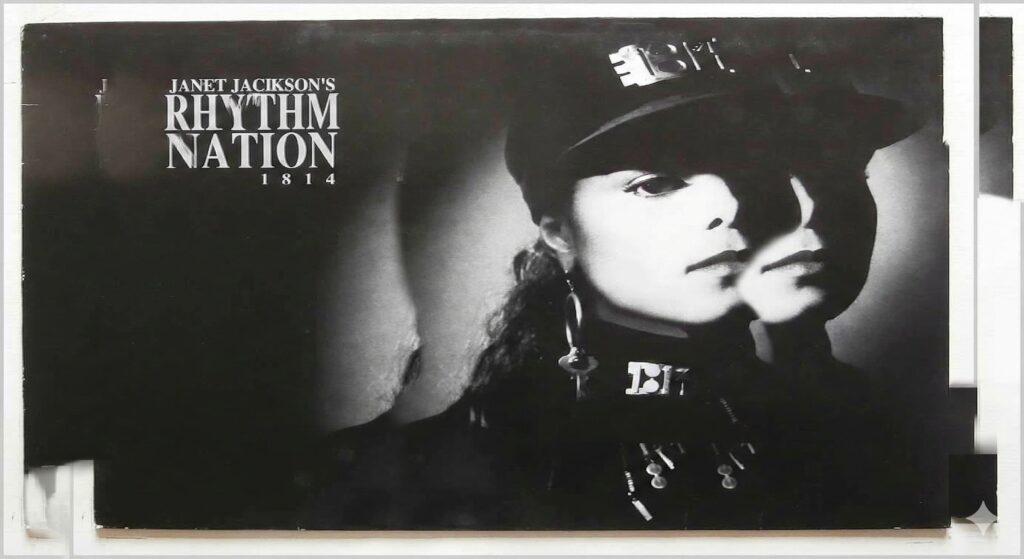
In a sector accustomed to software vulnerabilities, urgent patches, and remote exploits, CVE-2022-38392 continues to stand out as a rarity that, nonetheless, teaches a very serious lesson: sometimes, the problem isn’t in the code but in the interaction between the digital world and the physical world. In this case, the trigger wasn’t malicious software or an authentication flaw but an audio signal associated with the music video Rhythm Nation (1989), by Janet Jackson.
The story, which began as a technical anecdote highlighted by Microsoft, was eventually documented in the National Vulnerability Database (NVD) with a description uncharacteristic of a typical CVE: “certain 5,400 RPM hard drives (…) allow nearby attackers to cause a denial of service through a resonant frequency attack using the audio signal from the music video.” Put into operational language: if a vulnerable device was near the sound, it could fail the storage device and system.
A CVE with “physical access” and a real impact on availability
The NVD entry describes CVE-2022-38392 as a denial of service (DoS) vulnerability. The key is in its vector: the attack requires physical proximity, not privileges, and in terms of complexity, it’s considered relatively straightforward once the trigger is known. The entry also notes an interesting detail for such a peculiar case: a CVSS 3.1 score of 5.3 (MEDIUM), with a high impact on availability.
However, the NVD includes an important warning: due to lack of publicly available information on specific products, no clear CPE configuration is assigned. That is, the phenomenon and its effect are known, but there isn’t a comprehensive public inventory of all affected models. The description mentions a “reported product” (Seagate STDT4000100, with an associated identifier) but stops short of an exhaustive list.
How it was discovered: Windows XP support and a lab no one would want to set up
The most well-known part of this case was recounted by Raymond Chen, a Microsoft engineer, on The Old New Thing. The anecdote dates back to the era of Windows XP support, when a major manufacturer discovered that playing the Rhythm Nation music video could cause certain laptops to lock up. The surprising part came afterward: during investigation, it was observed that the problem could be replicated even on nearby devices, including competitor models, simply by exposure to the audio.
The mechanism, explained in accessible terms but grounded in physics, points to resonance: certain frequencies present in the audio coincided with a natural frequency of internal components in some 5,400 RPM mechanical hard drives. This additional vibration was enough to cause read/write errors and degrade storage operation to the point where the OS would crash. The practical result was an “acoustic denial of service”: it wouldn’t steal data, but could take down machines.
The mitigation: an audio filter that became a “permanent part”
In cybersecurity, some vulnerabilities are fixed with firmware patches, others with configuration changes, and some with hardware replacements. This case was mitigated in a surprisingly logical way: the manufacturer implemented a filter in the audio pipeline that detected and eliminated the problematic frequency during playback.
That fix gained a second life in 2025 when Chen expanded on the story: that filter (technically an Audio Processing Object, APO) would have remained present at least until Windows 7. At that stage, Microsoft mandated a rule allowing users to disable APOs (“audio enhancements”), but the vendor requested an exception, arguing that disabling the filter could cause physical damage or failures resulting from the same resonance phenomenon. According to the account, Microsoft granted the exception, and the APO continued working even when the user tried to disable audio enhancements.
This part of the case is important because it exemplifies a very current pattern: low-level mitigations that protect against hard-to-diagnose issues tend to remain invisible layers for years. Over time, they become “legacy rules” that few understand but which stay in place because removing them could reopen strange, costly risks.
A real threat today? Practically none, but the lesson remains relevant
In terms of contemporary risk, CVE-2022-38392 is more of a museum piece than an everyday threat. Most modern laptops use SSDs, which lack spinning platters and heads susceptible to resonances. Also, the specific attack pattern (physical proximity + targeted audio) doesn’t align with current dominant threat models.
But dismissing it as mere curiosity would miss the point: the case demonstrates that the attack surface isn’t limited to software. Vulnerabilities can involve vibration, temperature, acoustics, interference, or environmental conditions. For legacy devices — still present in industries with long product cycles — and environments where hardware operates at limits, this episode serves as a reminder: security and resilience depend also on physics, materials, and design considerations.
In an era where the industry discusses technological sovereignty, supply chains, and hardware risks, the “Janet Jackson CVE” functions as a memorable anecdote—easy to tell, hard to forget. And perhaps that’s what makes it so useful: it prompts us to consider threats that don’t come over the internet but through the air.
Frequently Asked Questions
What exactly is CVE-2022-38392?
A documented DoS vulnerability by NVD: certain 5,400 RPM mechanical hard drives could fail and cause system crashes through a resonance attack triggered by the audio signal from the Rhythm Nation video.
Why does NVD say the attacker must be “physically close”?
Because the described vector isn’t remote: the audio needs to impact the target device through proximity (nearby sound), making the attack dependent on the physical environment.
How was the issue practically mitigated?
According to Microsoft, with an audio pipeline filter (APO) that removed the problematic frequency during playback, and that remained active for years.
Could something similar happen with modern hardware?
The specific case relates to mechanical hard drives and particular resonances. With SSDs, the risk drops significantly, but as a concept, it reminds us that physical vectors (vibration, interference, etc.) can still affect systems.
via: Open Security