
The hosting economy is going through an uncomfortable phase: clients demand higher performance for less money, while operators grapple with aging hardware, rising electricity bills, and tight profit margins due to increased competition. In this context, “silent” migrations — those that don’t require rebuilding platforms or APIs — have become gold. And precisely that is what OpenMetal and RamNode claim to have achieved in Amsterdam: reducing infrastructure costs by 70% per month and increasing the density of virtual machines by 16 times, all without touching the orchestration layer.
According to the announcement distributed by OpenMetal, RamNode — a provider known for its VPS/VDS plans — was operating in its Dutch region with almost 40 servers, many with 8 to 10 years of age. This hardware fleet, besides increasing maintenance costs, limited growth: in its standard 8 GB VDS plan, the company could only host 4 clients per node, pushing them to add more hardware to scale.
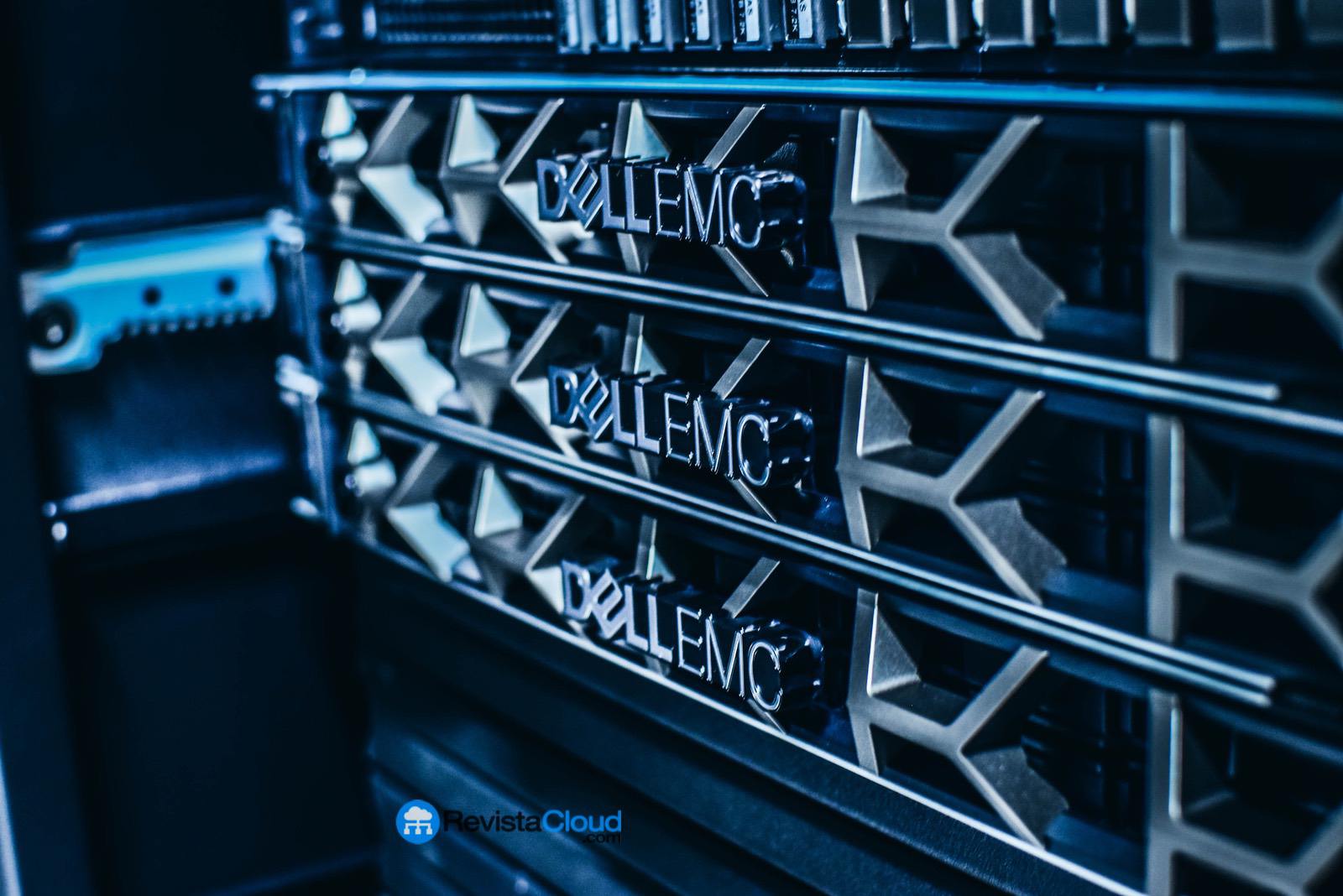
The migration, as stated by OpenMetal, was solved with 8 high-performance bare-metal servers deployed in Amsterdam, supported by NVMe Gen4 storage and modern Intel Xeon processors. RamNode’s infrastructure manager, Vanessa Vasile, summarized it with a phrase that reflects the kind of leap many operators are seeking: moving “from a room full of rented old hardware” to “a handful of NVMe servers” with greater density and efficiency.
From “more servers” to “more density”: the game-changing metric
The most relevant metric for a VPS provider isn’t just “how fast a server runs,” but how many profitable VMs it can host while maintaining performance and stability. That’s where the headline emerges: RamNode claims to have increased from 4 to 64 clients per node in the 8 GB plan, representing a 16-fold improvement in density.
This isn’t magic: it’s the result of several “unspectacular” but crucial decisions in hosting:
- Upgrading CPU (more IPC, more useful cores, better efficiency states).
- Opting for NVMe (lower latency and higher sustained IOPS).
- Increasing RAM per node to consolidate without choking the hypervisor.
- Reducing operational friction if the migration doesn’t require rewriting the platform.
Specifically, OpenMetal details that its v4 and v3 hardware include dual Intel Xeon Gold, 512 GB DDR5, and 6.4 TB NVMe Gen4 (Micron 7450 MAX).
Table: Before and after modernization (according to OpenMetal)
| Indicator | Before (NL region) | After (Amsterdam with OpenMetal) |
|---|---|---|
| Servers in operation | ~40 | 8 |
| Hardware age | 8–10 years (many nodes) | Modern “enterprise” hardware |
| Clients per node (8 GB VDS plan) | 4 | 64 |
| VM density | Baseline | x16 |
| Monthly infrastructure cost | Baseline | -70% |
| API/orchestration changes | — | “Zero modifications” |
| Reference node specs | Not detailed | 2× Xeon Gold, 512 GB DDR5, 6.4 TB NVMe Gen4 |
“Drop-in infrastructure”: modernizing without replatforming
A key point of the announcement lies not in speed but in risk. OpenMetal claims that RamNode did not have to modify its orchestration, APIs, provisioning, billing logic, or automation. Put simply: they changed the ground beneath their feet without altering the building.
This approach aligns with industry reality: many providers can’t afford a migration that involves rebuilding the stack (new panel, new workflows, network model changes, etc.). The priority is often to “replace the bottleneck” (hardware and storage) while maintaining customer experience and business operation intact.
Todd Robinson, president of OpenMetal, describes it as the advantage of combining modern hardware with a flexible approach: achieving significant gains in economy and performance without the complexity of replatforming.
The behind-the-scenes: NVMe, consolidation, and VM costs
For a non-technical reader, let’s break it down: why can a server change cut costs so dramatically?
- Fewer servers, less everything: less space, fewer ports, less maintenance, fewer parts that can fail.
- Higher performance per watt: newer generations typically deliver more work per unit of energy.
- NVMe storage: reduces latency and I/O queues; in “cheap” VPSes, storage is often the biggest bottleneck.
- More density = better margins: if a node supports more clients while meeting SLAs, the unit cost decreases.
OpenMetal adds that, following this achievement, RamNode is considering expanding to other locations, including Singapore, as part of its growth strategy.
Frequently Asked Questions
What does “VM density” mean, and why does it matter in VPS/VDS?
It’s the number of virtual machines (or clients) a physical server can host with acceptable performance. Higher density generally means lower cost per customer… as long as service quality isn’t compromised.
Does NVMe Gen4 really make a difference in a hosting server?
It’s especially noticeable with workloads involving many small operations (databases, builds, containers, control panels). The key isn’t just peak speed, but also latency and sustained performance.
Are bare metal and “cloud” mutually exclusive?
Not necessarily. Bare metal is physical dedicated hardware; on top of that, you can run virtualization, private cloud, platforms like OpenStack, Kubernetes, etc. Many providers combine both approaches.
Can an entire region be migrated without changing APIs or automation?
Yes, if the migration is approached as replacing underlying infrastructure (hardware/network/storage) while keeping the control plane, provisioning, and workflows intact. OpenMetal affirms this was the case with RamNode.
via: prnewswire