
Powerchip Semiconductor Manufacturing Corporation (PSMC) aims to move beyond being seen solely as a Taiwanese foundry focused on memories and mature processes. The company is expanding into components essential for manufacturing large artificial intelligence processors, a market in which advanced packaging has become as scarce as the chips themselves.
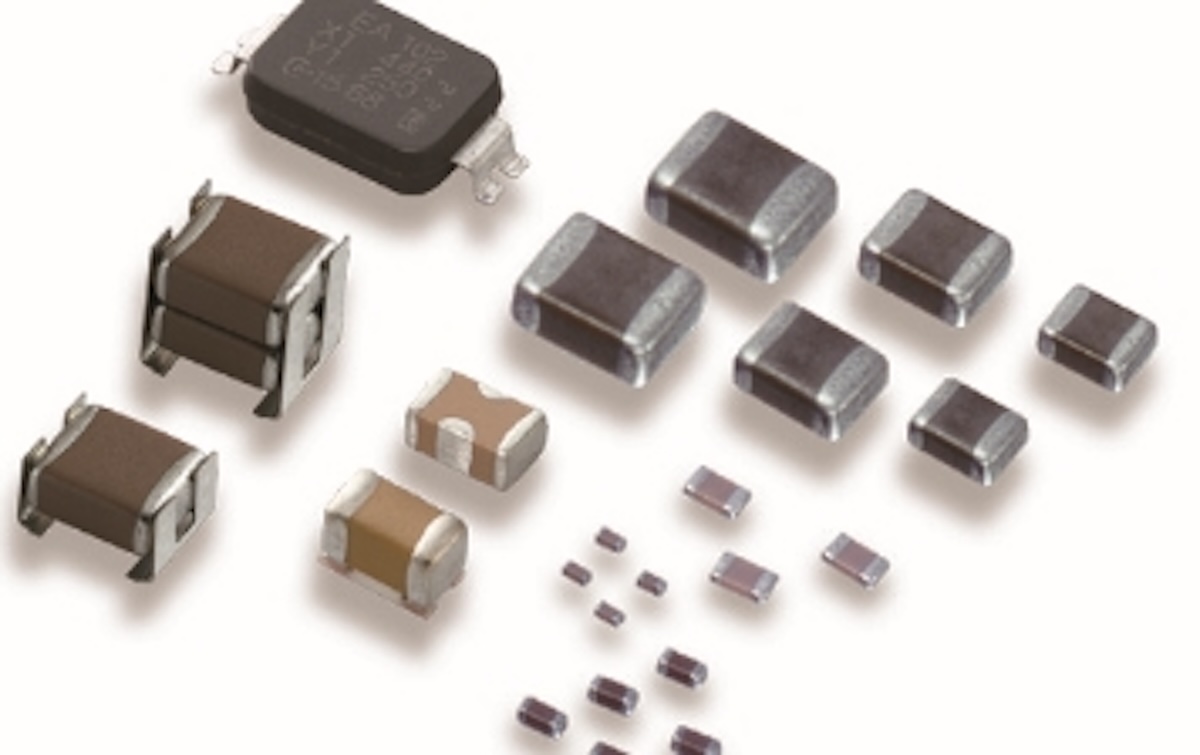
PSMC reports that its high-density silicon capacitors produced on 12-inch wafers have surpassed the certification required to be integrated into Intel’s EMIB platform. The product has entered a stable manufacturing phase, with the company aiming to increase its monthly capacity to approximately 10,000 wafers by the second half of 2027.
This is a significant leap. PSMC offers silicon capacitors on 8-inch and 12-inch wafers, but expects most growth to come from the latter. By 2027, it projects a monthly capacity of 8,000 to 10,000 12-inch wafers, while 8-inch wafer production could reach around 5,000 units.
The certification was announced by PSMC itself, which identifies Intel as a reference client, although the American manufacturer has not publicly disclosed the commercial terms of the agreement. Entry into production does not necessarily mean that all components are directly destined for Intel’s marketed processors, as EMIB is part of Intel Foundry’s packaging solutions offered to other companies as well.
Why Intel needs silicon capacitors for EMIB
EMIB, which stands for Embedded Multi-die Interconnect Bridge, enables connecting multiple chips or chiplets within the same package using small silicon bridges embedded in the substrate. Unlike other techniques, it doesn’t require placing all components on a large silicon interposer.
This architecture helps combine chips manufactured with different processes—such as compute cores, memory, accelerators, or I/O interfaces—within a single product. It also allows building larger processors without relying on a single silicon piece, which would be more costly and prone to defects.
The growth of these packages presents another challenge: powering high-energy components with rapid load changes in a stable manner. Silicon capacitors can be placed very close to chips to reduce voltage fluctuations, store small amounts of energy, and supply it when demand spikes.
Their high density permits integrating more capacity in less space compared to certain conventional capacitors. This feature is particularly valuable in AI accelerators and high-performance computing systems, where space within the package is limited and electrical stability influences frequency, power consumption, and reliability.
Intel has been expanding EMIB and combining it with its Foveros stacking technology. The company considers these systems capable of building large heterogeneous processors and connecting multiple blocks with high bandwidth. For PSMC, joining this ecosystem provides access to a segment with better margins than traditional manufacturing in mature processes.
The Taiwanese company is also developing silicon interposers, local interconnects, and direct wafer bonding techniques. Some of this capacity could serve orders related to platforms like CoWoS, whose availability continues to impact AI accelerator production.
TSMC uses a full silicon interposer in CoWoS-S, while CoWoS-L combines a redistribution layer with small local silicon links. The strong demand for these packages has created opportunities for specialized component manufacturers, although this does not necessarily mean that PSMC supplies all the products or clients using CoWoS.
PSMC groups these activities under its division 3D AI Foundry. This business still accounts for about 5% of its revenue, according to company figures, but aims to increase its share to 20% within three years.
Its catalog includes capacitors, interposers, and Wafer-on-Wafer technology, enabling the bonding and stacking of entire wafers. PSMC claims to have achieved over 90% yields in eight-layer stacking tests and is already working on twelve-level structures.
The company’s President, Frank Huang, also states that PSMC has indirectly entered NVIDIA’s supply chain through power management ICs and gallium nitride products. This is an indirect participation, and PSMC has not specified which manufacturers are incorporating those components or on which platforms.
Partnership with Micron broadens exposure to AI memories
The second part of the strategy involves an agreement with Micron. In March 2026, the American manufacturer completed the purchase of PSMC’s P5 plant in Tongluo, Taiwan, for $1.8 billion. The facility spans approximately 27,900 square meters of cleanroom space and will be adapted to produce advanced DRAM memories.
Micron expects the plant to start meaningful shipments during its fiscal year 2028. It also announced plans to build a second factory on the same site to expand production of DRAM and high-bandwidth memory HBM.
The sale has not ended the relationship between the two companies. PSMC will relocate some equipment to Hsinchu and provide services related to wafer backside finishing, known as PWF, supporting Micron’s HBM manufacturing chain.
PSMC will not produce complete HBM modules by itself. Its role will focus on certain post-processing stages after initial wafer fabrication, prior to stacking and final encapsulation. The pilot line is expected to be installed before the end of 2026, validated in 2027, with volume production planned for the fourth quarter of that year.
Both companies are also developing a first-generation 1P DRAM process. PSMC plans to complete equipment installation by the first quarter of 2027, conduct pilot production in the first half of 2028, and reach volume manufacturing in the latter half or during the second half of that year.
This collaboration allows Micron to increase capacity in Taiwan more swiftly than building a factory from scratch. For PSMC, it means retaining part of the business associated with the sold plant, progressing to more advanced memory processes, and strengthening its position within the HBM supply chain.
DRAM price increases improve PSMC’s results
The company’s traditional memory business continues to support its financials. In Q2 2026, it accounted for over half of its sales, aided by higher average prices and a slight increase in shipments.
PSMC reported quarterly revenues of 17.291 billion Taiwanese dollars, a 27% increase over the previous quarter. Gross margin rose from around 10% to 28%, while net profit reached 3.291 billion Taiwanese dollars. Earnings per share stood at NT$0.76.
In July, the company raised the manufacturing price of DRAM wafers by 45%. Since the production cycle takes several months, it expects a significant portion of that increase to be reflected in revenues starting November.
It also increased wafer foundry prices by 10-15% for 8-inch and 12-inch wafers. PSMC attributes this decision to growing orders from AI servers, automotive electronics, energy storage, power transistors, and power management circuits.
Management anticipates that DRAM shortage could persist into 2027, as major cloud service providers are reserving capacity several years in advance. However, this outlook depends on demand trends, investments by Samsung, SK Hynix, and Micron, and the potential reactivation of production lines for less advanced memories.
Frank Huang forecasts that some Taiwanese mature-process foundries might surpass 40% gross margins in 2027. This is an optimistic estimate and not a sector-wide consensus. Capacity increases, demand corrections, or a new price war could quickly alter this outlook.
PSMC’s evolution demonstrates how the AI boom is extending beyond GPUs. Capacitors, interposers, power chips, DRAM, and wafer finishing services now play a pivotal role within a manufacturing chain that must expand capacity at multiple points simultaneously.
Frequently Asked Questions
What has Intel certified at PSMC?
PSMC states that its high-density silicon capacitors produced on 12-inch wafers have received the necessary certification for use in the EMIB packaging platform.
What capacity will PSMC have in 2027?
The company forecasts achieving between 8,000 and 10,000 monthly 12-inch wafer capacities of silicon capacitors and about 5,000 8-inch wafers.
Will PSMC manufacture HBM memory for Micron?
No, it will not produce the full product. Its role will be providing PWF services related to later stages of wafer processing within Micron’s HBM manufacturing chain.
When will 1P DRAM process production start?
PSMC expects to install equipment in the first quarter of 2027, conduct pilot testing in the first half of 2028, and begin volume production in the second half or during the latter part of that year.
Sources:
- Central News Agency, PSMC results and strategy as of 07/14/2026.
- PSMC, sale closure of P5 plant and creation of the 3D AI Foundry division.
- Intel Foundry, technical documentation on EMIB and advanced packaging.
- Micron, completion of Tongluo plant acquisition.
- TSMC, technical documentation of CoWoS-S, CoWoS-L, and CoWoS-R platforms.
- Economic Daily News, capacitor capacity, 1P process, and PWF collaboration.
