
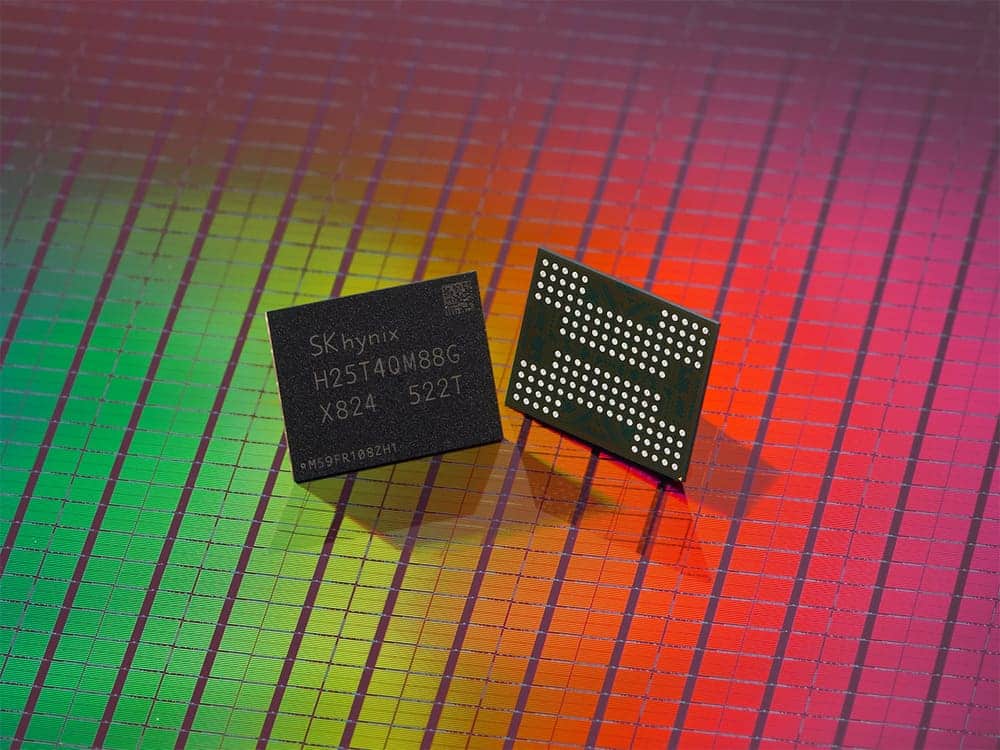
The rising cost of NAND flash—the memory that powers SSDs, smartphones, consoles, and much of modern electronics—is beginning to show visible effects in the supply chain. Phison Electronics, one of the major providers of controllers and storage solutions, has notified its customers that it will review payment terms and negotiate prepayments “on a case-by-case basis” to ensure supply in an increasingly tense market.
The decision comes amid a surge in prices. According to information published by DIGITIMES, NAND costs have shot up as much as 500% in certain segments, amidst a tight supply and strong demand. DIGITIMES summarizes the core issue: the sharp increase in NAND prices has abruptly increased Phison’s financing needs, leading the company to seek stability in inventory access and reduce the risk of being shut out of allocations.
Why is a controller supplier requesting prepayments?
In the hardware industry’s day-to-day operations, Phison isn’t a “consumer” brand like a typical SSD manufacturer, but it’s a central player: it supplies NAND controllers, firmware, and reference platforms used in many storage products. When NAND prices rise, the challenge isn’t just the final chip cost but also working capital: buying today to deliver tomorrow.
In a normal market, payment terms of 30, 60, or 90 days help ease the tension. But in a market with rapid price increases and limited supply, that window becomes a threat: inventory costs rise, but payments are delayed. Prepayment (partial or full) transforms this pressure into a shared risk with the customer—buyers secure priority supply, and suppliers reduce financial gaps caused by volatile raw material prices.
The root cause: AI is eating memory
This issue is bigger than Phison alone. The NAND market has been under pressure for months due to the surge of Artificial Intelligence and the redesign of data centers. It’s not just about training models but supporting them in production: large-scale inference accelerates storage needs and dataset movement. Meanwhile, companies are fast-tracking the shift from HDDs to SSDs in environments where latency and energy consumption are increasingly critical.
In this context, Phison’s CEO has publicly described a sustained tension: prices have more than doubled in several segments since mid-2025, and some industry players have already committed much of their 2026 production capacity. Sector analyses also point to an “upcycle” in NAND since 2025, with notable price hikes across categories driven by extraordinary demand from AI infrastructure.
The alarming symptom for buyers: “seller’s market” conditions
It’s not uncommon for suppliers to request prepayments, but it’s a clear sign that the balance of power has shifted towards manufacturers and intermediaries with allocation control. The market moves into a “seller’s mode”: those with capacity set the rules.
Recent reports have highlighted even more severe warnings about the flash memory situation: claims that some suppliers are demanding long-term advance payments to secure supply, and extreme cases where specific components are skyrocketing in price multiple times. The takeaway for buyers is clear: in memory, the risk has shifted from just price to simply not being able to buy.
What this could mean for businesses and consumers
Phison’s decision indicates a shift that usually arrives with delay but ultimately does:
- SSD and PC manufacturers: more expensive NAND and stricter payment conditions pressure margins and may lead to higher prices or reduced specifications (less capacity for the same retail price).
- Businesses and data centers: even if volume negotiations are possible, they now compete for allocations. In AI and analytics projects, storage costs could climb again as demand grows.
- Consumers (mobiles, consoles, laptops): impacts tend to be gradual but persistent. If NAND remains tight, entry-level models may be the first to cut capacity or see increases in price.
The irony is that end users often blame SSD or laptop manufacturers, but the movement starts several steps upstream — contracts, inventories, and financing in the flash supply chain.
A warning for 2026: storage is becoming strategic again
For years, storage seemed “settled” thanks to economies of scale and density improvements. Now, AI has changed the landscape. NAND is returning to being a strategic resource, not just regarding cost but also availability. When a company like Phison adjusts its commercial policy toward prepayments, the message isn’t just for its direct customers: it’s a warning to the entire industry.
By 2026, the question will shift from “How much does an SSD cost?” to “Who guarantees supply and under what conditions?” Increasingly, the answer depends on long-term agreements, reserved capacity, and liquidity. These factors inevitably influence the consumer price as well.
Frequently Asked Questions
Why is Phison requesting prepayments from some NAND controller clients?
Because rising NAND prices increase their financing needs, and the company seeks to ensure stable supply by negotiating prepayments on a case-by-case basis.
What does it mean that NAND prices have “gone up 500%”?
According to industry sources, certain NAND segments or categories have experienced extraordinary price increases; it doesn’t necessarily mean all segments have risen equally.
Will SSD prices increase in 2026 because of this?
It’s possible: if NAND continues to become more expensive and supply remains tight, manufacturers often pass on part of the cost to SSDs and flash-based devices.
Which sectors feel NAND shortages sooner: consumer or enterprise?
Typically, enterprise and data centers feel the impact first due to volume and contractual commitments, but when allocation tightens, it eventually affects mobile phones, laptops, and consumer electronics.
via: Digitimes