

Documenting cabling and network assets is often an invisible task… until something goes wrong. In data centers, telecom rooms, and manufacturing plants, a poorly identified patch cord or incomplete record can turn a minor incident into hours of searching, checks, and cross-calls. Against this backdrop, Panduit has announced the launch of RapidID Pro and RapidID Pro+, an evolution of their automated network mapping and documentation system aimed at advanced diagnostics, traceability, and asset management in growing infrastructures.
The company, specialized in electrical infrastructure and connectivity solutions, focuses on a recurring problem: increasingly dense networks with more devices, more changes, and greater pressure to reduce intervention times. In this context, “having the map” ceases to be merely an organizational issue and becomes an operational element: speeding up workflows, reducing errors, and providing consistency when multiple technicians or teams work in parallel.
From manual records to rack labeling
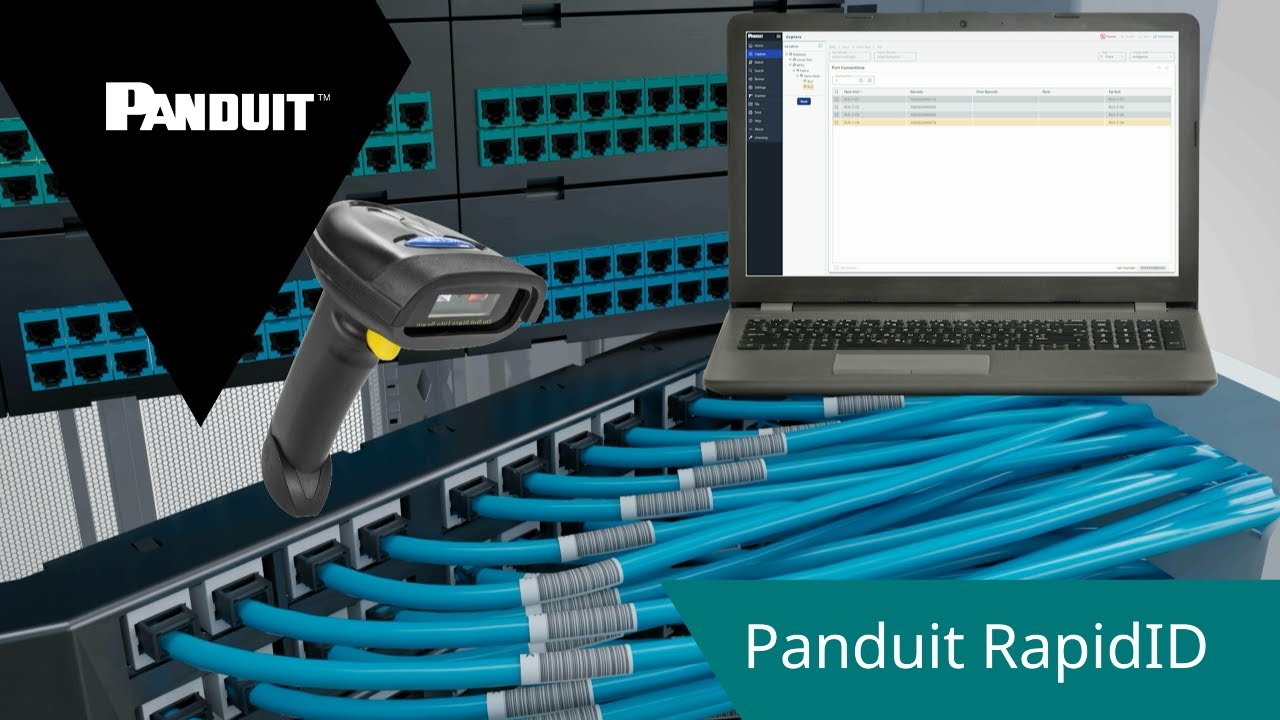
Panduit’s announcement presents RapidID Pro as an extension of RapidID Desktop. The key is that the system adds unique identifiers for devices and assets, aiming to improve documentation and facilitate “navigation” through the network structure. In practical terms, this means transforming the inventory from a static list into a more usable daily reference: what’s there, where it is, and how it relates within the cabling and the plant.
One of the most visible changes for technical staff is the ability to print labels directly in the field for cables, devices, and assets. In environments where work is time-sensitive—migrations, expansions, switch replacements, or scheduled interventions—being able to generate on-site labels avoids relying on separate processes (preparation in the office, pre-printing, transporting sheets, re-labeling later). The promise is straightforward: less friction during execution, and by extension, fewer inconsistencies between installed infrastructure and documentation.
Previously, Panduit argued in communications about RapidID that cable documentation is a typical source of costs and errors, and that automating it helps reduce risks of downtime. With Pro, the company extends this philosophy to networks that no longer only need to “know where each cable goes,” but also track assets and support troubleshooting with greater detail.
Pro+ and the leap to collaborative environments: central server and multi-user support
While RapidID Pro aims to enhance operational documentation and labeling, RapidID Pro+ adds a feature designed for organizations with multiple technicians, locations, or shifts: multi-user support with a central server solution.
In practice, this type of architecture generally seeks three main goals:
- Accelerate processes by consolidating data and workflows in a single point.
- Reduce errors related to duplicates, different versions of documentation, or inconsistent practices.
- Improve consistency when different individuals document changes at different times.
Panduit frames Pro+ within this line: a system that not only registers data but also maintains a more comprehensive and coherent “view” of the environment as the network grows and evolves.
A commitment to “documented infrastructure” as an operational advantage
In the announcement, Nathan Gleghorn, Panduit’s Senior Product Manager, summarizes the approach as practical “improvements” for network documentation, highlighting on-site label printing and the capturing of devices and assets, along with the benefits of a server in terms of speed, error reduction, and consistency.
The market perspective is clear: in modern networks, value is not just in deploying more capacity but in operating with less uncertainty. When cabling and assets are well identified, maintenance changes: locating issues takes less time, audits are simpler, and intervention cycles are shortened. Most importantly, it addresses a silent but common problem: the documentation falling behind what is actually installed.
With headquarters in Tinley Park, Illinois, and a global presence since 1955, Panduit emphasizes its international reach and R&D focus, presenting RapidID Pro and Pro+ as part of an innovation path towards “future-ready” network infrastructures. Ultimately, the message is that documentation ceases to be a “bonus” and becomes a key element of productivity and operational continuity.
Frequently Asked Questions
What’s the difference between RapidID Desktop, RapidID Pro, and RapidID Pro+?
RapidID Pro builds upon RapidID Desktop by adding improved documentation through unique identifiers for devices and assets, and enabling on-site label printing. RapidID Pro+ further supports multiple users via a central server.
Why is printing cables and asset labels directly in the field useful?
Field printing aims to reduce friction during installations and changes: it allows labeling at the moment of intervention, helping keep physical deployment aligned with documentation, especially during expansions, replacements, or maintenance.
Which networks benefit most from RapidID Pro/Pro+?
According to its focus, it’s suited for growing networks that require advanced diagnostics, traceability, and asset tracking, where manual documentation can quickly become outdated.
What does a central server add to network documentation?
A central server is designed for environments with multiple users: it helps unify data, reduce inconsistencies, and accelerate processes, avoiding duplicate or conflicting inventory and cabling records.