
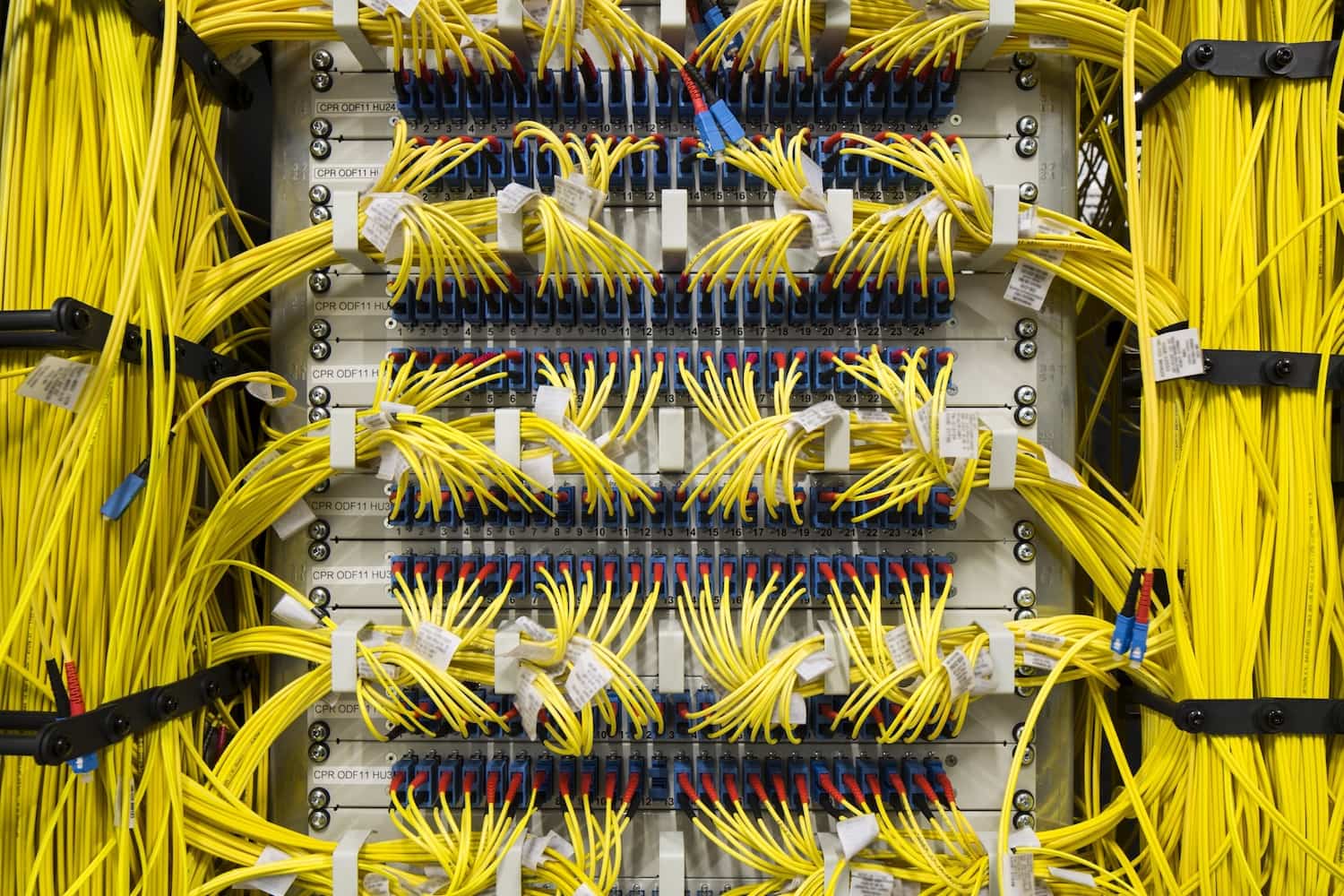
The modernization of many critical communication networks has been stumbling over the same obstacle for years: legacy cabling. In hospitals, factories, hotels, transportation infrastructures, or secure buildings, replacing old telephone copper wiring with a modern Ethernet network isn’t always feasible due to cost, technical complexity, or simply because it would require construction work that no one wants—no one wants to open walls or conduits. Against this backdrop, Alcatel-Lucent Enterprise has announced support for Single Pair Ethernet (SPE) for its OmniPCX Enterprise Purple communication platform—a decision aimed directly at this longstanding issue: how to migrate to Voice over IP and IoT without rebuilding the entire physical infrastructure.
ALE’s proposal centers around the IEEE 802.3cg (10BASE-T1L) standard, which defines 10 Mbps Ethernet over a single twisted pair and supports long-range links. IEEE describes it as an extension of Ethernet for operation over a single conductor pair, and ALE’s documentation emphasizes that this technology can reach up to 1,000 meters and carry IP data along with remote power over the same copper pair. For some markets, it’s a simple yet powerful idea: reuse existing telephone cabling as a foundation for new IP communications.
A move designed for environments where old wiring dominates over software
The significance of the announcement isn’t just in SPE’s novelty, which has been making strides in automation and industry for years, but in its integration into a critical enterprise communications platform. The Ethernet Alliance advocates that Single Pair Ethernet is helping to integrate OT networks into continuous Ethernet environments within industrial automation and buildings. ALE aims to bring that logic into corporate telephony and critical mobility: not just industrial sensors and edge devices, but also IP-DECT base stations, IP/SIP phones, and intercoms supported by legacy cabling.
The compatibility aligns with the architecture of OXE Purple. According to its official technical sheet, OmniPCX Enterprise Purple can operate in a 100% IP/SIP architecture or a hybrid one that includes IP, SIP, digital, analog, and DECT, plus rack modules for multimedia services and TDM connectivity. In other words, it’s not designed solely for fully renovated environments but also for long transition scenarios where multiple technology generations coexist and conserving previous investments remains a key project requirement.
That’s probably the most important aspect of this announcement. Many organizations prefer not to have a “clean break” between old and new because such migrations are often expensive, risky, and difficult to justify in 24/7 operational facilities. ALE presents SPE as a transitional pathway: retain part of the existing copper, connect IP devices over that medium, and gradually move toward a more modern network without a complete replacement on day one.
What changes technically with SPE in OXE Purple
The commercial solution that embodies this strategy is the 10BT-SPE Adapter, which ALE already markets as a 10BASE-T1L/10BASE-T converter—bringing Single Pair Ethernet to existing buildings. According to its datasheet, this adapter allows an IP device—such as an IP-DECT base station or IP phone—to connect to the network and leverage already deployed single-pair cabling. For larger installations, ALE also offers a SPE16-XL card for the OXE XL-Rack chassis, capable of supporting up to 16 10BT-SPE adapters on the communication server side.
From a technical perspective, SPE doesn’t match the speeds of a modern office Ethernet network, but it provides enough capacity for many voice and mobility applications. ALE states that 10BASE-T1L offers 10 Mbps full duplex, which is more than sufficient for IP telephony, while extending reach well beyond the typical 100 meters limit of traditional Ethernet. Its documentation provides concrete examples in hospitals, hotels, or transportation infrastructure where distances between technical rooms and building extremities range from 400 to 800 meters, complicating use of standard Ethernet without repeaters or intermediate enclosures.
The practical advantage is evident in various sectors. In healthcare, ALE emphasizes that DECT remains a critical technology for staff mobility, and migration to IP-DECT can be challenging in long, old buildings. In transportation, deploying phones or intercoms over large distances without multiplying technical rooms is highlighted. In industry, the ability to connect sensors, IIoT devices, and specialized terminals on the same physical infrastructure—also in zones with ATEX restrictions—is another argument, all without increasing infrastructure complexity.
Less construction, more continuity… and an opportunity for IT and OT
ALE’s message isn’t just about “saving cabling.” The company advocates for an architecture where the voice network can remain physically separate from the corporate LAN, offering an advantage in maintaining service continuity in case of IT outages or cybersecurity incidents. Its datasheet notes that this separation decreases the risk of voice disruptions during cyberattacks and helps maintain resilient critical communication infrastructure. In sectors like hospitals, transportation, energy, or manufacturing, this argument weighs almost as heavily as civil works savings.
There’s also a broader perspective. Single Pair Ethernet has been promoted as a common physical layer to bring IT and OT closer together, and ALE leverages this to suggest that those starting today by repurposing copper for migrating DECT or IP telephony are, in fact, laying the groundwork for broader connectivity at the operational edge. While not a full market revolution, this is an interesting signal: modernizing critical voice isn’t just about software, SIP, or hybrid cloud, but also about reclaiming physical infrastructures that seemed destined to be left behind in the IP era.
For Alcatel-Lucent Enterprise, the approach makes sense. Instead of pushing for a complete migration that many clients can’t undertake immediately, they propose a middle-ground: leverage existing copper, extend its value, and use it as a bridge to IP communications and IoT connectivity. At a time when much of the tech industry talks about rapid renewal, the idea of evolving without ripping everything out might be, precisely, the most sensible aspect of this announcement.
Frequently Asked Questions
What is Single Pair Ethernet, and why does it matter in enterprise telephony?
It’s a variation of Ethernet that allows IP data to be transmitted over a single twisted pair. In the case of 10BASE-T1L, defined in IEEE 802.3cg, it’s designed for long distances and can reuse legacy copper cabling. This makes it useful for migrating critical telephony and mobility systems without rewiring entire buildings.
What exactly has Alcatel-Lucent Enterprise announced for OXE Purple?
ALE has added support for SPE to OmniPCX Enterprise Purple and is marketing the 10BT-SPE Adapter. Additionally, they document a SPE16-XL card for larger deployments within the OXE XL-Rack chassis.
In which sectors does this technology make the most sense?
ALE’s documentation points especially to healthcare, transportation, industrial, energy, oil & gas, hotels, secure buildings, and environments with ATEX restrictions—scenarios where cabling is costly or complex, and where distances surpass the limits of traditional Ethernet.
Does SPE replace a modern office Ethernet network?
Not exactly. Its main value isn’t maximum speed but bringing IP connectivity and remote power over long distances on pre-existing copper. It’s particularly useful for migrations, industrial edge setups, and critical communications where reuse of infrastructure is more important than extreme bandwidth.
via: al-enterprise
