
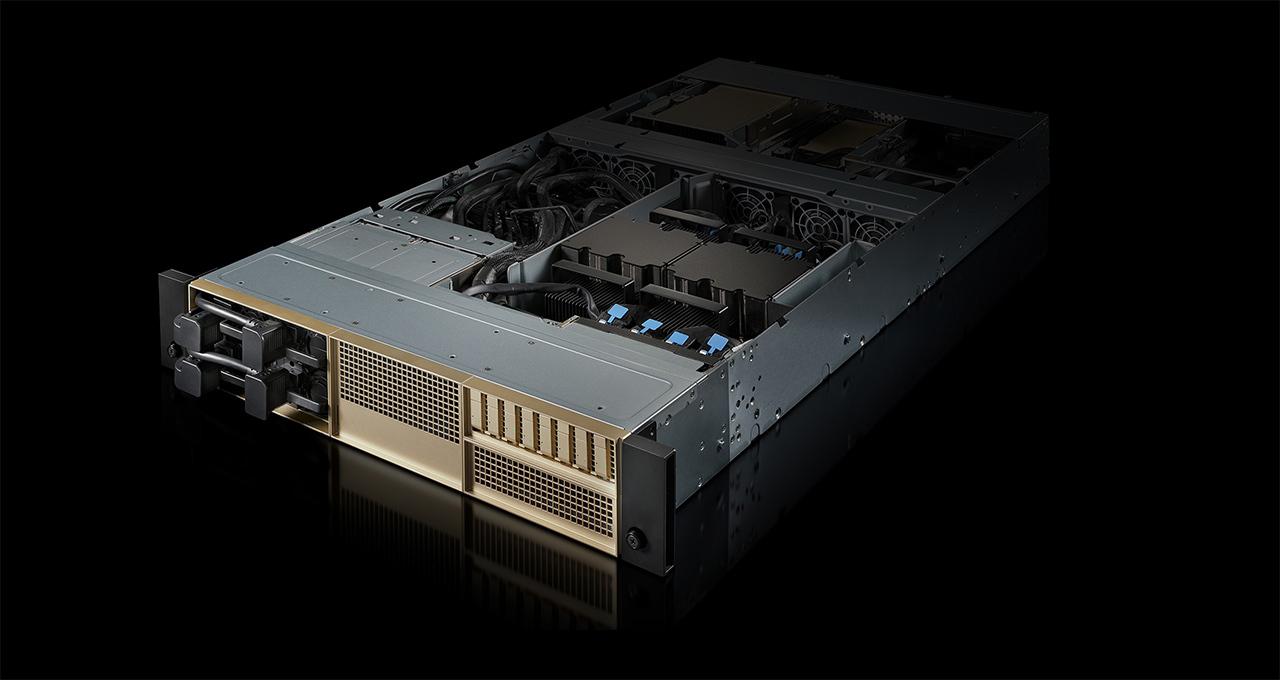
NVIDIA Vera has delivered between 46% and 48% more performance than a 96-core Intel Xeon 6 in a TPC-H benchmark run with DuckDB, despite using only 88 cores. The test, carried out by the DuckDB and NVIDIA teams, measures a very different kind of workload from the usual AI benchmarks: analytical queries over large volumes of data.
NVIDIA Vera in 30 seconds
- Vera, with 88 cores, scored 2,482,589.73 points with DuckDB 1.5.5, versus 1,673,422.48 for the 96-core Xeon 6.
- With DuckDB 2.0.0-alpha, Vera reached 3,073,292.99 points and the Xeon scored 2,109,782.19.
- Both systems used 768 GB of memory, more than 3 TB of NVMe storage, and Ubuntu 26.04.
- The test used TPC-H SF1,000, geared toward complex queries and large-scale data analysis.
- DuckDB 2.0.0-alpha improved results by 24% to 26% over version 1.5.5.
The result comes from a benchmark DuckDB published on September 15, 2026. The experiment pitted a system based on a 96-core Intel Xeon 6 against an 88-core NVIDIA Vera platform. For the comparison, both machines used 768 GB of memory and an NVMe SSD of more than 3 TB, while the Vera system was limited to a single socket of a dual-socket machine.
The difference doesn’t come solely from the core count. The Xeon used in the test relied on Hyper-Threading, and DuckDB was configured with 96 threads. Vera used Spatial Multithreading, NVIDIA’s multithreading technology for its cores, with 88 threads assigned to DuckDB. The other key parameters — memory, storage, and operating system — were kept aligned.
Vera keeps its lead with both DuckDB versions
The benchmark used TPC-H with a scale factor of SF1,000. TPC-H is a decision-support test that combines business queries over large datasets with highly complex operations. Its QphH@SF metric reflects the ability to process queries under different load conditions.
The median results were as follows:
With DuckDB 1.5.5, Vera posted a median of 2,482,589.73 points, versus 1,673,422.48 for the Xeon 6 — a difference of roughly 48.4%. On version 2.0.0-alpha, the results were 3,073,292.99 points for Vera and 2,109,782.19 for Intel, an advantage of roughly 45.7%.
DuckDB sums up the difference as a 46% to 48% margin in Vera’s favor on TPC-H SF1,000. The figure depends on which version of the database engine was used, so the result doesn’t represent a fixed difference between the two processors for every application.
The jump between DuckDB versions also matters. On the Xeon 6, moving from version 1.5.5 to 2.0.0-alpha raised the score by roughly 26.1%. On Vera, the increase was around 23.8%. DuckDB attributes the improvement to optimizations built into the engine’s upcoming generation, particularly useful for complex workloads like TPC-H.
Version 2.0.0 still appears in the experiment as an alpha release. So those results shouldn’t be read as the definitive measurement of a stable version that’s already available to all users.
A database test, not an AI benchmark
The experiment’s significance also lies in the type of workload. Vera was designed as part of NVIDIA’s strategy to pair its computing platforms with AI workloads, but the TPC-H test used by DuckDB isn’t a model training or inference benchmark.
The benchmark focuses on data queries and analysis. That makes it possible to see how the processor handles a conventional enterprise database workload, a different category from the tests that usually accompany AI hardware launches — the same territory covered by NVIDIA’s recent Vera Rubin NVL72 performance results.
The setup DuckDB used also places some limits on how to interpret the results. The Vera system physically had two sockets, but the test restricted DuckDB to one. The result therefore corresponds to a single Vera socket with 88 cores, not the performance of the full dual-socket machine.
It’s also a single benchmark. TPC-H can be representative of certain analytical workloads, but its results can’t automatically be extrapolated to transactional databases, general-purpose applications, other SQL engines, or any other x86 processor.
DuckDB doesn’t present the result as a universal comparison between architectures, either. The team points to two specific conclusions from the experiment: Vera achieved roughly 1.5 times the performance of the reference x86 system across both versions tested, and DuckDB 2.0.0-alpha achieved roughly 1.25 times the score of version 1.5.5 on both platforms.
DuckDB’s next announced step is to publish more details about the test. That data could help clarify which specific features of the processor, the compiler, or the engine itself contribute to the difference observed in TPC-H.
For DuckDB users, there’s also a takeaway that’s independent of the processor: part of the improvement comes from the software itself. DuckDB 2.0.0-alpha’s optimizations raised performance on both systems compared, even though Vera kept a wide lead across both versions used in the test.
FAQ
How many cores does the NVIDIA Vera tested by DuckDB have?
The NVIDIA Vera system used in the test had 88 cores, and DuckDB was configured to use 88 threads. The reference system used a 96-core Intel Xeon 6 with Hyper-Threading.
What performance did NVIDIA Vera achieve on TPC-H?
Vera posted a median score of 2,482,589.73 with DuckDB 1.5.5 and 3,073,292.99 with DuckDB 2.0.0-alpha.
What was the difference compared with the Intel Xeon 6?
With DuckDB 1.5.5, Vera beat the Xeon 6 by roughly 48%. With DuckDB 2.0.0-alpha, the advantage was roughly 46%.
Does the test measure AI performance?
No. TPC-H is a benchmark geared toward analytical queries and decision-support systems. DuckDB’s test evaluates a database workload, not AI training or inference.
via: duckdb.org
