
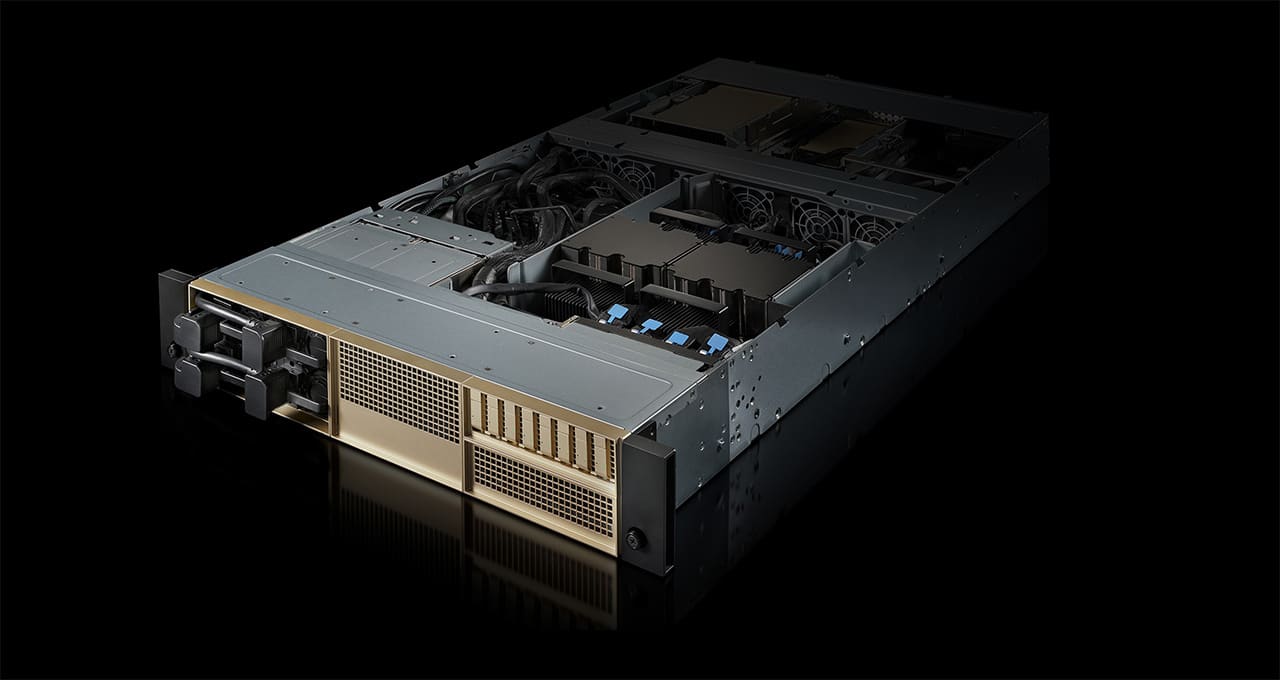
NVIDIA has begun delivering the first systems based on Vera, their new CPU designed for agentic artificial intelligence workloads. The company assures that the initial units have already reached Anthropic, OpenAI, SpaceXAI, and Oracle Cloud Infrastructure — a move that marks Vera’s transition from a technical announcement to being in the hands of strategic clients. This is not just another CPU in the data center catalog: NVIDIA aims to make it a central piece of the so-called AI factories — the infrastructures where large-scale AI models are trained, run, and coordinated.
The news comes at a time when focus often centers on GPUs, but agentic AI is shifting the workload distribution within data centers. An agent isn’t limited to generating a response and stopping. It can look up information, launch tools, execute code, query databases, open isolated environments, analyze documents, coordinate multiple steps, and maintain context over long sessions. Much of this work doesn’t happen inside the GPU but around it. That’s where NVIDIA wants Vera to position itself.
Why a CPU is once again strategic in AI
Over the past few years, the AI narrative has revolved around GPUs. NVIDIA has dominated this market with its accelerators, software, and developer ecosystem. But as models start acting as agents, the bottleneck isn’t just matrix calculations. It also appears in orchestration, memory management, tool calls, code execution, sandbox environments, data retrieval, and data movement between processes.
Vera is designed for such workloads. According to NVIDIA, it features 88 Olympus cores designed by the company itself, 1.2 TB/s of memory bandwidth, and performance per core up to 50% higher under load. The CPU supports Armv9.2 and enables 176 threads via NVIDIA Spatial Multithreading — a technique that distributes physical core resources rather than just switching threads over time.
The company also highlights support for up to 1.5 TB of LPDDR5X memory, second-generation NVLink-C2C connectivity with 1.8 TB/s of coherent bandwidth, and Confidential Computing capabilities. In practical terms, NVIDIA envisions Vera not simply as a host processor partnering with a GPU, but as a CPU capable of supporting thousands of parallel software environments and fueling the data pipelines of accelerated systems.
| NVIDIA Vera Feature | Announced Data |
|---|---|
| Cores | 88 Olympus |
| Threads | 176 with Spatial Multithreading |
| Architecture | Armv9.2 |
| Memory Bandwidth | Up to 1.2 TB/s |
| Memory Capacity | Up to 1.5 TB |
| NVLink-C2C | Up to 1.8 TB/s |
| Performance per Core | Up to 50% under load |
| Compatibility | Standalone systems, Vera Rubin NVL72, HGX Rubin platforms |
Corporate insight is clear. If agents are going to generate more calls, more code, and more data queries, the CPU ceases to be a secondary component. In many agentic workloads, the GPU accelerates the model, but the CPU organizes the work that enables that model to function.
Deliveries to AI labs and cloud providers
The initial rollout carries symbolic weight. NVIDIA has not announced broad, mass-market availability but rather deliveries to some of the leading AI innovators: Anthropic, OpenAI, SpaceXAI, and Oracle Cloud Infrastructure. Ian Buck, NVIDIA’s Vice President of Hyperscale and High-Performance Computing, personally delivered the first systems, according to the company’s official blog.
At Anthropic, Vera is presented as a promising piece for agentic workloads. For OpenAI, the delivery relates to fueling new workloads. At SpaceXAI, NVIDIA states Vera is being evaluated for reinforcement learning and agent-based simulation pipelines. At Oracle Cloud Infrastructure, the message is even more ambitious: OCI plans to deploy hundreds of thousands of NVIDIA Vera CPUs starting in 2026, aiming to provide large-scale production-grade agentic infrastructure.
This is significant because it situates Vera not only in research labs but also in the cloud. If OCI executes on these plans, NVIDIA’s CPU could become a new option for enterprises wanting to validate agents, run reasoning workloads, or deploy AI services built for long-duration tasks and intensive tool usage.
NVIDIA places Vera within a broader co-design strategy alongside Rubin GPUs, BlueField-4 DPUs, Spectrum-X, and the MGX architecture. Besides functioning as an independent CPU, Vera will serve as the host processor in Vera Rubin NVL72, connecting with Rubin GPUs via NVLink-C2C. In these systems, CPU and GPU share a unified memory architecture to better utilize accelerated computing.
Agentic AI demands different infrastructure
The arrival of Vera confirms a trend already visible in recent NVIDIA and Dell announcements: enterprise AI is moving beyond just GPU counts. Real performance will depend on coordination between CPUs, GPUs, memory, networks, storage, security, and orchestration software. An agent that writes code, tests, queries documentation, and retries multiple times needs an infrastructure distinct from that of a simple chatbot.
This explains NVIDIA’s emphasis on tasks such as tool-calling, sandboxing, long-context recovery, analytics, KV cache management, and reinforcement learning. These are less glamorous than training large models but can determine the efficiency of an AI factory. If the GPU has to wait for the CPU to prepare data, orchestrate tools, or move memory, the overall cost per result increases.
Energy efficiency is another aspect. NVIDIA claims Vera can handle orchestration, data movement, and control with twice the energy efficiency of traditional infrastructures. This is a manufacturer’s assertion that needs validation through independent benchmarks and real workloads, but it highlights a central sector concern: AI is consuming more power, and even small improvements in efficiency can reduce operational costs and ease pressure on data centers.
For hyperscalers, such a CPU could integrate into managed AI services, agent platforms, reinforcement learning setups, data analysis environments, and complex architectures with models, tools, and databases coexisting. For enterprises, the key question will be whether Vera appears integrated in commercial servers, racks, and cloud services at a reasonable price and availability.
The move also carries a competitive message. NVIDIA isn’t limiting itself to accelerators anymore. With Vera, it extends its presence into data center CPUs — traditionally a territory dominated by Intel and AMD — not from general-purpose computing but from a specific angle: agentic AI. This specialization could be an advantage if the market adopts agents widely, but it also depends on these promises translating into real production deployments and not just pilot projects.
Vera does not diminish the importance of GPUs. On the contrary, it reinforces the idea that advanced AI systems will become increasingly integrated. The CPU feeds, orchestrates, and sustains; the GPU accelerates calculations; the network connects; storage provides data; and security layers protect models, context, and execution. Data centers are evolving into machines designed to produce intelligence continually, rather than just a sum of components.
The delivery of the first systems to OpenAI, Anthropic, SpaceXAI, and Oracle alone isn’t a guarantee of commercial success for Vera. But it clearly shows where NVIDIA aims with its business: shifting from the GPU as a star product to an AI factory platform — a comprehensive ecosystem. In the age of agents, the chip that manages the workflow may be nearly as important as the one doing the computing.
Frequently Asked Questions
What is NVIDIA Vera?
NVIDIA Vera is NVIDIA’s first custom CPU, specifically designed for agentic AI, reinforcement learning, tool orchestration, sandboxes, analytics, and data flows in AI factories.
Why is Vera important if AI mostly relies on GPUs?
Because AI agents depend not only on model calculations. They also execute code, call tools, manage context, move data, and coordinate workflows — areas where the CPU plays an essential role.
Which companies have received the first Vera systems?
According to NVIDIA, the first systems were delivered to Anthropic, OpenAI, SpaceXAI, and Oracle Cloud Infrastructure.
Does Vera replace NVIDIA GPUs?
No. Vera complements GPUs. It can operate as an independent CPU or as the host processor in platforms like Vera Rubin NVL72, working alongside Rubin GPUs and other network and security components.
via: blogs.nvidia
