
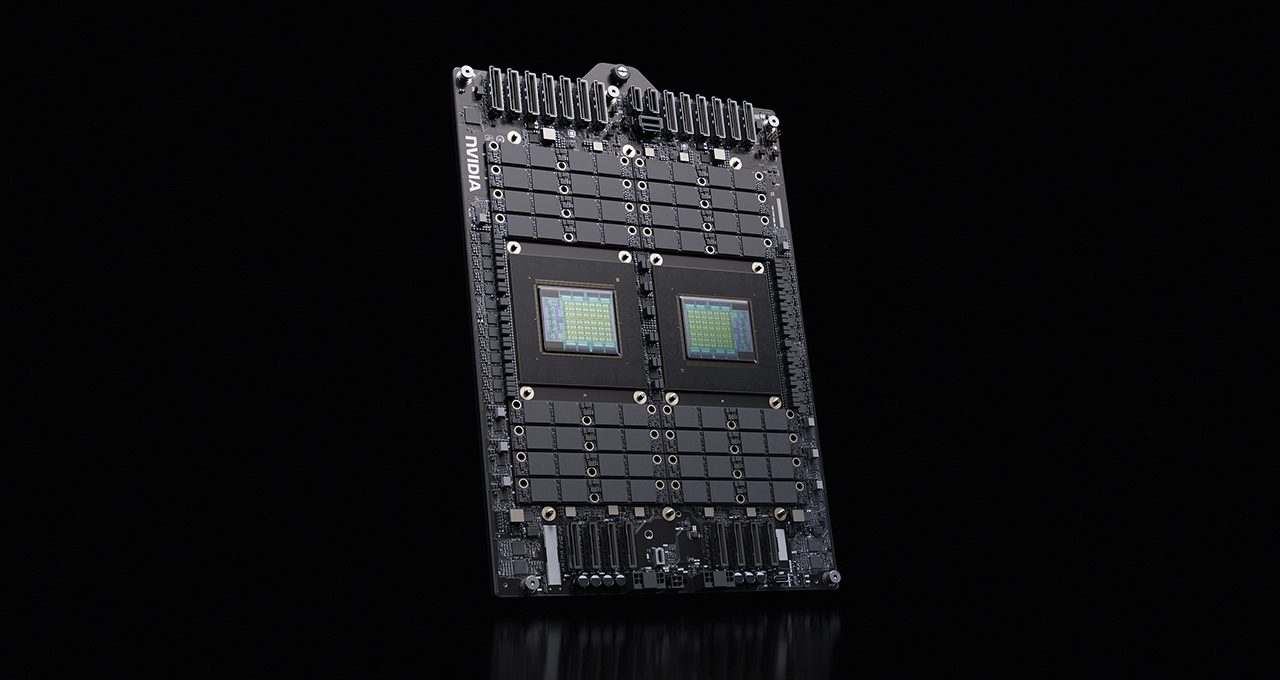
NVIDIA has begun deploying its new Vera CPU into the internal design flows of its upcoming generations of processors and GPUs. Initial tests conducted with Cadence and Synopsys show performance improvements of up to 1.5 times in certain electronic design automation (EDA) workloads, a critical phase in the development of any modern chip.
The key points of the Vera CPU in 20 seconds
- NVIDIA is already using the Vera CPU to develop its future CPUs and GPUs.
- Initial tests with Cadence and Synopsys show up to a 50% increase in performance in certain EDA tasks.
- Vera features 88 Arm Olympus cores, LPDDR5X memory, and the second generation of NVIDIA Scalable Coherent Fabric.
- The company states that higher verification speeds enable earlier error detection and shorter development times.
- NVIDIA is already working on its successor, Rosa, based on the upcoming Arm Rigel cores.
In recent years, NVIDIA has evolved from being solely a GPU manufacturer to a provider of complete AI computing platforms. This strategy now extends to the internal development of its own processors. The company announced that Vera is now part of the systems its engineers use to design the next generation of CPUs and GPUs, leveraging its own architecture to speed up the silicon creation process.
CPUs remain essential in chip design
Although AI and GPUs have accelerated many stages of semiconductor development, much of the most demanding processes still depend on CPU performance.
These include logical simulation, formal verification, regression testing, and parts of digital implementation — tasks that require high per-core performance, low latency, and a memory subsystem capable of maintaining a steady data flow.
Before a processor reaches manufacturing, engineering teams must validate the design’s behavior over months or even years, identify errors, test thousands of different scenarios, and ensure the chip will function correctly once produced.
Reducing the time needed for these tasks speeds up the overall development cycle and allows issues to be identified earlier in less costly phases of the project.
Up to 50% performance boost in early tests
To evaluate Vera’s potential, NVIDIA collaborated with two leading EDA software developers: Cadence and Synopsys.
Initial tests used industry-standard applications that are widely employed in the semiconductor field:
- Cadence Jasper, specialized in formal verification using intelligent test techniques and machine learning.
- Synopsys VCS, one of the most commonly used logic simulators for validating complex designs before manufacturing.
According to NVIDIA, both applications achieved up to 1.5 times more performance on certain production workloads when using Vera, with the same number of cores as on reference platforms.
The company emphasizes that these results come from selected workflows and that they continue collaborating with Cadence and Synopsys to optimize both the applications and system configurations to boost performance across a broader set of EDA processes.
Vera combines new Arm cores with high-bandwidth memory subsystem
The Vera CPU will gradually replace the current Grace generation within NVIDIA’s ecosystem.
Its key features include:
- 88 Arm Olympus cores designed by NVIDIA.
- High-efficiency LPDDR5X memory.
- Second-generation of NVIDIA Scalable Coherent Fabric.
- High memory bandwidth.
- Low latency suitable for time-sensitive applications.
This architecture is designed to run large distributed verification campaigns across hundreds or thousands of servers — a common workload for teams developing advanced processors.
NVIDIA uses its own CPUs to design future generations
One of the most striking aspects of this announcement is that NVIDIA has started using Vera to develop chips that will succeed Vera itself.
The company explains that this strategy creates a continuous improvement cycle, where each new generation helps design the next.
As engineers optimize applications, compilers, and EDA tools on the new architecture, they also gain insights to improve the design of the subsequent processor.
According to NVIDIA, this approach enables coordinated advancements in architecture, software, and systems, speeding up the development of future computing platforms.
Next on the roadmap: Rosa
During the announcement, NVIDIA also confirmed that Vera’s development is not the end of its roadmap.
The company is already working on Rosa, a CPU that will succeed Vera and incorporate the upcoming Arm Rigel cores.
While full technical specifications have not yet been released, NVIDIA confirmed that Rosa will be part of the next generation of AI platforms and will continue to expand the strategy initiated with Grace — now reinforced with Vera.
Beyond performance: accelerating chip development timelines
The announcement is not just about demonstrating that Vera is faster than Grace in certain workloads.
The real significance lies in NVIDIA’s goal to cut the time required to develop its future architectures.
Improvements in simulation, verification, and implementation can help identify errors earlier, test more design options, and shorten the path from initial RTL (Register Transfer Level) descriptions to chip fabrication.
In an industry where each new generation involves billions of dollars in investment and several years of development, even a few weeks’ reduction in the design cycle can provide a major competitive advantage.
The decision to incorporate Vera into its own engineering teams also reflects NVIDIA’s move toward a more integrated model. The company no longer just designs GPUs but also CPUs, networks, software, and full platforms for data centers — applying its own technologies to accelerate next-generation hardware development.
Frequently Asked Questions
What is NVIDIA Vera CPU?
It is NVIDIA’s new data center CPU, built on 88 Arm Olympus cores, designed to support the company’s future GPUs in AI systems.
What performance improvements have been demonstrated?
Initial tests with Cadence and Synopsys EDA applications show up to a 50% performance increase on certain workloads compared to NVIDIA’s reference platforms.
What is Vera used for?
NVIDIA is already using Vera internally to design and validate its upcoming CPUs and GPUs, especially for simulation, formal verification, and digital implementation tasks.
What’s next in the lineup?
NVIDIA has confirmed that it is working on Rosa, a new CPU based on the upcoming Arm Rigel cores that will continue the roadmap initiated with Grace and Vera.
