
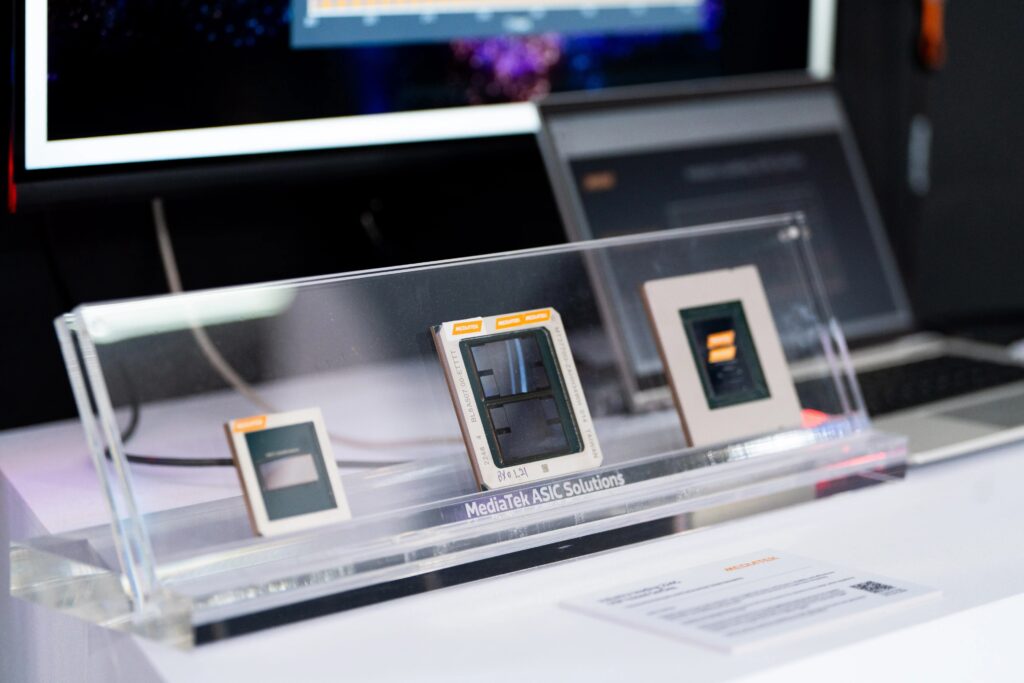
The silicon war for Artificial Intelligence is no longer just about who makes the fastest GPU. In 2026, the real race is shifting toward a more uncomfortable—and more strategic—terrain: who controls the ecosystem (interconnection, compatibility, tools, intellectual property, and alliances) in an era where hyperscalers want their own chips and, at the same time, need everything to “speak the same language” within the data center.
In this context, Nvidia, Arm, and Qualcomm are making moves with different goals but following a common pattern: turning their technology into the backbone of third-party accelerators—even when those third parties compete with each other.
From “GPU vs ASIC” to “ecosystem vs ecosystem”
The rise of AI ASICs (chips designed for specific workloads) responds to a simple logic: if thousands of servers are deployed with a very defined set of models, networks, and pipelines, the incentive to optimize for cost, performance, and efficiency is huge. That’s why more operators are building or commissioning their own silicon…but they face a limit: operational complexity of integrating compute, networking, memory, storage, and software into a coherent system.
This is where “coopetition” appears: competing in chips while cooperating (or becoming trapped) in interconnection, standards, and tooling.
Nvidia: opening the door… to stay the lock
Nvidia has dominated the narrative of the “AI factory” for years: GPUs, networks, libraries, and an increasingly integrated stack. The problem is that, as the market grows, more strategic customers want to reduce dependence.
Nvidia’s response, instead of shutting down, points to the opposite: licensing some of its interconnection technology so that other chips—including ASICs—can be integrated into architectures where Nvidia still sets the rules. In other words: allowing the “competitor” into the room through a door with Nvidia’s hinges.
This movement is significant because high-speed interconnection is, practically, the circulatory system of the AI data center. If a de facto standard is defined by a single player, the rest compete… within the field that this player defines.
Arm: more integration to accelerate designs, and ready-to-use “blocks”
Arm, on the other hand, plays a different game. Its strength is not selling a specific chip but being the architecture (and starting point) for much of the design of modern processors and accelerators. Arm’s trend is clear: offering more integrated solutions—not just “loose IP,” but complete subsystems—that enable partners and manufacturers to shorten design cycles, reduce risk, and accelerate time-to-market.
This approach aligns with a world where value shifts toward integration: less “artisan engineering” and more rapid assembly of verified blocks to reach production sooner. Arm aims to become the industrial scaffolding on which AI ASICs are built—even if those ASICs don’t carry its brand.
Qualcomm: diversifying muscle (and reducing exposure) amid tension with Arm
Qualcomm is the player that has recently shifted its narrative the most: from mobile to PC, and from PC to data centers, with evident ambitions in high-performance computing. But its position is also influenced by a critical factor: the relationship with Arm, marked by legal disputes and the potential—at least theoretically—of license terminations in certain scenarios.
In this landscape, Qualcomm is strengthening assets that give it maneuvering room:
- High-performance interconnection and connectivity for data centers: key capabilities if it wants to compete in AI infrastructure where bottlenecks are no longer just compute but also data movement.
- Exploration of alternative architectures/CPUs and strategic assets that reduce dependence on a single IP provider.
Recent corporate moves reflect this direction: acquisitions to expand core technology and secure positions in critical blocks of the data center stack.
Comparison table: what each is aiming for
| Player | Strategic move | What they aim to control | Risks they seek to mitigate |
|---|---|---|---|
| Nvidia | Interconnection as “glue” for heterogeneous environments | The communication standard and ecosystem | Third-party ASICs eroding its platform |
| Arm | More integrated, ready-to-accelerate subsystems | The architecture/IP layer used by designers | Being left as a “commodity IP” without control of the roadmap |
| Qualcomm | Acquisitions and expansion into critical data center blocks | Interconnection + technological options for scalability | Structural dependence on third-party IP |
What this means for 2026
The overarching message is uncomfortable for those expecting a “clean” competition for FLOPS: the winner won’t just be the one with the best chip but the one that manages to make other chips (including rivals) function better within their technological framework.
For hyperscalers, this opens a phase of constant negotiation: they can design their own ASICs, yes, but they must decide which ecosystem to adopt for interconnection, deployment, programming, and operation at scale. Here, Nvidia, Arm, and Qualcomm are vying to become the default choice.
Frequently Asked Questions
Why are hyperscalers betting on AI ASICs instead of just buying GPUs?
Because an ASIC can optimize cost, power, and performance for very specific workloads. The issue is that integrating and operating those ASICs at scale adds complexity in networking, software, and tools.
What is the most critical today: the chip or the interconnection?
More and more, interconnection. In large-scale AI, moving data between accelerators and nodes can limit performance just as much—if not more—than raw compute.
How does the Arm–Qualcomm tension affect the chip market?
It introduces uncertainty about dependencies on IP and licenses and pushes Qualcomm to strengthen its technological alternatives and strategic assets to reduce exposure.
Could there be a “single standard” in AI data centers?
It’s possible that part of the market converges around a few dominant frameworks (interconnection + software + tooling), but the pressure from hyperscalers to diversify makes the coexistence of multiple ecosystems likely, at least in the medium term.
via: digitimes