
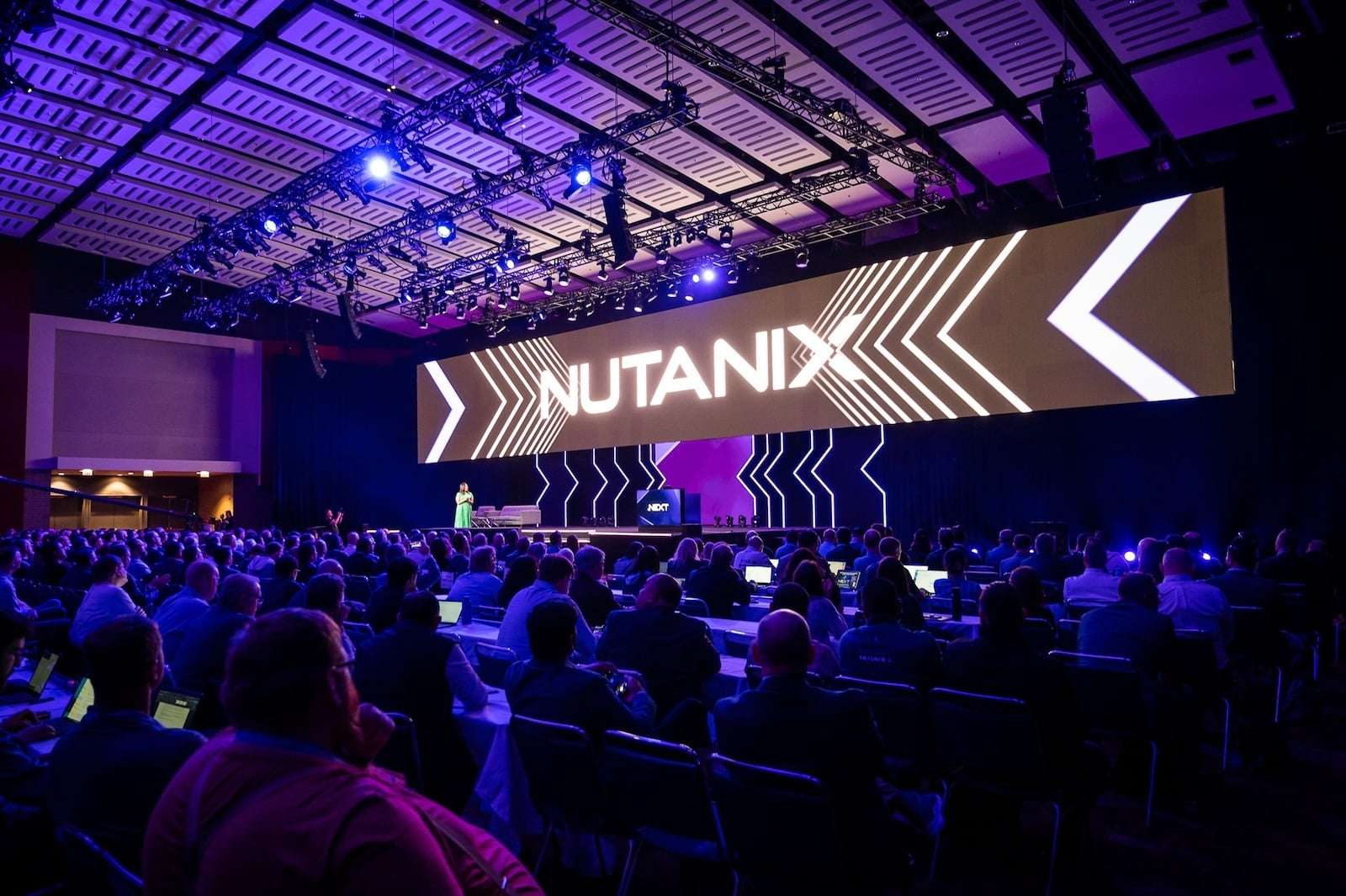
Nutanix has taken a significant step forward in infrastructure automation with the launch of a MCP (Model Context Protocol) server for Nutanix Cloud Platform. This open-source piece enables AI assistants and agents to interact with hybrid environments via the Prism v4 API. The goal is to allow tools like GitHub Copilot, Claude Code, or Cursor to query, diagnose, and automate tasks on the infrastructure without bypassing the platform’s existing access controls and governance.
The key points of Nutanix MCP in 20 seconds
- Nutanix has released an open-source MCP server for the Nutanix Cloud Platform.
- Agents access the infrastructure through Prism v4 APIs.
- The system inherits role-based access controls, auditing, and usage limits.
- It can be used with tools like GitHub Copilot, Claude Code, or Cursor.
- Nutanix maintains human oversight and asynchronous management for long-running operations.
This move is especially interesting because it shifts the concept of AI agenting from code generation to a much more sensitive area: the actual management of infrastructure.
Until now, asking an AI to explain how to create a virtual machine was relatively straightforward. Allowing that AI to query cluster status, identify issues, prepare maintenance tasks, or execute actions in production is a very different matter.
This is where MCP comes into play.
What MCP brings to Nutanix administration
The Model Context Protocol has become a standardized way to connect models and agents with external tools, data, and services.
In this case, the MCP server acts as an intermediary between the agent and the Nutanix Cloud Platform.
The process flow can be simplified as follows:
Administrator
     │
     ▼
AI Agent
     │
     ▼
Nutanix MCP Server
     │
     ▼
Prism v4 API Gateway
     │
     ▼
Nutanix Cloud Platform
A natural language request could be translated into one or more calls to Nutanix APIs.
For example, an administrator might request:
Show me the virtual machines with the highest memory usage in the production cluster over the last few hours.The agent would interpret the intent, leverage the exposed tools via MCP, and query the platform.
The main difference from allowing a large language model to make REST calls freely is that the agent does not automatically get unrestricted access to the infrastructure.
The server operates based on Nutanix’s existing APIs and permissions.
Prism v4 as the control layer
The most significant aspect of the announcement is not the natural language interface but what lies beneath it.
Nutanix is supporting the MCP server on its Prism v4 API Gateway. The company now considers v4 APIs as its recommended version for production and plans to retire older APIs v0.8, v1, v2, and v3 gradually starting with a scheduled update in Q4 2026.
Currently, the v4 APIs cover multiple management domains, including:
- virtual machines;
- storage;
- networks;
- security;
- monitoring;
- lifecycle management;
- AIOps;
- operations on Prism;
- multi-domain management;
- licensing;
- disaster recovery.
This means that MCP does not create a parallel management path. Nutanix’s goal is for AI to use the same interfaces governed by security and compliance controls.
For organizations, this distinction is crucial.
Connecting a chatbot directly to administrator credentials is not the same as allowing an agent to work via an API that enforces permissions and role-based controls for each identity.
Agents also have RBAC
One of the main issues with infrastructure agents is the scope of their permissions.
Nutanix proposes using RBAC (Role-Based Access Control) to restrict what APIs each agent can invoke.
A monitoring agent might have only read permissions, such as:
Agent: Infrastructure Observer

✓ list virtual machines
✓ query alarms
✓ read metrics
✓ review tasks

✗ create VMs
✗ delete volumes
✗ modify networks
✗ update cluster
A provisioning agent might have additional permissions but limited to specific resources.
This model is much more reasonable than giving an assistant a broad administrative account.
The v4 API documentation already indicates that operations are associated with specific permissions depending on the resource. For example, various Prism operations distinguish roles like Cluster Admin, Prism Admin, Prism Viewer, or Domain Manager Admin.
The MCP server leverages this existing structure rather than replacing it.
Auditing: tracking which agent performed what
The next challenge arises after executing an action.
If a person deletes a virtual machine, enterprise systems need to record who performed the operation.
The same applies to agents, but with an additional layer:
user
   ↓
agent
   ↓
MCP tool
   ↓
API
   ↓
infrastructure
Nutanix claims that its architecture maintains logs to identify which agent initiated a specific operation.
This can be especially important when multiple automations operate concurrently on the platform.
In an enterprise setting, it is not enough for the AI to respond with:
“The operation has been completed.”
Teams need the ability to trace back later:
Who requested the action
Which agent interpreted it
What tool was used
Which API was invoked
Which resource was affected
When was it executed
What was the outcome
This traceability will be a key condition for agents to move from simple queries to actual participation in production infrastructure.
Nutanix adds limits to prevent agent runaway
Another specific risk of agent-based automation is speed.
A person might make an error and send an incorrect request.
An agent could repeat it hundreds of times.
Nutanix incorporates mechanisms for throttling and metering on APIs to control call volume.
The company specifically mentions protection against scenarios of agent swarms, where multiple agents generate high request volumes simultaneously.
Conceptually:
10 agents
   │
   │ 10,000 requests
   ▼
API Gateway
   │
   ├── authentication
   ├── RBAC
   ├── rate limiting
   ├── metering
   └── auditing
   │
   ▼
Infrastructure
For administrators familiar with traditional APIs, this may seem obvious.
But with autonomous agents, this becomes even more critical.
Human-in-the-loop before touching production
Nutanix also does not necessarily envision a completely autonomous management infrastructure.
The platform adopts a human-in-the-loop approach, where certain actions may require oversight or approval.
This enables workflows such as:
Administrator:
"Analyze why the cluster is degraded"

             ↓

Agent:
"Two hosts need firmware updates"

             ↓

Agent:
"I propose running LCM tonight"

             ↓

HUMAN APPROVAL

             ↓

Prism API:
execute update
This model is especially suitable for tasks like:
- updates;
- network changes;
- migrations;
- resource deletions;
- security modifications;
- recovery operations.
The AI can perform diagnostics and prepare a plan, while the administrator retains control over execution.
Long operations are handled as asynchronous tasks
Infrastructure does not always function as a web API that responds in milliseconds.
Moving a VM, updating a cluster, or deploying Prism Central can take minutes.
Nutanix v4 APIs already support a task-based asynchronous model for many operations. A request might return a task ID, which can be queried until completion.
For example, Prism v4 responses use HTTP 202 status for accepted but ongoing operations, with a link to the associated task.
This approach fits very well with agents.
Agent
  │
  ├── start operation
  │
  ▼
Task ID: 12345
  │
  ├── check status
  │
  ├── wait
  │
  ├── check status again
  │
  ▼
COMPLETED
The agent does not need to keep a connection open during the operation.
It can come back later, check status, and continue the workflow.
From natural language to Python, Go, or PowerShell
The MCP server also targets developers.
Nutanix assures that assistants can use knowledge of their APIs to generate code directly in various languages and formats.
Among them:
Python
Go
Java
JavaScript
PowerShell
curl
REST
JSON
This makes sense because Nutanix’s developer portal already provides examples for many of these languages within the v4 reference.
An administrator might ask:
Create a PowerShell script to list VMs in the cluster with more than 16 GB RAM.While a developer might request:
Generate a Go example to query active tasks on Prism Central.The agent thus receives a structured API description rather than having to infer endpoints from unstructured documentation.
The truly interesting case: hybrid operations
Nutanix has been building its offering around hybrid cloud for years.
Nutanix Cloud Platform can operate within on-prem data centers, Nutanix Cloud Clusters, and edge locations.
The v4 documentation describes its Multi Domain Management layer as a way to manage NCP services deployed across:
on-premises
     +
Nutanix Cloud Clusters
     +
edge
In this context, an agent can be much more useful than in a standalone cluster.
For example:
"Check if we have capacity to move 20 VMs from data center to NC2 without exceeding 70% utilization."Resolving such a request may require querying:
- capacity;
- CPU;
- memory;
- storage;
- VM inventory;
- networks;
- policies;
- multiple domains.
This is precisely the kind of task where an API-connecting agent can reduce manual effort.
MCP does not automatically turn infrastructure into autonomous
However, it is important to avoid overinterpreting this announcement.
Having an MCP server does not mean that an agent can safely manage any infrastructure without oversight.
MCP provides a mechanism to expose tools.
Ultimate security still depends on:
identity
+ permissions
+ tool design
+ validation
+ limits
+ auditing
+ human approval
An increasingly relevant concern is prompt injection.
If an agent queries external information and then has tools capable of modifying infrastructure, malicious content could attempt to induce it to perform unintended actions.
Traditional RBAC controls reduce the risk but do not eliminate it entirely.
The safest approach remains applying the principle of least privilege and separating read-only agents from those authorized to modify production.
