
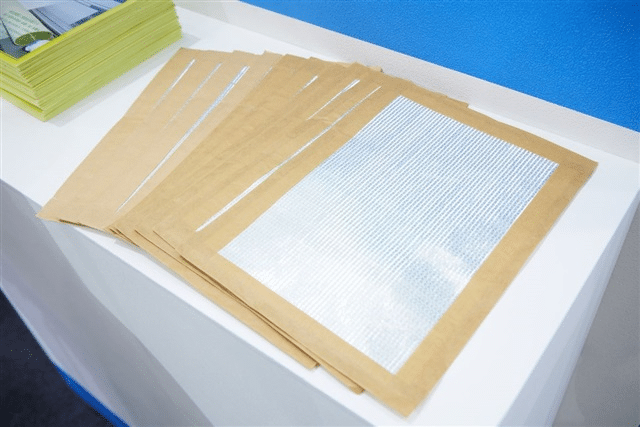
Nittobo is expanding production of its T-Glass to meet surging demand for materials used in advanced packaging for artificial intelligence chips. The Japanese company controls around 90% of the global market for this specialized glass and is adding capacity in Japan and Taiwan, though industry forecasts point to supply staying tight at least until mid-2027.
Nittobo and T-Glass for AI chips in 20 seconds
- Nittobo controls around 90% of the global T-Glass market.
- The material helps prevent warping in large chip packages exposed to heat.
- The company expects to triple its production capacity compared with fiscal 2026.
- Part of the new capacity is being built in Japan and Taiwan.
- Demand for AI servers is growing faster than available supply.
T-Glass is a material little known outside the semiconductor industry, but it occupies an important position in one of the layers that make today’s processors possible. It’s used as a glass fiber fabric inside packaging substrates, where it helps control thermal expansion and keep the structure stable when the chip runs at high temperatures.
The pressure has grown with the rise of AI accelerators. Processors are getting larger, packing in more HBM memory, and need advanced packaging capable of keeping numerous components aligned. That combination makes controlling thermal expansion harder.
Nittobo is one of the leading suppliers of this material and, according to industry estimates, holds roughly 90% of the global T-Glass market. That position makes any capacity expansion by the company relevant for substrate, packaging, and server manufacturers.
A material that helps keep packaging stable
Nittobo’s T-Glass is characterized by low thermal expansion and high mechanical strength. The company uses it to manufacture glass fabrics for semiconductor packaging substrates.
When a chip heats up, the different materials that make up the package don’t expand in exactly the same way. If the differences are too large, warping or stress can appear that complicates manufacturing and reduces the component’s reliability.
The problem becomes more important with AI processors. Today’s large accelerators pack in bigger silicon dies, more HBM memory, and increasingly complex interconnect structures.
Nittobo explains that T-Glass is used in semiconductor substrates for CPUs, GPUs, communications ASICs, and chips destined for AI systems. The company also makes NE-Glass and NER-Glass, materials aimed at high-speed applications where the glass’s electrical properties carry more weight.
That’s why rising demand isn’t coming only from GPUs. It’s also coming from networking chips and the communication systems that connect accelerators inside data centers.
Nittobo is preparing a major capacity expansion
The company is responding with an expansion that will raise its T-Glass capacity to roughly three times the level of the fiscal year that ended in March 2026 before fiscal 2029 is over.
Nittobo has committed around ¥80 billion, about $550 million at the exchange rate used in company and industry reports, to boost production of semiconductor materials in Japan and Taiwan.
In Taiwan, the company plans to double capacity from 2025 levels before March 2028. It’s also expanding its Japanese production, including the Fukushima plant, where new facilities are planned.
The expansion isn’t a response to a one-off spike in demand. Nittobo has raised its forecasts for its electronic materials business and expects growth in AI servers and devices to keep demand for its products high.
In August, the company raised its revenue forecast for the fiscal year ending in March 2027 to ¥141 billion and its operating profit forecast to ¥30 billion. It also raised its net profit forecast to ¥20 billion.
The electronic materials business was one of the main reasons for the revision. Nittobo raised its revenue target for this division to ¥77.8 billion, up 27% from the previous fiscal year.
Supply will stay tight despite the new factories
The problem is that expanding a factory of this kind doesn’t solve a shortage right away. Manufacturing processes for specialized glass require specific equipment and a long qualification period before reaching stable production.
TrendForce estimates that Nittobo’s significant new capacity won’t start clearly easing the constraints until mid-2027. The company itself has acknowledged that even its plan to triple capacity might not be enough to meet all expected demand.
The situation is already affecting planning at chip and board manufacturers. According to industry reports, large tech companies are trying to secure higher-specification glass production in advance.
Among the customers competing for this capacity are manufacturers and suppliers linked to Nvidia, Google, Amazon, and other major computing players. The pressure also reaches Apple, since the same materials can be used in other types of advanced electronic components.
The shortage also has a cost dimension. Prices for specialized substrate materials have risen as PCB and packaging manufacturers try to secure supply for the coming years.
Market concentration makes the situation worse. Although other electronics glass manufacturers exist, T-Glass’s specific properties and the expertise needed to produce it at scale make it hard for new competitors to quickly ramp up supply.
Rubin and new servers add to the pressure
One of the factors driving up consumption of specialized glass is Nvidia’s new generation of AI systems.
The Rubin platform packs in larger-scale processors and systems than previous generations. In addition, the shift toward designs with fewer cables and more integrated interconnects is increasing demand for bigger, more complex boards.
TrendForce’s analysis points to Rubin systems driving consumption of high-end fiberglass materials both in accelerator substrates and in server board components.
The pressure isn’t limited to GPU packaging. AI systems need large boards, backplanes, and midplanes capable of connecting accelerators, memory, processors, and high-speed networking. These components also use specialized materials to control thermal expansion and preserve signal integrity.
Nittobo is also developing a new generation of T-Glass with an even lower thermal expansion coefficient. The company has worked with copper-clad laminate manufacturers to evaluate samples and plans to introduce this advanced material around 2028.
The company is also developing a new generation of low-dielectric-constant glass for AI server boards. In this case, the goal is tied to transmitting signals at increasingly higher speeds.
The combination of both trends explains why glass has become an unexpected bottleneck in AI infrastructure. Accelerators need more power, packages keep growing, boards carry more data, and all of these elements require materials capable of withstanding higher temperatures and speeds.
Nittobo is expanding capacity to meet that demand, but the timeline for the new facilities means the market will have to live with constraints for several more quarters. The situation shows that the availability of an AI accelerator doesn’t depend solely on manufacturing the silicon. It also depends on far less visible materials that are part of the layers that hold it together, keep it stable, and keep it connected. Other parts of the supply chain are under similar strain, as seen in how Asahi Kasei is working through its own bottleneck for AI chip materials, and in Intel’s push to bring glass-core substrates back into AI chip packaging.
Frequently Asked Questions
What is Nittobo’s T-Glass?
It’s a glass fiber fabric with low thermal expansion and high strength used in semiconductor packaging substrates. It helps keep the structure of large chip packages stable as temperatures rise.
Why is demand for T-Glass rising with artificial intelligence?
AI accelerators keep getting larger and use more HBM memory and high-speed connections. That increases the thermal and mechanical demands on their substrates and packaging.
How much does Nittobo want to increase its capacity?
The company expects to reach, by the fiscal year ending in March 2029, T-Glass production capacity roughly three times that of the fiscal year ended March 2026.
When could the T-Glass supply improve?
Industry analysis points to the constraints easing around mid-2027, once a significant portion of the new capacity comes online. Until then, supply will remain under pressure.
