
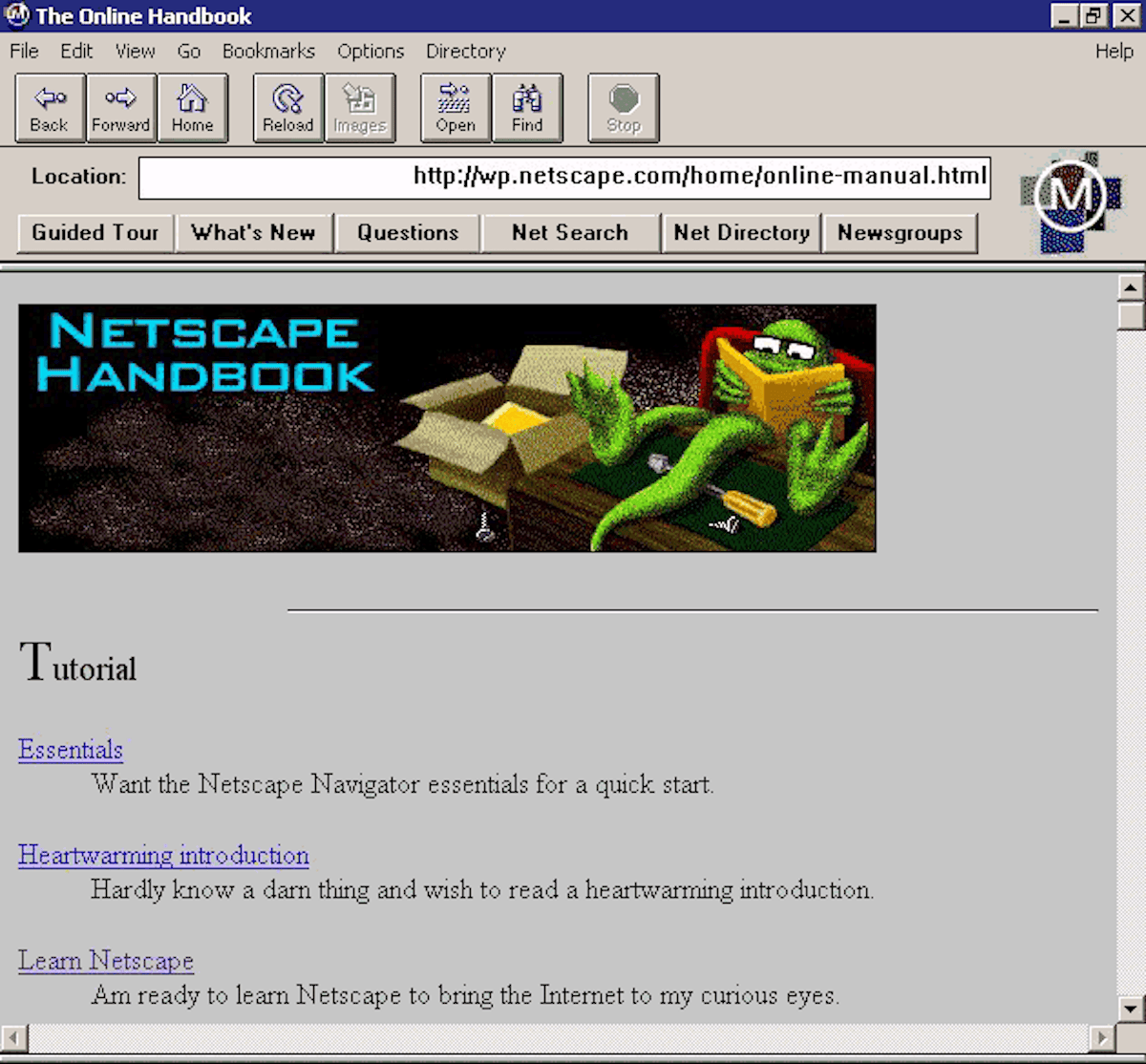
31 years ago, when the word “Internet” still sounded like academic jargon and home access was a luxury of noisy modems and patience, a program appeared that changed the relationship between people and the Web: Netscape Navigator 1.0. It wasn’t the first browser in history, but it was one of the first to bring the Web into the mainstream with a simple but powerful idea: if browsing was easy, the Internet would stop being an experiment and become a social phenomenon.
In 1994, the Web was young, fragmented, and not very “friendly.” There were earlier browsers, but Navigator’s leap was more cultural than technical: it offered a more polished experience, better performance, and a sense of “product” at a time when most tools still had a laboratory vibe. In a very short time, “Netscape” stopped being just a company name and became, for many users, synonymous with browsing the Internet.
The impact: the Web became massive (and started to professionalize)
Netscape Navigator helped accelerate something that now seems obvious: that the Web would become a universal platform for reading, learning, shopping, and communicating. In an ecosystem where every step was a small victory, Navigator helped establish the idea that the browser would be “the gateway” to everything else.
It also pushed for professionalism in the sector. With millions entering the Web, the market began demanding more complete websites, more serious companies, and above all, more security. It wasn’t just about visiting pages anymore—conditions were being created for e-commerce, digital media, and a new economy based on online services.
From innovation to rivalry: how the “browser wars” began
Netscape’s success quickly sparked immense industry interest. The result was a fierce race—the well-known “browser wars”—that marked the second half of the 90s: new versions, rapid feature development, and competition that, for better or worse, shaped how modern the Web is today.

In that race, a reality that still persists today became popular: the browser is more than just an app, it’s a battleground for standards, compatibility, and user experience. When the browser becomes the “operating system” of the Web, what’s at stake is huge.
What came after: from Netscape to the Chrome era (and mobile dominance)
Over time, the market changed hands. Internet Explorer gained ground for years, but the cycle shifted again when Netscape’s legacy evolved into something new: the push toward a Mozilla project and later, Firefox, which became a symbol of a more open Web, with a strong community behind it and a clear commitment to standards.
Meanwhile, Apple launched Safari, and years later, Google entered with Chrome with an aggressive strategy: speed, simplicity, and constant updates that matched a Web growing more dynamic. This move not only changed browser rankings but also user expectations. Browsers were no longer “something you install and forget about”; they had to continually evolve—fix bugs, improve performance, and adapt to a Web faster than ever.
And then came the seismic shift: mobile. Browsing ceased to happen mainly on desktops. The browser now coexisted with apps, notifications, and small screens, forcing the Web to reinvent itself to be useful everywhere. From this perspective, Netscape’s impact is clearer: Navigator helped turn the browser into a daily object. The mobile era made it almost invisible, integrated into everything.
Why does Netscape Navigator still matter in 2025?
Because many current debates—privacy, standards, monopolies, performance, security, platform dependency—have roots in that era. Netscape symbolizes a moment when the browser stopped being just a technical curiosity and became cultural infrastructure: a tool that defines how we access information and how the digital economy flows.
Remembering Netscape Navigator isn’t just nostalgia: it’s recognizing the point where the Web started to look like what it is today. It’s also understanding why each new “era” of browsers—Internet Explorer, Firefox, Safari, Chrome—was not just a succession of icons, but a battle over what Internet could be and who set its rules.
Frequently Asked Questions
What made Netscape Navigator stand out compared to previous browsers?
It offered a more accessible and “product-like” experience, helping to popularize the Web among non-technical users when Internet was still a minority presence.
What is the connection between Netscape and Firefox?
The decline of Netscape and its decision to open its technology spurred the Mozilla ecosystem, from which Firefox emerged as a key browser defending open web standards.
How did Chrome change the browser market compared to the Netscape era?
Chrome accelerated the idea of continuous development: frequent updates, obsessive focus on performance, and a model that pushed the industry to improve speed, security, and compatibility.
Why is there so much talk about “web standards” when it comes to the browser wars?
Because when a browser dominates, it can influence what technologies are used on the Web. Compatibility and respect for standards are crucial for the Internet to function equally for everyone, without being dependent on a single player.