
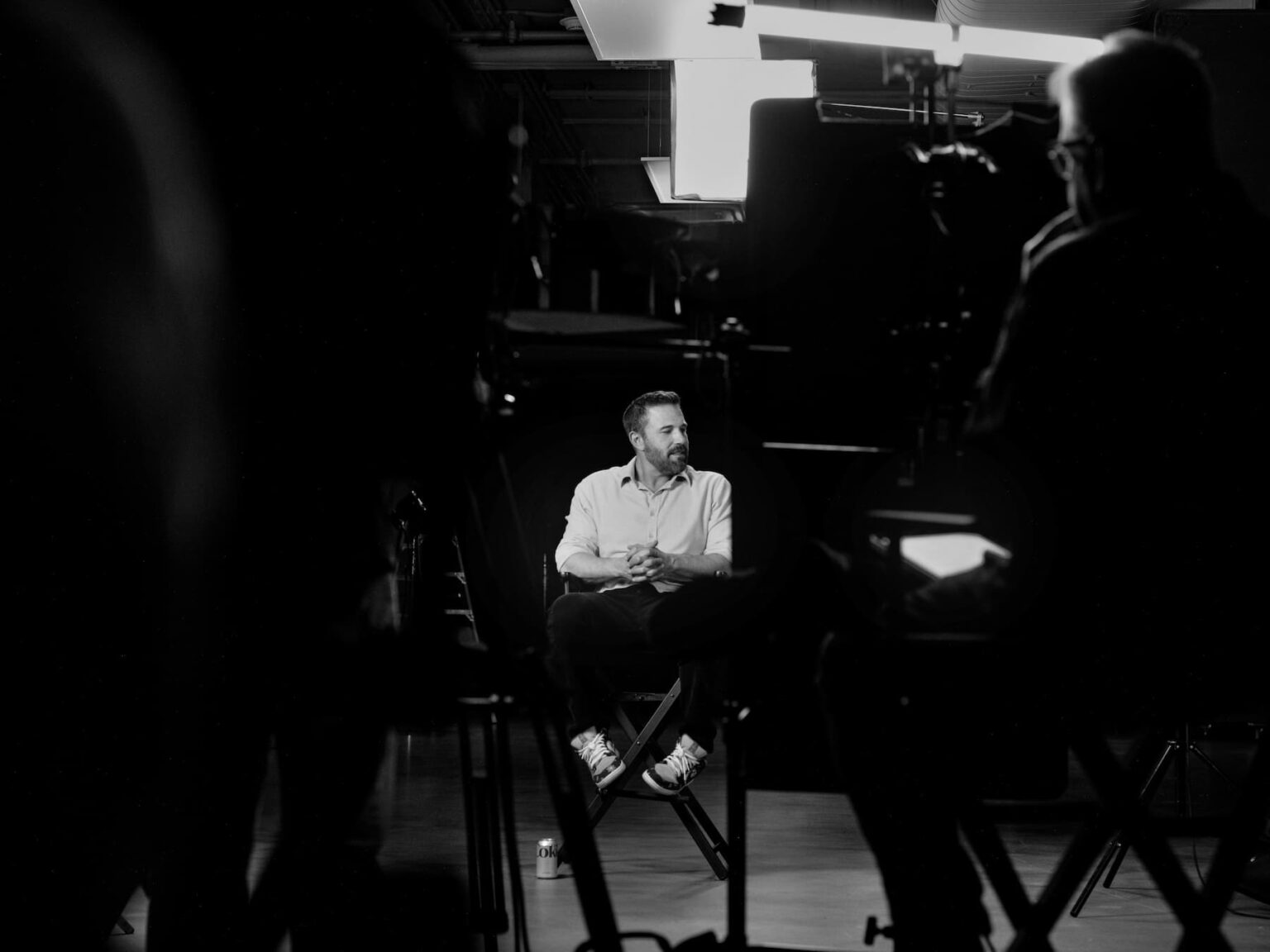
Netflix has acquired InterPositive, the film tech startup founded by Ben Affleck, in a deal whose financial terms have not been officially disclosed, although Bloomberg, cited by TechCrunch, reports that the deal could reach up to $600 million if certain targets are met. The company has confirmed that the entire InterPositive team, consisting of 16 people, will be integrated, and that Affleck will serve as a senior advisor at Netflix.
The acquisition has sparked a mix of fascination and concern within the industry because it touches on a very sensitive issue: the use of Artificial Intelligence in audiovisual production. But there is a significant gap between the official announcement and the viral narratives circulating online. Netflix presents the deal as a move towards tools “created by and for filmmakers,” designed to assist in post-production work and to safeguard creative intent, rather than as a system that will suddenly replace entire shoots, sets, or crews.
As Affleck explained when announcing the sale, InterPositive was launched in 2022 after noticing that many early AI tools didn’t understand the real language of production. Reuters summarizes that the startup developed models to interpret visual logic and editorial consistency, as well as to assist with common production issues such as incomplete takes or incorrect lighting, keeping creative decisions in human hands.
This doesn’t mean the operation is minor. On the contrary: it’s a clear sign that Netflix wants to incorporate AI more deeply into the filmmaking process. But it’s important to distinguish confirmed facts from speculation.
| What is confirmed | What has not been officially confirmed |
|---|---|
| Netflix acquired InterPositive and integrated its 16-person team | That Netflix paid exactly $600 million in cash |
| Ben Affleck joins as a senior advisor | That technology will fully replace real sets in a widespread manner |
| The tool works with footage from filming and post-production | That the system guarantees cost savings of 70%, 50%, or 40% |
| Netflix states that AI should enhance creativity, not replace teams | That recent layoffs at Disney are directly due to this technology |
What InterPositive Actually Does
The most concrete description of the product comes from The Verge, which explains that InterPositive’s technology focuses on ingesting dailies, meaning the raw footage from ongoing productions, to generate assets useful in post-production. Its applications include color grading and correction, background manipulation, re-framing shots, and removing visual elements like crew cables. This approach is very different from a system that “makes movies on its own” via simple prompts.
This distinction is crucial because it reframes the understanding of the deal. What Netflix is buying, at least for now, is not an autonomous film factory but a layer of software aimed at speeding up and streamlining technical tasks that are currently time-consuming and costly in post-production. While potentially disruptive, this doesn’t mean traditional shooting, art direction, or VFX teams will vanish overnight.
It also helps contextualize the “gray cube” story. As Affleck explained in the Netflix announcement, InterPositive recorded a proprietary dataset in a controlled studio environment to train its system and better understand how light, lenses, and visual continuity behave under real production conditions. This fits with a very controlled training and testing environment, but doesn’t automatically imply that commercial filmmaking will be done solely with a blank cube and an algorithm.
Job Concerns Are Valid but Not So Simple
The most sensitive part of the debate revolves around employment. And context is key here. This spring, Disney announced layoffs affecting around 1,000 employees across various divisions, including animation, television, technology, and corporate functions, as part of an operational simplification strategy led by new CEO Josh D’Amaro. Both Reuters and Associated Press report that Disney defends these cuts as a restructuring to increase agility and create a more “technology-enabled” workforce.
Additionally, several industry outlets have reported that Marvel Studios has been heavily affected, with its visual development team nearly dismantled or greatly reduced. However, a shift driven by new technology doesn’t automatically mean these layoffs are “caused directly by AI.” Disney has not officially attributed those cuts to AI.
This nuance does not eliminate industry concern. It clearly shows Hollywood is entering a phase where technology, cost pressures, and studio reorganization increasingly intersect. In this context, an acquisition like InterPositive is viewed not just as innovation but also as a sign of where a major platform aims to go: producing faster, with greater control, and less technical friction.
Netflix’s Move Makes Industrial Sense
Looking at it objectively, Netflix’s move aligns well with its strategic position. The company has been advocating for AI use to support creators and production workflows. Purchasing a small, specialized startup designed with production logic allows it to bring in talent, intellectual property, and a specific product without relying on broad, third-party tools. TechCrunch adds that if Bloomberg’s reported figure is confirmed, this could be one of Netflix’s largest acquisitions ever.
The key question, therefore, isn’t whether Netflix “bought the future of cinema,” but rather which part of that future it aims to control first. It appears their priority is AI-assisted post-production, focusing on visual consistency and streamlining costly technical processes. This could significantly alter the economics of making a film or series—even if it doesn’t turn filmmaking into a mere exercise of placing actors in a cube and hitting a button.
That’s where the real tension lies. AI is not entering cinema as an immediate and total replacement but as a tool beginning with tasks where the potential savings and business case are strongest. If this approach becomes entrenched, pressure on technical roles, post-production teams, and VFX studios may gradually grow—even as studios publicly emphasize “enhanced creativity” rather than replacement.
FAQs
Has Netflix confirmed paying $600 million for InterPositive?
No. Netflix announced the acquisition but did not disclose the amount. The $600 million figure comes from Bloomberg, cited by TechCrunch, which suggests the direct payment might be lower, and part of the total could depend on performance targets.
Does InterPositive replace traditional filming with AI?
There’s no public basis to claim that. Officially, it’s described as technology focused on existing footage and post-production tasks like color correction, continuity, backgrounds, re-framing, and removing unwanted visual elements.
How many people did InterPositive have when Netflix bought it?
The deal includes a team of 16 people, according to reports from The Verge and others.
Are Disney’s layoffs officially due to AI?
No. Disney confirmed around 1,000 layoffs as part of a restructuring to simplify operations and improve agility. While tech advances influence the industry, the company has not officially attributed those layoffs directly to AI.
via: about.netflix
