
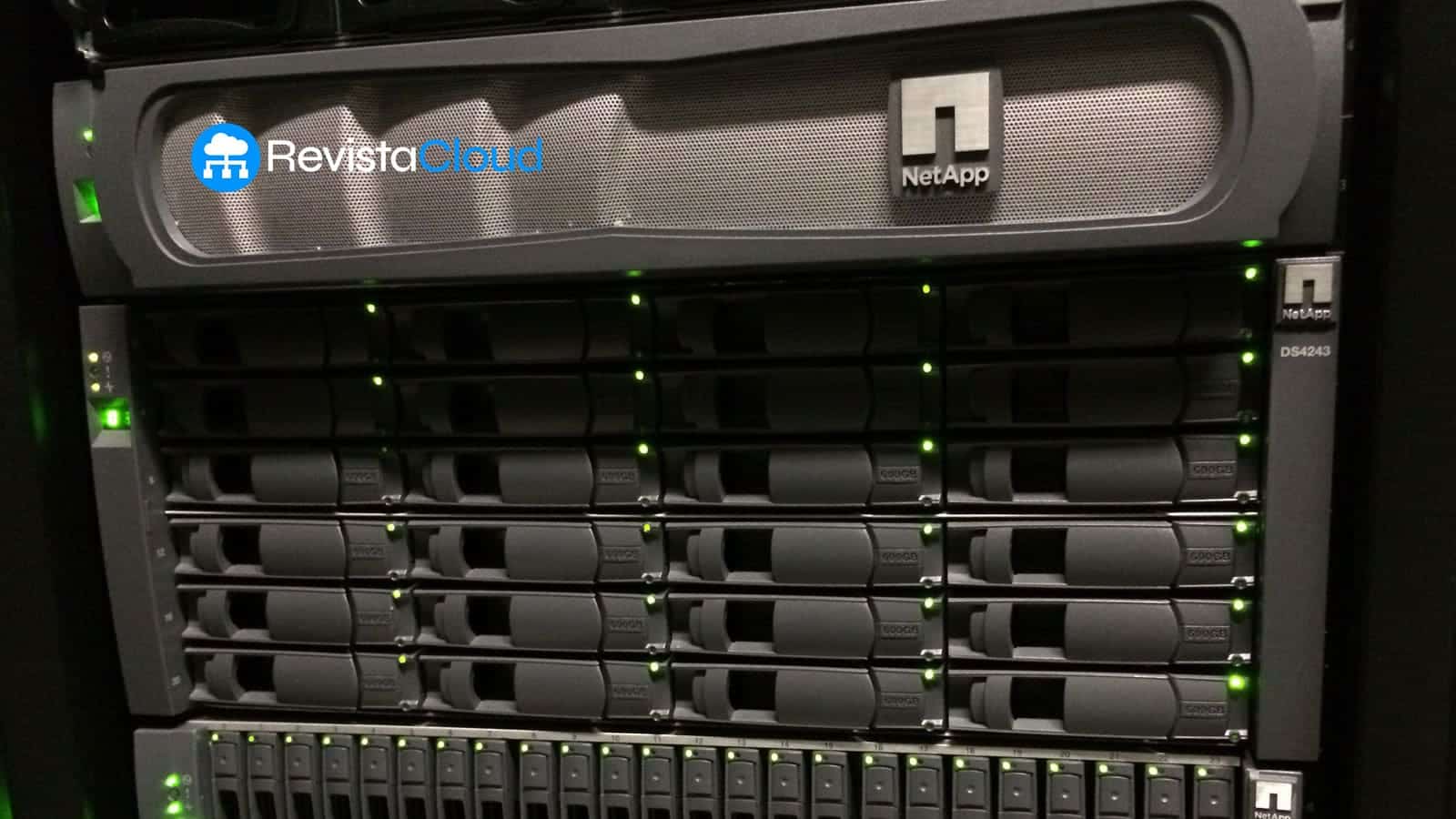
The arrival of ONTAP 9.19.1 expands SnapMirror Active Sync to NAS workloads is a significant update for companies that need to keep critical data available through NFS and SMB. NetApp’s technology, which until now focused on block storage within this continuity scenario, can now provide RPO 0 and an RTO close to zero for file storage, with automatic failover between two ONTAP systems.
Key points of SnapMirror Active Sync for NAS in 20 seconds
- ONTAP 9.19.1 adds NFS and SMB to SnapMirror Active Sync.
- NetApp establishes a RPO 0 and an RTO close to zero for these configurations.
- NAS protection is performed at the Storage Virtual Machine (SVM) level.
- The secondary system remains ready to take over if the primary fails.
- This update broadens the possibilities for synchronous storage architectures between data centers.
For infrastructure providers like Stackscale, which uses NetApp technology in its enterprise storage solutions, this announcement also clarifies an often unnoticed distinction: replicating data does not necessarily mean having the same data in two locations at all times.
An architecture designed for RPO 0 aims precisely for this. In case of a serious incident at one data center, the goal is to eliminate any window of data pending replication.
From block protection to file protection as well
SnapMirror Active Sync was originally developed for SAN workloads and has expanded its capabilities across subsequent versions of ONTAP.
With ONTAP 9.19.1, NetApp integrates NFS v3 and later, and SMB 2.x or newer into this technology. Initially, NAS operates on two-node AFF clusters and four-node AFX clusters, under an active-passive architecture.
This operation presents notable differences compared to SAN storage.
Protection is performed at the SVM (Storage Virtual Machine) level. The secondary SVM remains inactive while the primary system functions normally. ONTAP replicates both data and required configurations so that the secondary environment can take over when failover occurs.
For non-disruptive failover, network and protocol configurations, including IP addresses, must match between the primary and secondary SVMs.
NetApp also maintains some limitations that should be kept in mind. In ONTAP 9.19.1, SnapMirror Active Sync for NAS works with FlexVol volumes and does not support FlexGroup volumes or consistency groups within the protected SVM.
There are also differences depending on SMB versions. SMB 3 Continuous Availability (CA) resources can perform a non-disruptive failover. In SMB 2 and SMB 3 resources that do not utilize CA, a brief interruption may occur during failover, though the RPO 0 goal remains.
NFS v3 and later versions support non-disruptive failover as well.
What does RPO 0 really mean?
In any business continuity architecture, it’s important to distinguish between two concepts: RPO and RTO.
Recovery Point Objective (RPO) determines the amount of data an organization is willing to lose after an incident.
For example, a backup every six hours could mean, in the worst case, losing several hours of changes. Frequent asynchronous replication significantly reduces this window, but there is still an interval between writing data at the source and its arrival at the destination.
Synchronous replication changes this approach.
Data Center A
       │
       │ write
       ▼
 Storage A
       │
       │ synchronous replication
       ▼
 Storage B
       │
       ▼
Data Center B
The operation is confirmed within the synchronous replication mechanism, ensuring both sides maintain protected data in a coordinated manner. The objective becomes RPO 0: no data loss of the protected data.
RTO addresses a different question: how long it takes for services to be operational again.
And here, with ONTAP 9.19.1, it’s important to be precise. NetApp describes SnapMirror Active Sync for NAS as a solution with RPO 0 and RTO near zero, not as a blanket guarantee of RTO 0 for any NAS workload.
Stackscale’s synchronous storage architecture with NetApp
This evolution is especially relevant to private cloud and distributed enterprise storage architectures across data centers.
Stackscale uses NetApp technology as part of its enterprise storage solutions and offers architectures where data can be synchronously replicated between two locations.
A simplified high-availability design could be represented as follows:
                PRIVATE CLOUD
                     │
          ┌──────────┴──────────┐
          │                     │
          ▼                     ▼
   Data Center A      Data Center B
          │                     │
      Compute               Compute
          │                     │
          ▼                     ▼
       NetApp ═══════════════ NetApp
                synchronous replication
The goal is to prevent storage from becoming the weak point in an infrastructure that otherwise can have redundancy in servers, communications, and virtualization.
This is especially significant in virtualization environments.
A platform based, for example, on Proxmox VE or VMware can have multiple compute nodes. But high availability of virtual machines also depends on where their disks reside.
If storage is only available in one location, losing that data center can make the virtual machines inaccessible, even if compute capacity exists elsewhere.
With synchronous storage between two data centers, infrastructure can be designed so that compute, network, and storage become part of the continuity strategy, rather than treating storage as an independent layer.
Synchronous replication and backups solve different problems
Having RPO 0 does not eliminate the need for backups.
These are complementary mechanisms.
Synchronous replication is mainly aimed at maintaining availability in the event of infrastructure failures or loss of a site. But if an application deletes information, an administrator accidentally deletes a file, or unwanted changes get replicated to the second system, having a historical copy remains necessary.
Therefore, a data protection architecture can combine multiple layers:
| Technology | Main Objective |
|---|---|
| Local high availability | Server or component failures |
| Synchronous replication | Storage or site failure |
| Snapshots | Fast recovery of versions |
| Backup | Historical and independent recovery |
| Second data center | Continuity in case of severe site incidents |
The specific combination depends on each application’s requirements and, above all, its recovery objectives.
Not all workloads need RPO 0. For some services, a RPO of minutes or hours can be perfectly reasonable, reducing complexity and cost.
For databases, enterprise platforms, financial services, transactional systems, or certain file repositories, the situation might be quite different.
ONTAP 9.19.1 broadens options for designing business continuity
NetApp’s update is particularly relevant because it extends this model to another storage category.
SnapMirror Active Sync already enabled architecture design for SAN workloads via iSCSI and Fibre Channel, and later added NVMe support in specific scenarios. Now, ONTAP 9.19.1 brings that philosophy to NFS and SMB.
Additionally, secondary storage does not have to remain underutilized. NetApp allows creating clones of secondary volumes within another SVM for use in development, testing, UAT, or reporting, without affecting the primary protection relationship.
For private infrastructures based on NetApp, this evolution expands the options for deciding which workloads require synchronous replication, which protocols to use, and how services are distributed across data centers.
The change also helps bridge a longstanding boundary in enterprise storage: file-based applications can now approach levels of continuity historically associated mainly with SAN storage.
Frequently Asked Questions
What is SnapMirror Active Sync?
It is a NetApp ONTAP technology designed to keep data synchronized between systems and support application continuity in case of failures. With ONTAP 9.19.1, it extends NAS support to NFS and SMB.
Does SnapMirror Active Sync for NAS offer RPO 0?
Yes. NetApp specifies RPO 0 for NAS workloads compatible with SnapMirror Active Sync in ONTAP 9.19.1. RTO is described as near zero and also depends on the protocol and configuration used.
Does synchronous replication replace backups?
No. Synchronous replication is mainly aimed at availability and continuity, whereas backups enable recovery of historical data in case of deletions, corruption, or other incidents. They are complementary technologies addressing different problems.
Does Stackscale use NetApp for its storage solutions?
Yes. Stackscale leverages NetApp technology within its enterprise storage infrastructure and can design solutions with synchronous replication between data centers for workloads with demanding continuity objectives.
