
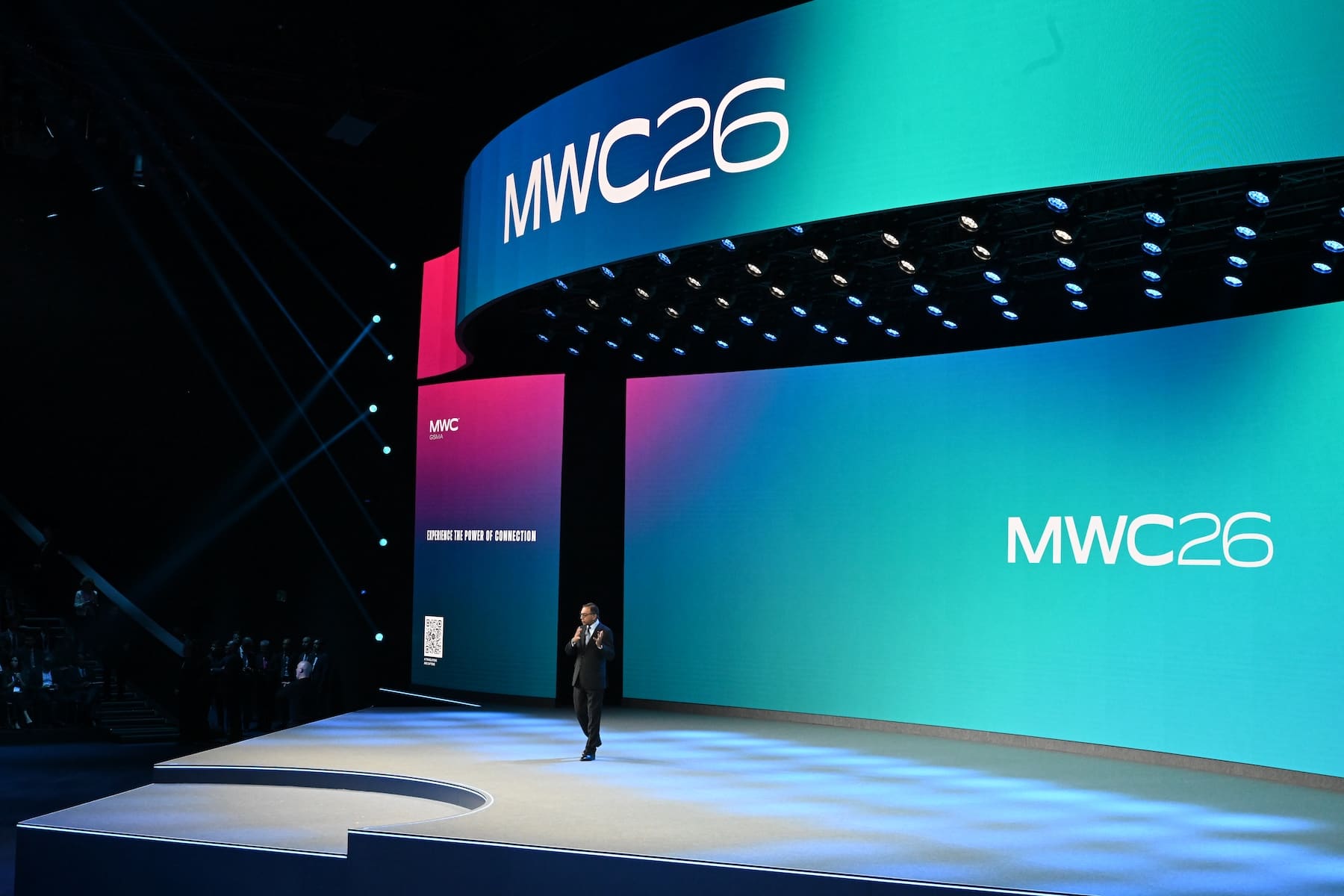
The Mobile World Congress 2026 (MWC26) has opened its doors in Barcelona at a pivotal moment for the global telecommunications industry. The event, considered the world’s largest gathering of the connectivity sector, brings together operators, manufacturers, startups, policymakers, and tech leaders for several days to discuss the future of networks, artificial intelligence, and digital security.
During the opening session, Vivek Badrinath, CEO of GSMA, delivered a direct message to the industry: the mobile ecosystem must accelerate investments in standalone 5G networks, ensure an open and inclusive development of artificial intelligence, and coordinate efforts to build a safer digital environment amidst rising technological threats.
As Badrinath explained, the telecommunications sector has reached an enormous economic scale and continues to grow. In 2025, mobile connectivity contributed $7.6 trillion to the global economy, accounting for approximately 6.4% of the world’s GDP. GSMA estimates this figure will increase to $11.3 trillion in 2030, representing 8.4% of the global GDP.
The mobile sector is transforming: from connectivity to digital platforms
One of the core messages of the Mobile Economy 2026 report, presented during the congress, is that the industry is rapidly evolving toward a platform-based model.
For years, operators focused their business on providing connectivity. However, the advent of technologies like standalone 5G, open APIs, edge computing, and artificial intelligence is changing the role of mobile networks within the digital economy.
Networks are no longer just data transport infrastructure. They are becoming programmable platforms capable of enabling new digital services across sectors such as automotive, manufacturing, healthcare, and entertainment.
5G advances, but there’s still a long way to go
The deployment of 5G continues to expand worldwide, though a full transition will take several more years.
According to forecasts in the report:
- By 2030, 57% of all mobile connections will be 5G
- 3G networks will represent just 5%
- 2G networks will decline to 1% of the total
The development of standalone 5G (SA) will be key to unlocking many advanced applications the industry anticipates, such as industrial private networks, massive automation, extended reality, or connected vehicles.
However, completing this transition requires significant investments. Predictions indicate operators will spend $1.2 trillion in capital expenditures through 2030 to continue modernizing their networks.
Bridging the digital divide remains a major challenge
Despite the global expansion of mobile coverage, the report highlights a persistent issue: the usage gap.
Currently, 96% of the world’s population lives in areas with mobile broadband coverage, but over 3 billion people still do not use mobile internet.
This means that the primary issue is no longer coverage but effective technology adoption. Factors such as device costs, digital literacy gaps, or the limited relevance of certain local services continue to restrict access.
GSMA notes that the usage gap is nearly ten times larger than the coverage gap, demonstrating that connectivity alone does not address digital inclusion issues.
Cybersecurity becomes a global priority
Another prominent topic at the opening of MWC26 has been the rise of digital threats.
As mobile networks become more software-defined and increasingly integrated with artificial intelligence, the level of risk likewise grows.
Estimates suggest that the global cost of cybercrime could rise from $9.22 trillion in 2024 to $15.63 trillion in 2029.
Furthermore, over 90% of mobile operators consider the threat environment to be high or very high, emphasizing the need for strengthened cooperation among governments, tech companies, and operators.
Network security, fraud protection, and resilience of critical infrastructure will be recurring themes throughout the congress.
An industry supporting millions of jobs
Beyond technology, the economic impact of the mobile sector continues to grow.
The global mobile ecosystem:
- Generated 50 million jobs in 2025
- Contributed over $800 billion in tax revenue to governments
- Remains one of the most important drivers of the global digital economy
The industry not only drives technological innovation but also sustains entire business ecosystems that include device manufacturers, software providers, network operators, data centers, startups, and developers.
Barcelona, a global connectivity hub
For four days, MWC26 will turn Barcelona into the main meeting point for the tech and telecommunications sectors.
Conferences and presentations will cover topics such as:
- 3G and 6G networks
- AI applications in telecommunications
- Satellite connectivity
- Edge computing
- Cybersecurity
- Digital economy
Main sessions are streamed live via the event’s official platform, and the congress will run until March 5, 2026.
With over a decade established as a global industry benchmark, the Mobile World Congress once again demonstrates that the future of the digital economy increasingly depends on the convergence of connectivity, artificial intelligence, and technological security.
Frequently Asked Questions about Mobile World Congress 2026
What is the Mobile World Congress, and why is it so important?
The Mobile World Congress is the world’s largest event dedicated to the telecommunications and connectivity industry. Each year, it gathers operators, manufacturers, tech companies, and governments to showcase new technologies, discuss trends, and shape the future of the sector.
What role will 5G play in the coming years?
5G will underpin many advanced technological applications, from industrial automation to connected vehicles and smart cities. It is expected that by 2030, more than half of all mobile connections worldwide will use this technology.
Why is artificial intelligence key for the telecom sector?
AI enables network optimization, automation of operations, threat detection, and the creation of new data-driven digital services. Its integration into mobile networks will be a major driver of innovation over the next decade.
What is the main challenge facing the mobile sector today?
Beyond deploying new networks, the biggest challenge is closing the digital divide. Although most of the world’s population has mobile coverage, billions of people still do not use mobile internet due to economic, social, or educational barriers.
Photo courtesy: © 2026 GSMA / MWC