
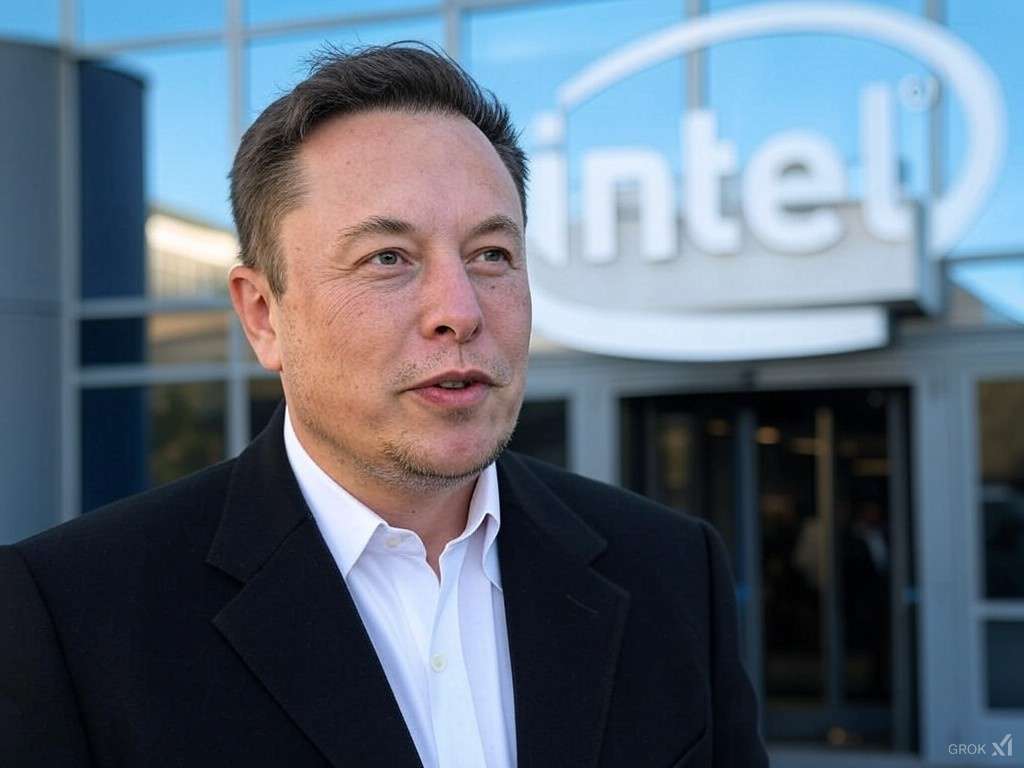
Elon Musk has turned a simple idea into one of the most uncomfortable battles in artificial intelligence: building a “maximally truthful” AI. xAI has framed this as part of its mission, linked to understanding the true nature of the universe, and Musk has insisted that such a system must prioritize accuracy even when the answer is uncomfortable or politically incorrect. The phrase works because it points to the industry’s weak spot: generative models no longer just answer questions but filter, summarize, and organize reality for millions of people.
For an industry obsessed with benchmarks, context windows, chips, agents, and inference costs, the debate about truth may seem philosophical. It is not. It’s a matter of architecture, training, product design, governance, and trust. Every advanced assistant—whether Grok, ChatGPT, Claude, or Gemini—involves human decisions about what should be answered, what should be rejected, which sources are prioritized, and how sensitive topics are handled. Absolutel neutrality doesn’t exist; the key is whether these decisions are explainable, auditable, and corrected when they fail.
Safety has become an editorial layer
Major labs have built their models around concepts like safety, alignment, utility, honesty, and harm reduction. OpenAI publishes its Model Specification as a framework to define how their models should behave, how they follow instructions, handle conflicts, and balance user freedom with safety limits. Anthropic, on the other hand, uses what they call the Claude Constitution to describe the values and behaviors they aim to instill in their system during training.
This effort is necessary. A model without limits can facilitate fraud, dangerous instructions, abuse, manipulation, cyberattacks, or physical harm. The problem arises when safety becomes stretched into invisible editing. In the name of prudence, a system might avoid legitimate topics, soften responses, overrepresent certain viewpoints, or return an overly sanitized version of reality.
Google experienced a prominent example with Gemini in 2024. The company paused generating images of people after the system produced inaccurate historical depictions, including scenes with ethnic diversity taken out of context in specific historical requests. Google acknowledged accuracy errors and explained that they needed to better adjust how they handle historical contexts.
The technical lesson was clear: a model can fail by reproducing biases, but also by trying to correct them in a too-mechanical way. In both cases, the user experiences the same result: less reliable answers. AI should not only avoid harm; it should maintain an honest relationship with facts.
xAI hits the target but is not immune
Musk’s proposal is appealing because it tackles that point. An AI aimed at truth should be less concerned with protecting the provider’s image and more focused on providing accurate responses, distinguishing facts from opinions, recognizing uncertainty, and correcting errors. In a market filled with assistants that sometimes sound like corporate press releases, this stance has strength.
But a “truth-seeking” AI doesn’t become truthful just by declaring so. Grok has also had episodes showing how hard it is to uphold that promise. Reuters reported in 2025 that xAI removed chatbot posts following complaints about antisemitic content and praise for Hitler, and the company itself said it was taking steps to prevent hate speech from being posted.
That case doesn’t invalidate xAI’s goal but does temper the hype. Fewer filters don’t automatically mean more truth. It could lead to more direct, riskier, or provocative answers, but also more vulnerable to errors, manipulation, or harmful outputs. Truthfulness requires more than disinhibition: it demands traceability, factual evaluation, quality controls, source updating, resistance to coordinated attacks, and correction mechanisms.
The technical question isn’t whether Grok is “freer” than other models. It’s whether it answers more accurately, explains doubts better, separates evidence from interpretation, reduces hallucinations on tougher topics, and allows auditing why it responds as it does. Truth isn’t just a tone of voice; it’s a measurable property, even if imperfect.
The next benchmark will be trust
In the early stages of generative AI, models competed on creativity, reasoning, programming, multimodality, and speed. The next phase will add another dimension: trust. Companies won’t just ask which model passes a test better, but which one provides more verifiable, less manipulable, and more regulation-compliant answers.
This will be particularly important in media, education, law, health, finance, public administration, and cybersecurity. In these fields, an incorrect answer isn’t just a nuisance; it can lead to wrong decisions, legal risks, or reputational damage. If a model avoids answering out of excessive caution, the user loses utility. If it answers without a basis, trust erodes. If it edits reality based on opaque values, legitimacy is lost.
Transparency should become a core product feature. Advanced models will need to better indicate when they are confident, which sources they used, which parts of an answer are inference, and which points remain under discussion. More organizational controls—model policies, usage logs, internal evaluations, comparisons across providers, and the ability to choose the appropriate level of filtering—will also be necessary.
There’s an opportunity here for the entire sector. OpenAI, Anthropic, Google, Meta, Mistral, xAI, and others can compete not only on power but on clarity. Publishing specifications, principles, or behavior policies is a step forward, but it’s not enough. The industry will need independent audits, more realistic evaluation datasets, domain-specific factuality metrics, and tools that allow comparison of responses under consistent conditions.
Neither a domesticated nor a reckless model
The risk is that the debate becomes overly polarized: on one side, “safe” but overly domesticated AI; on the other, “truthful” but presented as if any boundary is censorship. This division is convenient for marketing but poor for designing reliable systems.
An AI should be able to say uncomfortable truths when they are accurate and refuse to facilitate harm when a request crosses a reasonable line. It should acknowledge topics with strong consensus and areas where evidence is partial. It should correct users without paternalism and recognize its limits without hiding behind empty answers. It must be safe without condescension and direct without irresponsibility.
Musk has revived a necessary conversation because the sector has relied on “safety” as a catch-all word too long. Still, xAI will need to prove that its idea of truthfulness does not depend on the character of its founder or the dynamics of X as a platform. Truth cannot be a brand or attitude. It must translate into verifiable results.
The real technological battle in AI won’t simply be about which model is larger or which data center is more powerful. It will be about who can build an information intermediary that doesn’t hide reality, doesn’t invent safety where there is editing, and doesn’t confuse freedom with noise. Users don’t need an AI that always tells them what they want to hear; they need one that clearly explains what it knows, what it doesn’t, and why.
FAQs
What does it mean for an AI to be “maximally truthful”?
It means prioritizing factual accuracy, recognizing uncertainty, and responding based on the best available evidence—even when the answer is uncomfortable or unpopular.
Why does Musk’s proposal generate debate?
Because it challenges the focus of major labs that emphasize safety, alignment, and harm control. Musk suggests that these filters could become a form of reality editing if not applied transparently.
Is Grok necessarily more reliable than ChatGPT, Gemini, or Claude?
Not necessarily. While xAI promotes Grok as a truth-oriented AI, reliability must be measured through factual accuracy, audits, real-world behavior, error correction, and resistance to biases or manipulations.
Are safety and truth incompatible in AI?
Not at all. A good system should be both safe and truthful. The challenge is to prevent harmful uses without hiding legitimate information, distorting facts, or treating users as incapable of handling complex responses.
