
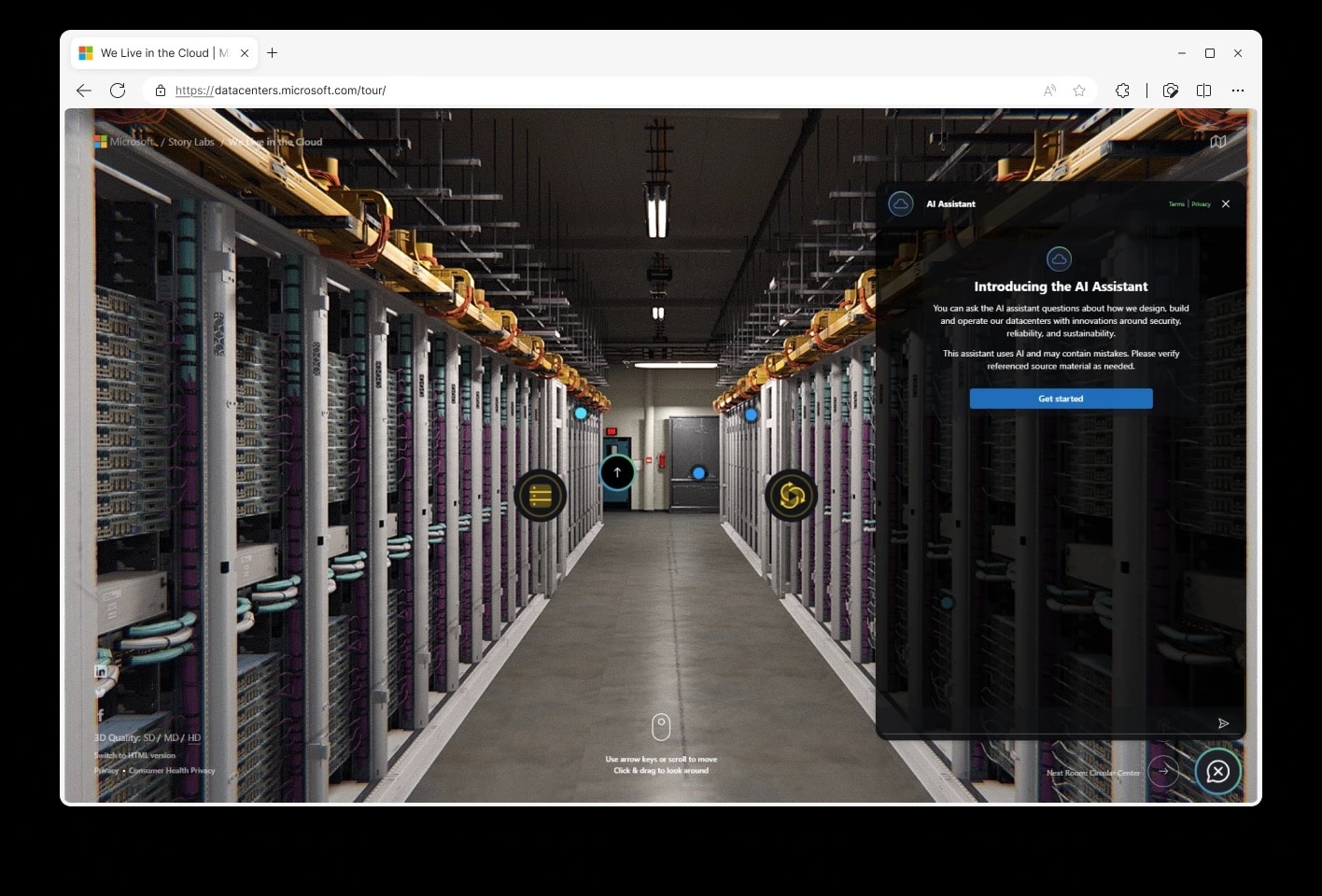
Microsoft closed its fiscal year 2026 with a new milestone in its AI infrastructure and cloud services strategy. The company launched 88 data centers during the past fiscal year and maintains its expansion pace with the goal of doubling its global capacity in just two years. Financial results also show strong growth in the Azure business and unprecedented investments to continue expanding its infrastructure.
The key points of Microsoft’s expansion in 20 seconds
- Microsoft added 88 data centers during fiscal year 2026.
- In the last quarter alone, it added 31 facilities across five continents, with an additional 1 GW of capacity.
- Infrastructure investment reached $145.3 billion in fiscal year 2026.
- Azure grew 43% and surpassed $100 billion in annual revenue for the first time.
- The company plans to increase capital spending to around $175 billion during fiscal year 2027.
This expansion confirms that Microsoft continues to lead one of the largest digital infrastructure investment races in the tech industry. The demand for AI services, cloud computing, and model training is driving the construction of new data centers at a pace that just a few years ago would have been hard to imagine.
One gigawatt of additional capacity each quarter
During Microsoft’s Q4 FY2026 earnings presentation, CEO Satya Nadella explained that the company added 31 data centers in the last quarter, spread across five continents. These new facilities contributed about 1 GW of capacity.
This isn’t an isolated event. Microsoft had already added around 1 GW in each of the two previous quarters, consolidating a very rapid growth trend. In comparison, over the entire fiscal year 2025, the company launched approximately 2 GW.
According to Nadella, Microsoft continues to progress toward its goal of doubling its total infrastructure capacity in just two years, driven by growing demand for cloud services and AI-related workloads.
This expansion scale is also reflected in the company’s annual report. Including data centers, offices, and other facilities, Microsoft now exceeds 112 million square feet, or about 10.4 million square meters of space.
Record investments to sustain Azure’s growth
Infrastructure growth is also evident in the financial figures.
Microsoft allocated $41 billion in capital expenditures during the last quarter, up from $31.9 billion in the previous quarter. For fiscal year 2026, total spending reached $145.3 billion, with roughly two-thirds going toward hardware infrastructure.
The company anticipates that Q1 of FY2027 will see around $50 billion in investments, and the total annual expenditure will be about $175 billion, again setting a record high.
CFO Amy Hood acknowledged that the increase in spending also reflects rising costs for certain components used in data center construction and equipment.
Additionally, Microsoft maintains significant financial commitments for the coming years. The annual report notes almost $29.85 billion committed to construction projects through 2027, along with $32.41 billion in operational and financial lease agreements. Beyond 2027, these commitments exceed $411 billion.
More efficiency to maximize every GPU available
Physical expansion isn’t the only focus. Microsoft has also worked to improve the utilization of its existing infrastructure.
Nadella explained that the company has managed to reduce by nearly 50%* the time needed to deploy new GPUs in its main cloud regions. Hood added that improvements in managing CPU and GPU fleets, along with internal process changes, allowed faster provisioning of capacity and better response to high demand.
The company also announced a significant accounting change: Microsoft will extend the estimated lifespan of its data centers and office buildings from 15 to 25 years, based on operational experience and asset utilization forecasts.
Hood noted that this change will barely impact FY2027 operational profit but will alter how some future data center contracts are classified, shifting some from operating to finance leases.
Azure surpasses $100 billion for the first time
Financial results show that the cloud business remains Microsoft’s primary growth engine.
Quarterly revenues reached $90 billion, beating market expectations. The Intelligent Cloud division generated $39.3 billion, a 32% increase from the previous year.
Within this segment, Azure and other cloud services grew by 43%, and Azure surpassed $100 billion in annual revenue for the first time.
For FY2026, Microsoft reported total revenue of $331.8 billion, an 18% increase over the prior year, with operating profit rising 21% to $155.2 billion.
The Intelligent Cloud division contributed $137.8 billion in revenue and $56.97 billion in operating profit.
Remaining Performance Obligation (RPO) for the cloud business reached $678 billion, excluding OpenAI. About 30% of this backlog is expected to convert to revenue in the next twelve months.
OpenAI: assets and infrastructure
The annual report also provides new details about Microsoft’s relationship with OpenAI.
In FY2026, Microsoft recognized $24.1 billion related to OpenAI, including shared revenues. It also had $6 billion in receivables.
The company had committed $13 billion in funding for OpenAI, of which $11.9 billion had already been disbursed by year-end.
Meanwhile, the book value of Microsoft’s servers, networking equipment, and software reached $215.87 billion, up from $132.84 billion a year earlier, reflecting the massive growth of its technological infrastructure.
Not all figures increased. Free cash flow declined by 23% year-over-year to $19.64 billion, and staff was reduced by about 5,000 employees from June 2025, mainly in the US and in research, sales, marketing, and admin areas.
Despite high levels of investment and rising costs related to capacity expansion, the market responded positively after earnings were published. Microsoft’s shares briefly surpassed $400 during the post-earnings session before settling around $390.
Frequently Asked Questions
How many data centers did Microsoft open during FY2026?
Microsoft launched 88 data centers during FY2026 as part of its strategy to expand capacity for cloud and AI services.
How much will Microsoft invest in infrastructure during FY2027?
The company plans to allocate around $175 billion in capital expenditures during FY2027, after investing $145.3 billion in 2026.
How did Azure perform over the last fiscal year?
Azure and other cloud services grew 43% year-over-year. Additionally, Azure surpassed $100 billion in annual revenue for the first time.
Why is Microsoft extending the lifespan of its data centers?
The company believes its facilities can operate longer than initially estimated and has extended their accounting lifespan from 15 to 25 years, which will affect how future investments are recorded.
Sources:
- Microsoft FY2026 Q4 Earnings Call.
- Microsoft Annual Report FY2026.
- Microsoft Investor Relations.
