
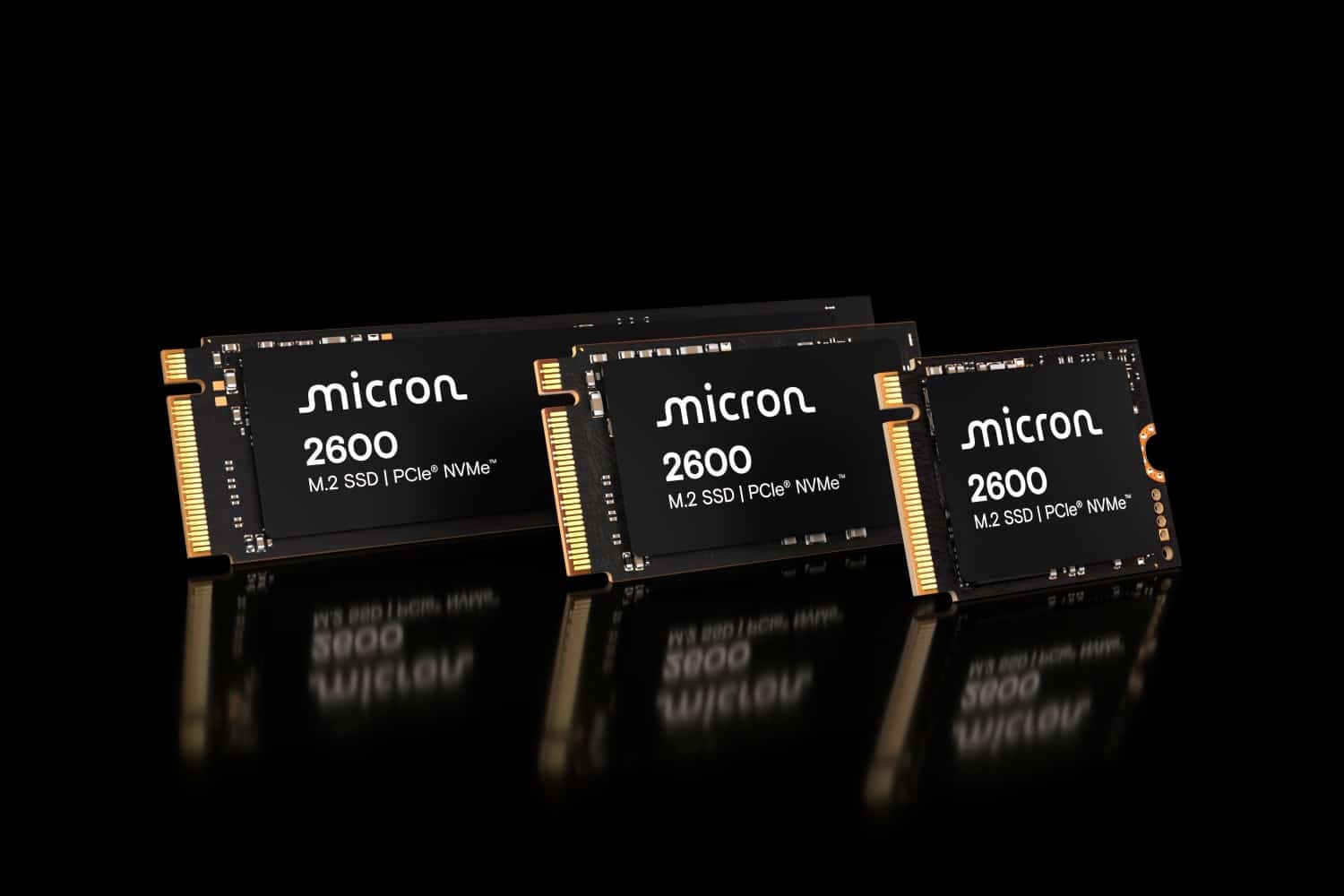
Micron has confirmed the end of an era for the consumer market. The American company announced it is exiting the end-user business and will cease selling products under the Crucial brand — including RAM modules and SSDs that are highly popular among PC builders and enthusiasts — to focus its capacity on AI data centers and other high-volume enterprise customers.
The decision comes during a peak period of demand for memory and storage for AI, and risks further tightening already soaring prices for RAM and SSDs seen in recent months.
Farewell to nearly 30 years of Crucial
Crucial has been a leading brand in memory and storage for end users for 29 years: from DDR modules for home and professional systems to SATA and NVMe SSDs that have been common in mid-range and high-end configurations.
Micron will continue shipping Crucial products through the consumer channel until the end of its second fiscal quarter, i.e., until February 2026. Beyond that, the brand will disappear from shelves, though the company has guaranteed ongoing warranty and support services for already sold products.
Meanwhile, Micron will keep marketing its own brand for enterprise and data center product lines, where the highest-value solutions are concentrated: DDR5 server memory, HBM for AI GPUs, and high-performance storage.
AI-driven: prioritizing “strategic customers”
The move is driven by one key factor: artificial intelligence. As the company admits, the growth driven by AI at data centers has led to an unprecedented surge in demand for memory and storage.
Micron’s Chief Commercial Officer, Sumit Sadana, describes it as a “difficult but necessary decision” to “improve supply and support” for its strategic clients in the fastest-growing segments. Practically, this means reallocating production capacity that was previously dedicated to Crucial toward large contracts for HBM, DDR5 for servers, and enterprise SSDs linked to GPU clusters and AI clouds.
Several analysts point out that the consumer business of Crucial accounted for a relatively small portion of Micron’s overall revenue, so the direct financial impact will be limited. The company also plans to internally reassign affected staff by leveraging vacancies in other divisions.
A cold splash for PC builders and gamers
While this aligns with Micron’s strategy, it is a significant blow to the PC ecosystem. Crucial historically competed on price and performance with other memory and SSD brands, pushing margins in the sector and offering reliable options for those building or upgrading their own systems.
The withdrawal of a key player comes at one of the worst possible times, as the market is currently experiencing a perfect storm of component shortages and rising costs. Part of the DRAM and NAND production capacity has shifted toward more profitable memories — such as HBM for AI GPUs — reducing the available supply for consumer DDR5 modules and SSDs.
In recent months, DDR5 32GB kits have gone from a little over 130 euros to well above 300 and nearing 400 euros in some stores, depending on models and markets. This volatility resembles commodity markets more than a mature tech product.
At the same time, some device manufacturers have been forced to raise prices due to higher memory costs, as seen in motherboards, mini PCs, or devices like Raspberry Pi, where integrated RAM is a key cost component.
With Crucial out, the market loses a competitive supplier at a time when additional capacity is most needed to ease price pressures.
Less competition amid a memory crisis
Crucial’s exit doesn’t mean a lack of brands in the lineup but does reduce effective competition at a crucial moment. Other firms will continue supplying DDR5 modules and SSDs for the consumer market, but all face the same reality: the industry’s global focus is on feeding AI data centers.
Major players — Micron, Samsung, SK Hynix, among others — are readjusting their factories to maximize high-margin memory production for GPUs, servers, and specialized solutions. The direct result is that other segments, including consumer, get less volume and see prices rise while supply tightens.
In this context, Micron’s decision to leave the consumer business with Crucial adds more pressure: options become more limited, and some demand will shift to other brands already operating at capacity.
What can users expect in 2026?
In the short term, Micron will continue shipping Crucial products until February 2026, so the impact won’t be immediate. Stocks will remain in channels for months, and other manufacturers will try to fill the gap left by the brand.
However, if the imbalance between AI demand and total memory production capacity isn’t addressed, pressure on RAM and SSD prices could persist well into 2026. Crucial’s departure isn’t the main cause but a further accelerant in an already tense market.
For end users and small builders, the message is clear: it will be wise to plan future memory and storage upgrades carefully, compare prices across brands and models, and consider alternatives like purchasing during sales or opting for intermediate configurations (e.g., 32GB instead of 64GB) while the market stabilizes.
Micron believes that focusing its resources on AI, data centers, and enterprise segments will strengthen its position at the heart of the new data economy, even if it means bidding farewell to a consumer brand that has accompanied millions of users for nearly three decades.
Frequently Asked Questions about the end of Crucial and the impact on RAM and SSDs
How long will Crucial RAM and SSDs still be sold?
Micron has announced it will continue shipping Crucial products through the consumer channel until late February 2026, coinciding with the end of its second fiscal quarter. Afterward, remaining stock will be all that’s left in stores.
Will warranty services remain for already purchased Crucial products?
Yes. Although the brand is exiting the consumer market, Micron has confirmed it will continue to offer warranty and support for sold Crucial products, respecting each product line’s terms and conditions.
Will DDR5 and SSD prices rise further after Crucial’s exit?
The withdrawal adds to a context of tight supply and rising memory costs driven by AI demand. It’s reasonable to expect continued price pressure while the industry prioritizes data centers and doesn’t significantly ramp up manufacturing, though the exact evolution will vary by manufacturer and market.
What options are available for those wanting to build or upgrade a PC in 2026 without Crucial?
Users can still turn to other brands of DDR5 RAM and SSDs aimed at consumer and gaming markets. With less competition, it’s even more important to compare prices, read reviews and specifications, and take advantage of promotional periods (sales or discount days) to mitigate the overall rising costs of memory and storage.
via: investors.micron