
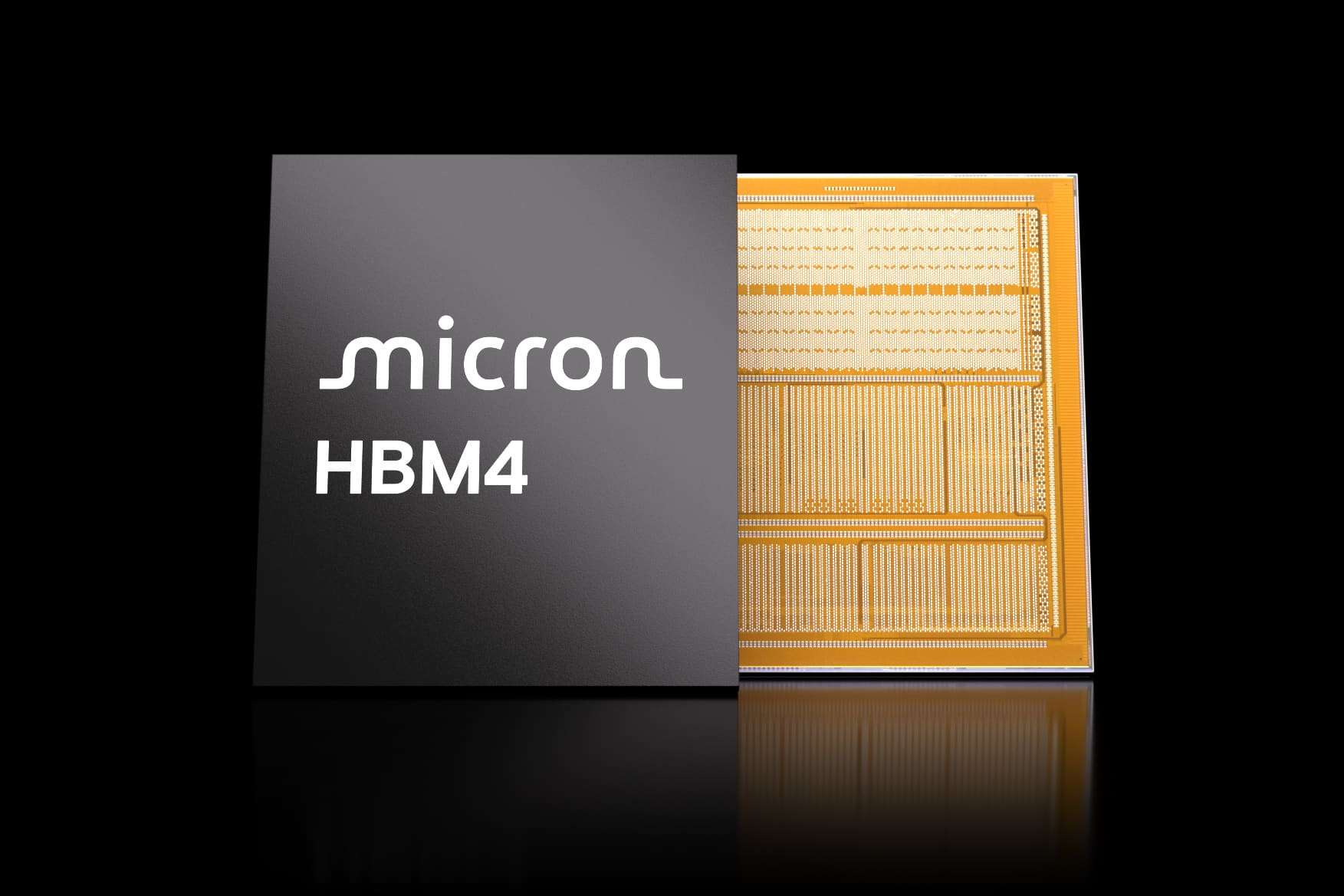
Micron has marked its 2 GB GDDR7 chips at 28 and 32 Gbps as End of Life (EOL), according to the company’s official catalog. The decision affects two part numbers that had been used in NVIDIA’s GeForce RTX 50 graphics cards and removes one of the available sources for supplying graphics memory to this GPU generation.
GDDR7 memory for the RTX 50 in 20 seconds
- Micron has discontinued its 2 GB GDDR7 chips at 28 and 32 Gbps.
- The company had started supplying GDDR7 to NVIDIA and had already appeared in some RTX 50 cards.
- Samsung and SK hynix remain the main suppliers of GDDR7 memory for this generation.
- Micron’s 3 GB GDDR7 chips remain in production, but have limited use in the RTX 50 lineup.
- The market is preparing 4 GB and 6 GB GDDR7 memory for future GPUs.
The move is notable because Micron entered the GDDR7 supply chain for the RTX 50 relatively late. The company came on board as an NVIDIA supplier in mid-2025, and it wasn’t until February 2026 that RTX 50 cards fitted with its memory chips started showing up.
The change doesn’t mean NVIDIA is left without GDDR7 suppliers, either. Samsung and SK hynix continue supplying this type of memory for the RTX 50, so the immediate impact on card availability will depend on how much volume Micron’s chips represented and how much capacity the other manufacturers have to cover it.
Micron discontinues two GDDR7 variants
The affected part numbers are 2 GB GDDR7 chips, equivalent to 16 Gb density. Micron made versions at 28 Gbps and 32 Gbps.
The company’s official catalog lists both part numbers as End of Life, meaning they’re no longer part of its available production. Specifically, the cited information identifies the affected variants as MT68A512M32DF-28:A and MT68A512M32DF-32:A.
Micron also makes GDDR7 at a higher density, 24 Gb or 3 GB per chip. Those part numbers remain in production, so the decision doesn’t mean the company has fully exited the GDDR7 memory business.
The difference in capacity, however, limits where these modules can be used within NVIDIA’s current lineup. The available information indicates that the 3 GB chips don’t fit neatly into most of the memory configurations used by the RTX 50 cards.
Graphics memory is spread across several chips around the GPU, and the final capacity depends on the number and density of those components. That’s why having a higher-capacity GDDR7 chip doesn’t automatically mean it can directly replace a 2 GB chip in any given card.
Samsung and SK hynix keep the supply going
The GDDR7 market for the RTX 50 continues to rely mainly on Samsung and SK hynix. With Micron’s 2 GB variants gone, these two manufacturers remain the main sources cited in the available information.
The effect on GeForce cards will depend on how much weight Micron carried in the total volume of memory supplied to NVIDIA. The source article suggests that even a 10% share could be noticeable in a market with memory constraints, but that figure hasn’t been confirmed by either NVIDIA or Micron.
So it can’t be said that the discontinuation will by itself cause an RTX 50 shortage. What does change is the number of available sources for certain memory chips.
The situation also arrives at a time when the cost of graphics memory is already having a direct impact on card prices. According to the reference information, NVIDIA has already applied several price increases during 2026 to certain GPU and memory packages, while some card makers have passed part of those increases on to the final price.
Configurations with large amounts of VRAM are especially sensitive because they need a higher number of chips or higher-density components. That can raise manufacturing costs when the memory supply is constrained.
3 GB GDDR7 doesn’t solve the RTX 50’s problem
Micron still makes 3 GB GDDR7 chips, but the available information indicates they have limited usefulness for the current RTX 50 lineup.
The reason lies in how NVIDIA configures its different cards. Using 3 GB modules doesn’t fit directly with most of the VRAM capacities present in the current generation, so it isn’t a simple substitute for the 2 GB chips Micron just discontinued.
That explains why having 3 GB GDDR7 in production doesn’t substantially change the situation for the RTX 50.
The strategy could look different for the next generations. According to forecasts cited in the source article, memory makers are said to be preparing 4 GB and 6 GB GDDR7 chips for 2027 and 2028. These capacities would be aimed at future GPUs, including what the market currently identifies as the RTX 60 family, although NVIDIA hasn’t confirmed either those configurations or that timeline in the information provided.
More VRAM, more pressure on GPU costs
Graphics memory has become an increasingly important component of cards aimed at artificial intelligence and gaming. In both cases, having more VRAM makes it possible to work with larger datasets, models, or textures without relying as heavily on other levels of memory.
For GPUs aimed at AI, this issue carries even more weight. Language models and other workloads can require large amounts of high-speed memory to store parameters, activations, and temporary data.
For consumer RTX 50 cards, the situation is different because NVIDIA has to balance VRAM capacity, bandwidth, power consumption, and manufacturing cost. Changing chip density isn’t just a matter of installing bigger modules, since board design and the GPU’s memory controller are also involved.
Micron’s discontinuation of its 2 GB GDDR7 chips therefore adds another factor to watch in the RTX 50 supply chain. Samsung and SK hynix remain available as the main suppliers, while Micron keeps other GDDR7 part numbers in production.
The next significant shift could come with higher-density chips. If 4 GB and 6 GB GDDR7 memory reaches the market within the timeline suggested by these forecasts, future GPU generations will have more options for increasing VRAM capacity without necessarily multiplying the number of chips installed on each card.
FAQ
Which GDDR7 chips has Micron discontinued?
Micron has marked its 2 GB GDDR7 chips at 28 Gbps and 32 Gbps as End of Life. The identified part numbers are MT68A512M32DF-28:A and MT68A512M32DF-32:A.
Who now supplies GDDR7 memory for the RTX 50?
Samsung and SK hynix remain the main suppliers cited for the RTX 50. Micron’s discontinuation doesn’t eliminate GDDR7 supply for these cards.
Has Micron stopped making all of its GDDR7 memory?
No. The company keeps other GDDR7 part numbers in production, including 3 GB chips. What has ended are the specific 2 GB variants listed in its catalog.
Will there be higher-capacity GDDR7 chips?
The reference information points to 4 GB and 6 GB GDDR7 chips arriving during 2027 and 2028, aimed at future GPU generations. That timeline should be treated as a forecast, not a confirmation from NVIDIA.
