
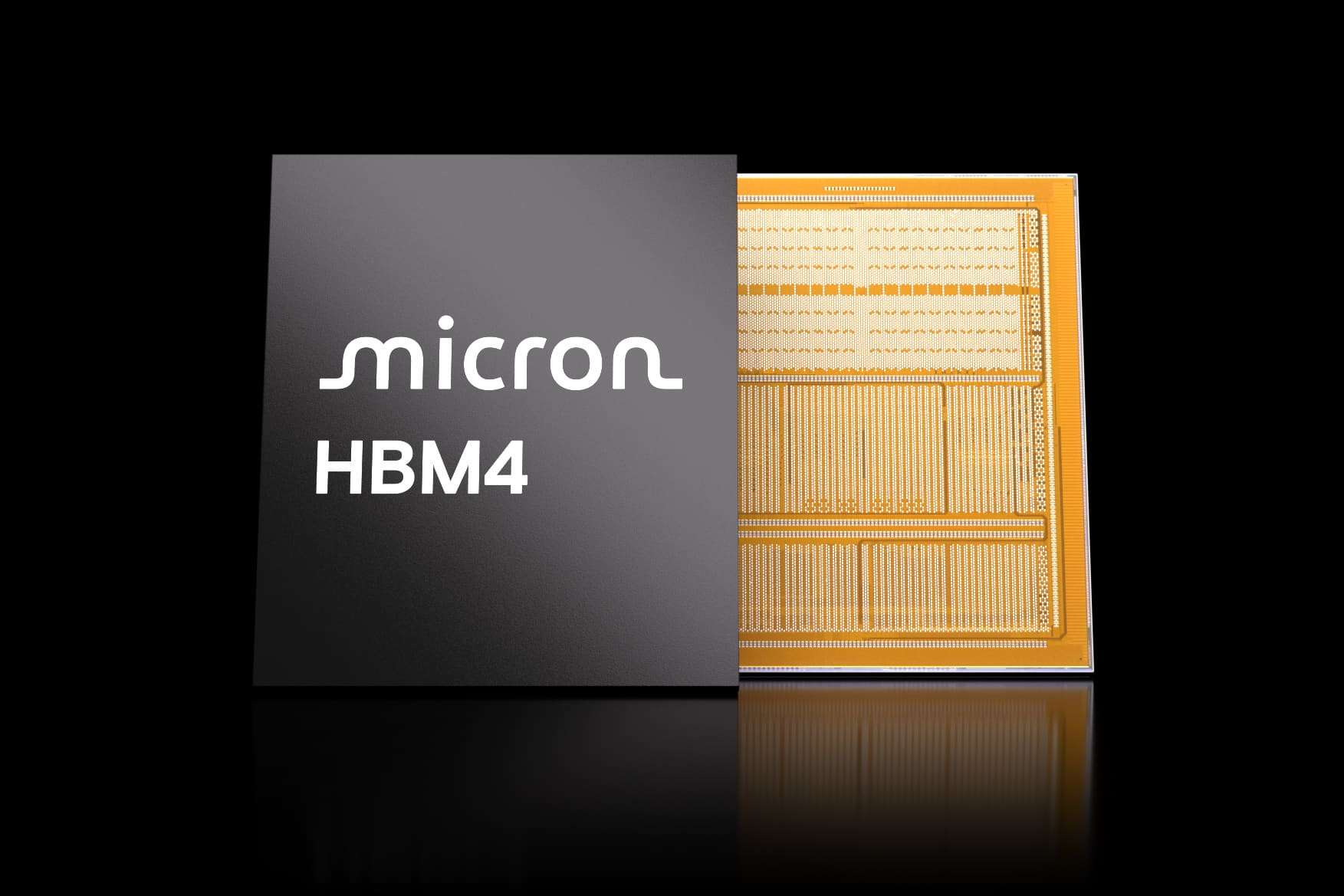
Micron and Anthropic have signed a strategic agreement that confirms an increasingly evident trend in AI infrastructure: the competition is no longer just about GPUs, data centers, or available energy. Memory and storage have become equally critical components for training and serving frontier models like Claude.
Announced on June 22, 2026, the agreement covers four areas: designing memory and storage architectures for AI workloads, supplying Micron data center products, adopting Claude within Micron, and a strategic investment by the memory manufacturer in Anthropic’s Series H funding round. Financial terms have not been made public, but industry interpretation is clear: AI labs need to secure critical components for the next several years, and memory manufacturers aim to take on a more strategic position in the evolving supply chain.
Memory is no longer a secondary component
For years, the conversation around AI infrastructure has been dominated by GPUs. NVIDIA, AMD, Google’s TPUs, AWS’s Trainium, and custom ASICs have captured much of the technical and financial attention. It makes sense: accelerators are the most visible part of the system. But an AI cluster’s performance isn’t driven solely by raw compute power. It needs to feed data to those accelerators continuously, transfer information between nodes, and handle increasingly intensive inference workloads.
This is where HBM, DRAM, and SSDs come into play. Micron emphasizes that its portfolio of high-bandwidth memory, DRAM, and data center storage impacts system performance, energy efficiency, and total cost of ownership for training and inference systems. In large-scale models, a poor balance between compute, memory, and storage can lead to underutilized capacity, driving up costs.
Anthropic expresses this from the demand side. Co-founder and Chief Computing Officer Tom Brown links the company’s computing strategy to “every layer of the stack,” highlighting memory and storage as central to efficiently training and serving Claude. While technical in tone, this succinctly captures the market shift: training models is no longer just about acquiring more accelerators but designing complete systems where every bottleneck counts.
| Agreement Area | Implications | Relevance to AI |
|---|---|---|
| Architecture design | Micron and Anthropic will analyze memory and storage across various workloads | Enables tailored systems to meet Claude’s needs |
| Supply | Memory and storage supply for Micron’s data center portfolio | Secures critical components in a tense market |
| HBM, DRAM, and SSDs | Core components of the data stack | Affects performance, power consumption, and cost per token |
| Claude adoption | Micron already uses Claude for engineering, manufacturing, and corporate functions | Transforms Micron into an enterprise customer and technical partner |
| Strategic investment | Participation in Anthropic’s Series H | Deepens the relationship beyond component procurement |
| Operational goal | Improve performance, energy efficiency, and token economy | Helps scale training and inference with less waste |
Token cost reaches hardware
One of the most significant aspects of the announcement is the phrase “token economics.” This is no minor detail. Token economics measures, in practical terms, how much it costs to process, generate, and serve the basic units of work—tokens—in a language model. For a company like Anthropic, reducing this cost can mean the difference between sustainable margins and dependence on increasingly expensive infrastructure.
Memory plays a direct role in this equation. HBM enables feed accelerators with bandwidths far superior to conventional memories. DRAM supports large volumes of data in server systems. Data center SSDs help move, prepare, and store information during training, fine-tuning, inference, and search-augmented retrieval. If any of these layers fall short, effective performance drops.
The agreement also indicates that major AI labs are entering a deeper level of integration with their suppliers. It’s no longer enough to simply buy cloud capacity or reserve GPUs. Frontier model training requires influence over the design of the systems used, bringing Anthropic closer to a collaboration model similar to the years-long partnerships that hyperscalers have developed with chipmakers, networking, and storage providers.
For Micron, this comes at a favorable moment. Demand for AI memory has shifted industry perceptions. DRAM and NAND have traditionally been cyclical markets, with periods of oversupply and price pressure. In contrast, HBM has become a high-value component within AI clusters. Partnering with Anthropic allows Micron to link its technology to one of the most important model developers and strengthen its role in next-generation systems.
A partnership uniting provider, customer, and investor
The relationship goes beyond supply. Micron has also integrated Claude internally to accelerate programming tasks and use cases across engineering, manufacturing, and corporate functions. This adoption turns the agreement into a two-way collaboration: Anthropic needs memory and storage; Micron uses Claude to improve its processes and, simultaneously, gains first-hand insight into how AI performs in industrial and design environments.
This aspect of the announcement is important because AI isn’t only being adopted in software, customer service, or content generation. In semiconductors, it can influence technical documentation, code review, process analysis, automation, manufacturing operations, and design support. If these uses deliver real productivity gains, Micron is not just selling to the AI industry—it’s transforming its own operations.
The investment in Anthropic’s Series H further strengthens this bond. No specific amounts have been disclosed, so avoid overinterpreting. Yet, this gesture aligns with a broader trend: infrastructure providers no longer want to be mere suppliers. They aim to participate in the growth of AI labs that will require enormous amounts of computation, memory, storage, and energy in the coming years.
For the cloud sector, the agreement signals several things. First, AI architecture is increasingly being negotiated closer to the silicon level. Second, memory supply becomes strategic in a market where HBM, server-grade DRAM, and high-performance SSDs can determine actual deployment capacity. Third, the cost per token will become an increasingly common metric in infrastructure discussions, not just in product teams or finance.
There’s also a recognition of potential risks. If AI labs secure preferential deals with memory manufacturers, smaller companies or secondary cloud providers may face stiffer competition for critical components. Demand pressure on HBM and server DRAM is already affecting other memory generations and consumer markets. When AI consumes manufacturing capacity and long-term contracts, its impact propagates along the entire supply chain.
Micron and Anthropic haven’t announced a new GPU, model, or data center. Instead, they’ve introduced something less visible but potentially more foundational: a partnership for memory and storage design centered on the actual needs of frontier AI. In an industry obsessed with compute, the message is clear: without data moving at the right speed, GPUs alone aren’t enough.
Frequently Asked Questions
What have Micron and Anthropic announced?
They have signed a strategic agreement that includes jointly designing memory and storage architecture for AI, supplying data center products, adopting Claude within Micron, and a strategic investment in Anthropic’s Series H.
Why is memory important for models like Claude?
Because training and inference require moving large volumes of data with low latency and high bandwidth. HBM, DRAM, and SSDs influence performance, power consumption, and the cost per token.
Does the agreement include financial figures?
No. Micron and Anthropic have not revealed the financial terms of supply or the amount of the strategic investment.
What does “token economy” mean in AI infrastructure?
It refers to the cost and efficiency with which a system can process and generate tokens. Improving memory, storage, and architecture can reduce operational costs when serving large-scale AI models.
Source: Micron
