
Meta has aimed to put into simple words one of the most crucial infrastructures of the digital economy: data centers. The company, which operates Facebook, Instagram, WhatsApp, Threads, Meta AI, and devices like Ray-Ban Meta, has published an educational explanation on how these facilities work and why they have become even more important with the advancement of artificial intelligence.
The move comes at a time when AI infrastructure has become one of the top priorities for tech companies. Meta assures that in the last 24 months, it has started building ten data centers and already owns 32 facilities that are operated directly. The company is redesigning part of its fleet to support AI workloads, both training and inference, in a landscape where demand for computing power continues to grow.
What is a Data Center Really?
A data center is a physical building designed to house technology capable of storing, processing, and moving digital information at high speed. While to users it seems like everything happens inside a phone or a computer, much of that activity depends on servers, chips, storage systems, fiber networks, routers, cooling systems, and electrical equipment installed in specialized facilities.
When someone uploads a photo to Instagram, that image doesn’t just “float in the cloud” as an abstract idea. It is stored on physical hardware located in a secure data center. When another person opens the image on their phone, their device sends a request through fiber optic networks, servers process the request, and the image is delivered almost instantly.
The same happens with Threads, where feed content is ordered using machine learning algorithms running in real-time. Similarly, with Meta AI, which requires specialized hardware to execute complex calculations when answering questions, summarizing information, or helping plan a trip. In all these cases, the data center is the unseen component that supports the visible experience.
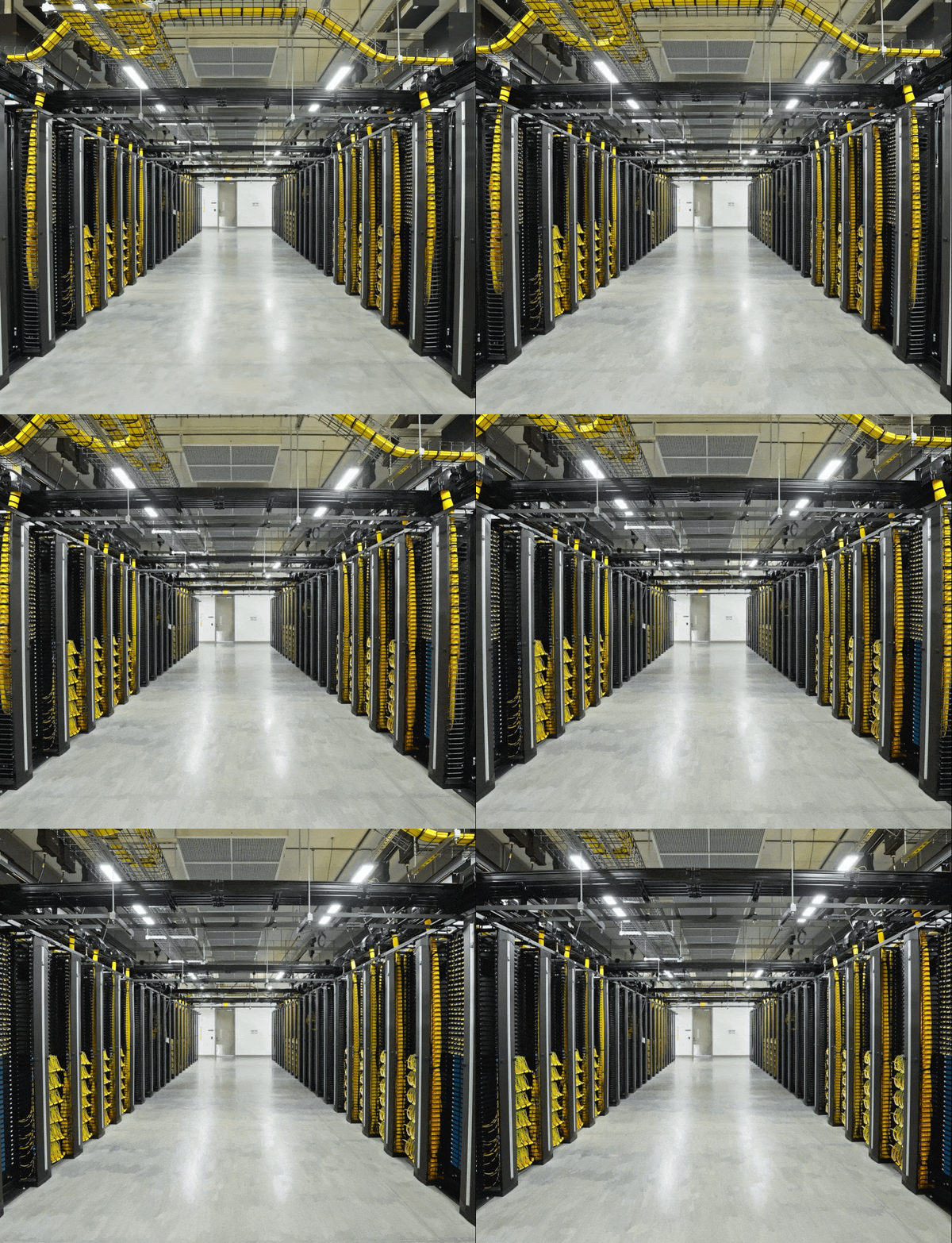
Meta uses a simple analogy: a data center functions like a restaurant kitchen serving billions of people. The servers are the chefs, transforming data into applications and services. The chips are the brains and hands of those chefs, determining the speed and efficiency of calculations. Storage is like the pantry and refrigerators. The network acts as the staff that take orders and deliver dishes. Cooling, power, and security form the infrastructure that keeps the kitchen running smoothly.
Servers, Chips, Storage, and Network
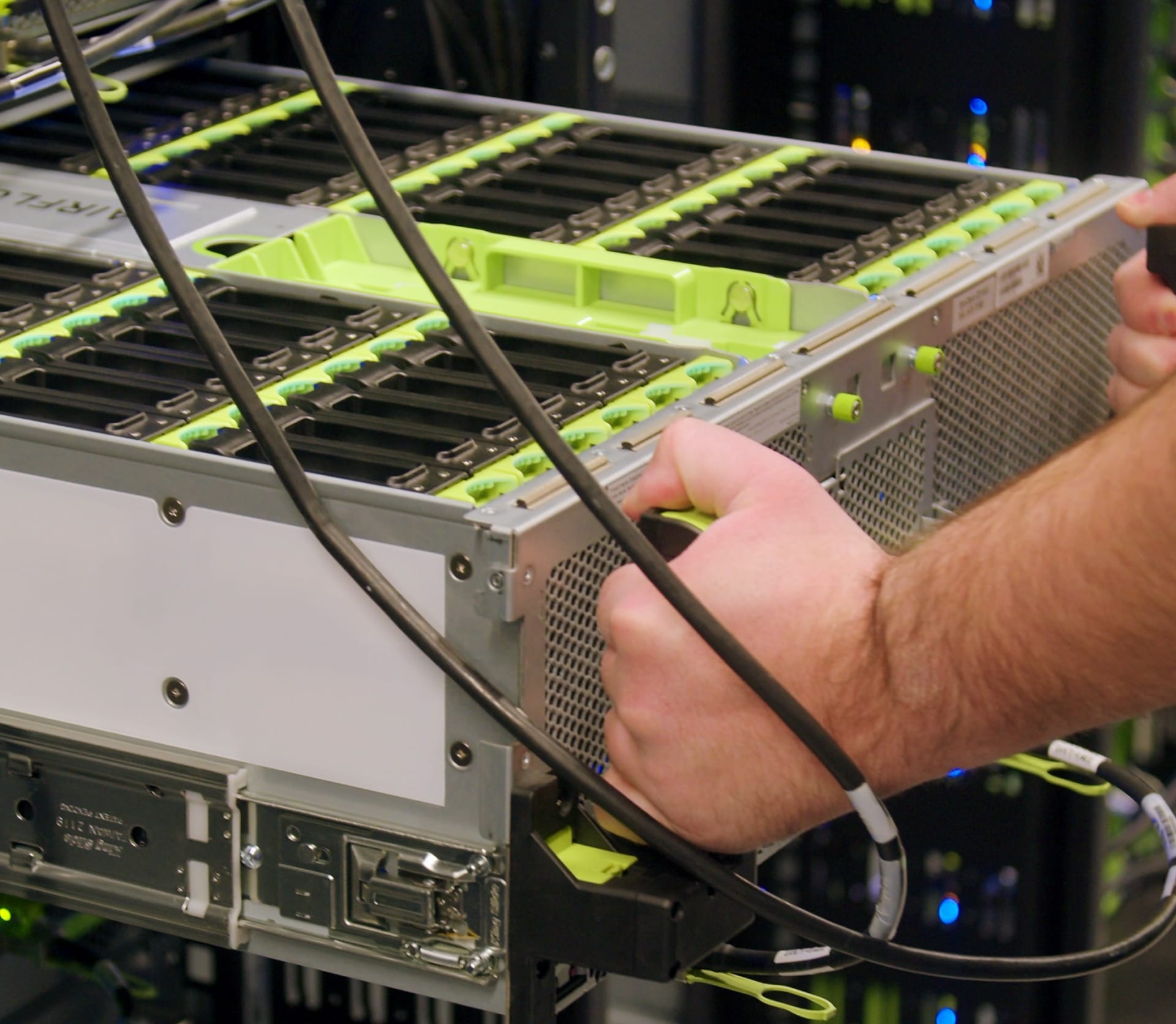
Within a data center, multiple technical layers coexist. The first layer consists of servers—computers designed to process data and run applications at large scale. They are the core of any such facility, handling requests, running services, processing images, videos, messages, ads, AI models, or recommendation systems.
The second layer involves silicon chips. These can be CPUs, GPUs, ASICs, or other specialized devices. In AI, accelerators play a central role because they enable faster and more efficient training of models and inference execution. The choice of hardware affects power consumption, responsiveness, and the operational cost of each service.
The third layer is storage. This includes hard drives, SSD units, and other systems capable of holding enormous amounts of data. For a company like Meta, this encompasses images, videos, messages, configurations, operational logs, and data essential for continuous application functioning.
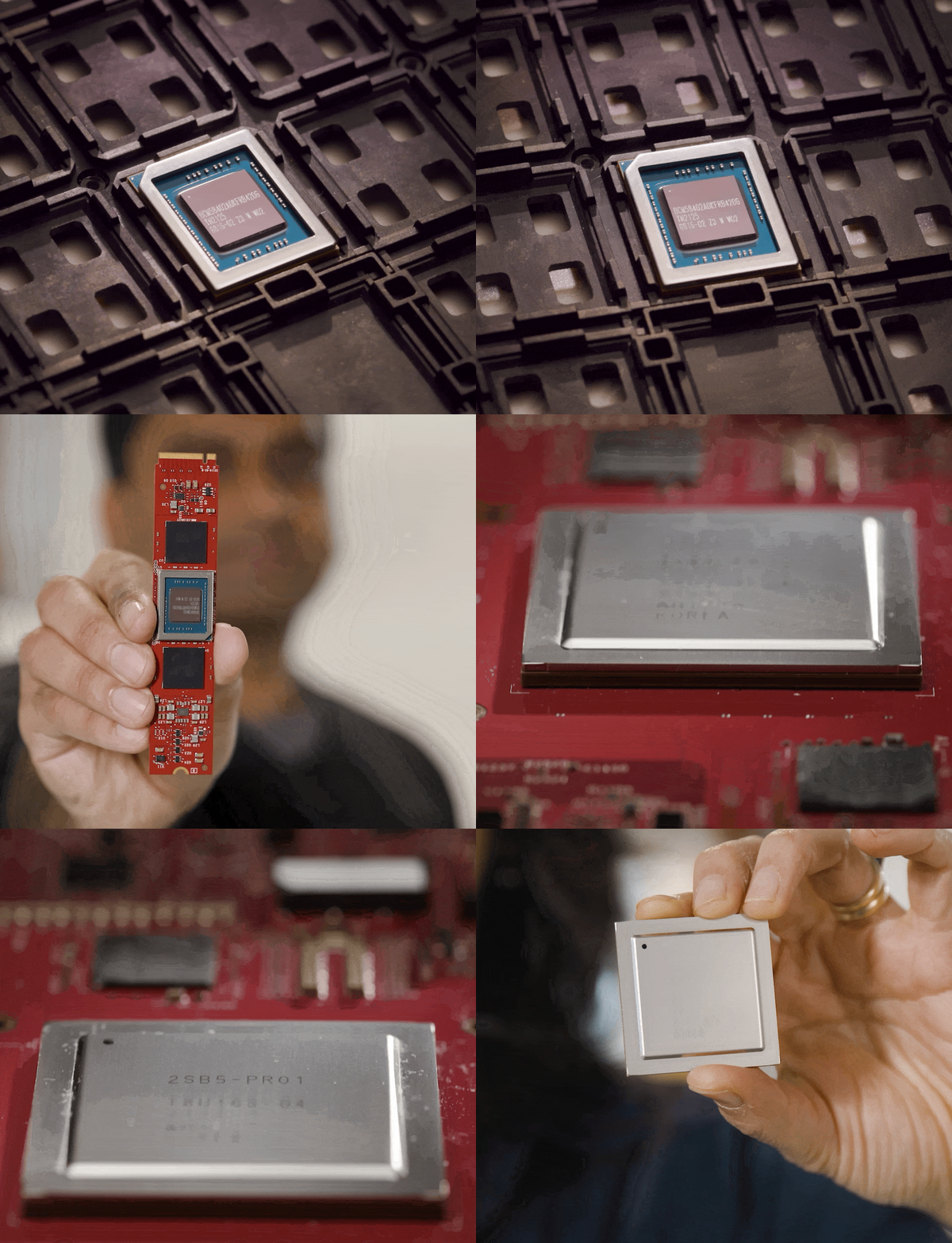
The fourth layer is connectivity. Routers, switches, fiber cables, firewalls, and other equipment manage traffic within the data center and to the outside. This part is essential because having many servers is of little use if information cannot move quickly and reliably between them or towards users.
Supporting all this are infrastructure systems: electrical systems, backup generators, UPS units, cooling, climate control, access controls, cameras, fire protection, and cybersecurity. Data centers are not merely buildings filled with servers—they are highly controlled industrial environments where temperature, power, network, and security must operate with precision.
Meta also emphasizes the role of people. Their data centers generate operational positions related to electrical work, climate systems, fiber optics, security, engineering, and maintenance. Automation is important, but these facilities still need human teams to build, operate, and troubleshoot.
AI-Ready Data Centers
The major difference compared to previous cycles is the integration of artificial intelligence. Meta acknowledges that its new data centers are being designed with an architecture optimized for AI. This involves more computing capacity, greater flexibility for various hardware configurations, high-performance internal networks, and cooling systems prepared for denser equipment.
The company cites facilities under construction in Richland Parish, Louisiana; Lebanon, Indiana; El Paso, Texas; and Tulsa, Oklahoma. It also notes that the centers in Richland Parish, El Paso, Lebanon, and New Albany, Ohio, will each have 1 GW or more of capacity once completed. This scale demonstrates how AI is driving the size and ambition of digital infrastructure.
Computing capacity refers to the total processing volume available to run workloads. Practically, it determines how many operations servers and chips can perform at any given moment. For traditional applications, this was already relevant; for generative AI, personalized recommendations, agents, video, advertising, and multimodal models, it has become a strategic factor.
Meta recognizes that training and inference requirements continue to evolve. Therefore, their designs seek flexibility. Not all AI workloads utilize the same hardware configurations nor generate the same heat. A data center constructed today should serve current equipment but also future generations of accelerators, servers, and cooling systems.
Cooling remains one of the key challenges. AI chips consume significant energy and produce large amounts of heat in small spaces. Meta states that it has developed systems capable of supporting both traditional servers and next-generation AI hardware. This allows facilities to be prepared for future loads without redesigning from scratch every few years.
Meta’s public explanation also has a reputational aspect. Data centers have become sensitive infrastructure due to their energy, water usage, land occupation, and local impact. By presenting these facilities as essential to connecting people, companies, and digital experiences, Meta aims to make the infrastructure more relatable—often discussed only in terms of costs, emissions, energy, or regulatory delays.
The company emphasizes efficiency, flexibility, and environmental responsibility, though it doesn’t disclose all technical or environmental details about each project. This will be a point of close scrutiny by local communities, regulators, and environmental groups as building of AI data centers increases.
What is clear is that AI cannot exist without physical infrastructure. Every assistant response, each feed recommendation, personalized ad, and trained model relies on servers, chips, networks, storage, power, and cooling. The cloud doesn’t just float in the air—it’s built with buildings, cables, machines, and people.
Meta is investing to grow that foundation at the pace of its AI ambitions. The company aims to bring what it calls “superintelligence for individuals” to billions of users, but to do so, it needs a network of data centers that is more powerful, dense, and flexible. The AI race is increasingly a race for land, energy, chips, and timely infrastructure construction.
Frequently Asked Questions
What is a data center?
It is a physical facility housing servers, chips, storage, networks, and support systems to process, store, and move digital information.
How many data centers does Meta have?
Meta claims to have 32 data centers operated directly, and over the past 24 months, it has started constructing ten more.
Why does AI need so many data centers?
Because training and running AI models require vast amounts of computing power, memory, storage, networking, energy, and cooling.
What does it mean if a data center has 1 GW capacity?
It means the facility is designed to support huge electrical and computational capacity. This scale is associated with large-scale AI deployments and massive digital services.
