
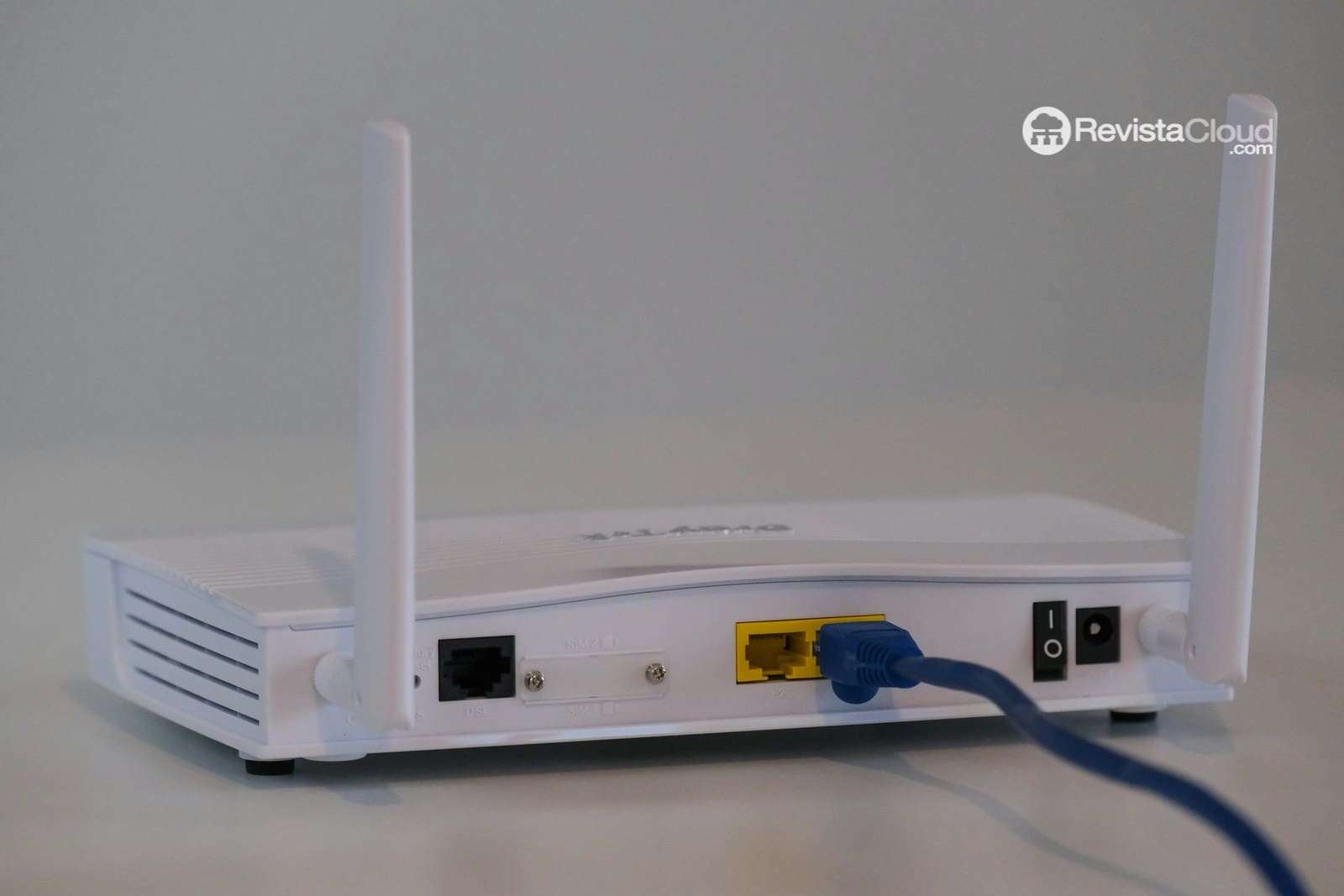
Memory crisis begins to exit the usual realm of servers, graphics cards, computers, and smartphones, reaching a much closer device: the home router. According to Banda Ancha, Movistar has started distributing new units of its Smart WiFi 7 router with a significant internal change: swapping DDR4 RAM for DDR3 in certain units manufactured by Askey.
This may seem minor to the average user, as the router retains the same external appearance and commercial functions. But from a technical perspective, it’s noteworthy. Movistar’s Smart WiFi 7 was introduced as a major evolution over the Smart WiFi 6, equipped for fiber connections up to 10 Gbps, WiFi 7 on 2.4 and 5 GHz bands, mesh networks, WPA3, and enhanced hardware to support more connected devices at home.
The potential use of DDR3 instead of DDR4 does not automatically make the router a poor device, but it does spark a debate about how much the stress in the memory market could impact household products that until now seemed removed from the component wars.
A router designed for busier homes
The Smart WiFi 7 is not a basic router. Movistar designed it to support a stage where home networks have become much more demanding. Many households now have smartphones, laptops, 4K TVs, gaming consoles, cameras, smart speakers, work equipment, home automation devices, and connected gadgets competing for bandwidth and stability.
Adding to this is the rollout of faster fiber connections. A modern router is no longer just about providing WiFi; it must manage heavy traffic, prioritize connections, maintain low latency, provide sufficient coverage, and prevent the wireless network from becoming the bottleneck in a high-speed fiber line.
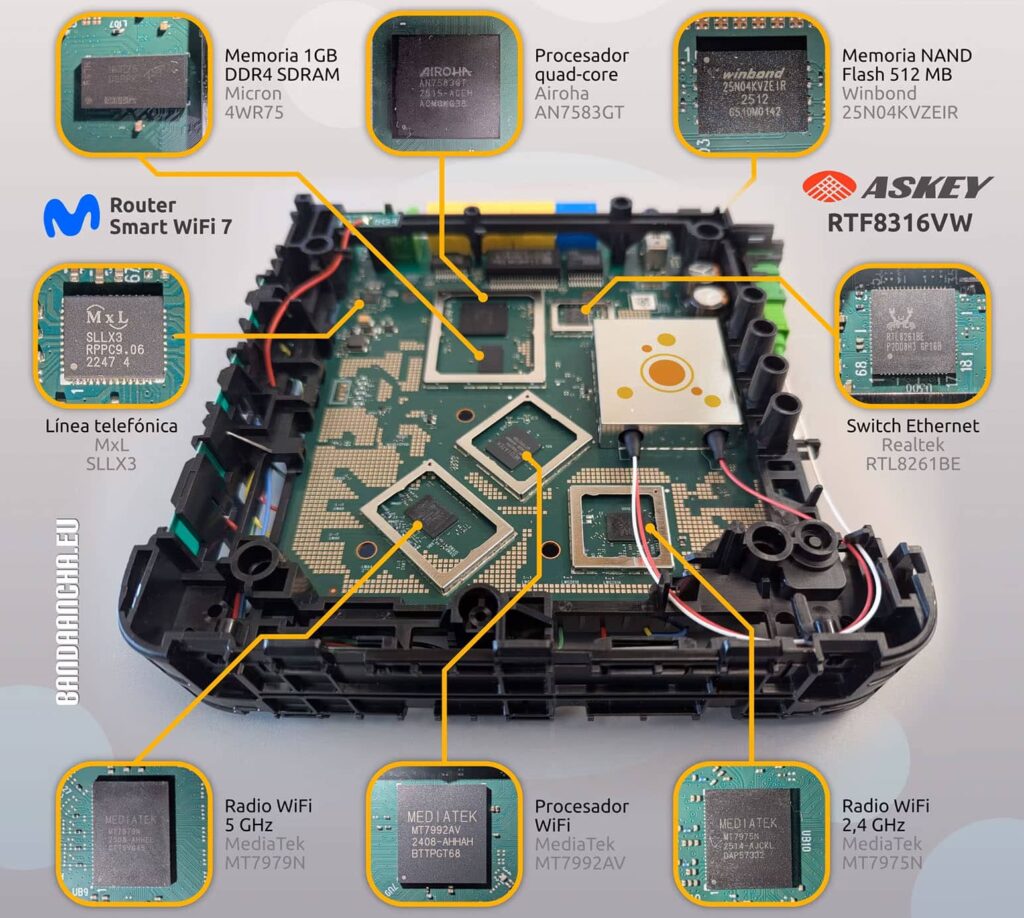
According to technical information shared by Banda Ancha, the first units of the Smart WiFi 7 manufactured by Askey had 1 GB of Micron DDR4 RAM. This was significant because it represented four times more memory than the previous generation. The RAM was accompanied by a four-core ARM Airoha processor, a network-oriented NPU, and a MediaTek Filogic 660 WiFi module.
In this context, replacing DDR4 with DDR3 is not just a technical detail. DDR3 belongs to an earlier generation, operates at lower frequencies, and is generally less efficient than DDR4. In normal household use, many users probably wouldn’t notice clear differences. But in demanding scenarios—many devices, simultaneous traffic, mesh networks, or extended high-consumption sessions—memory can influence the device’s stability and responsiveness.
| Element | Movistar Smart WiFi 7 |
|---|---|
| Manufacturer | Askey |
| Processor | Four-core ARM Airoha |
| Initial memory announced | 1 GB DDR4 from Micron |
| Indicated change | Possible switch to DDR3 memory |
| WiFi | WiFi 7 on 2.4 and 5 GHz |
| Wired network | Ethernet port up to 10 Gbps |
| Features | EasyMesh, WPA3, and support for XGS-PON connections |
| Intended use | Homes with more devices and multi-gigabit fiber |
Why is DDR4 becoming harder to source?
The underlying reason is not just about Movistar or Askey. The memory industry is experiencing intense pressure driven by demand for artificial intelligence, data centers, and servers. Manufacturers are allocating more capacity to high-value chips, such as HBM and other memory types used in AI infrastructure, GPUs, and high-performance systems.
This pressure mainly affects the most visible segments: graphics cards, servers, SSDs, laptops, and RAM modules for PCs. But the supply chain is shared. When certain chips become more expensive or scarce, manufacturers of high-volume devices, like carrier routers, also need to adapt.
This is where DDR3 enters as an alternative. It’s older memory with lower demand in modern products, and may be easier to source in specific formats or cost conditions. For manufacturers, swapping DDR4 for DDR3 can help maintain production and avoid delays. For operators, it allows continued deployment of routers without relying on components under global supply tension.
The challenge is user perception. If a product is marketed under the same name but some units contain different components, transparency becomes crucial. Not all internal changes visibly affect the user experience, but tech-savvy customers might want to know what hardware is installed and if there are performance differences between revisions.
Firmware, support, and reasonable concerns
The published information also points to the need for firmware updates to properly support variants with DDR3. It’s important to be cautious here. There have been discussions on forums about damaged or “fried” routers, but such claims shouldn’t be taken as confirmed facts. Any hardware change, especially memory, typically requires firmware adjustments, stability tests, and specific validation to ensure proper operation.
In a carrier’s router, firmware is an essential component. It controls not only the user interface but also network management, remote updates, telephony, extender compatibility, security, diagnostics, and overall stability. An internal hardware change necessitates that the software correctly recognizes the memory, adjusts timings, frequencies, and configurations, and avoids field issues.
For most customers, this debate will go unnoticed. The router arrives, is installed, and works. But more technical users might ask: if the device was originally built with DDR4, do units with DDR3 deliver the same performance in all scenarios? Without independent load testing, it’s impossible to give a definitive answer.
AI influences home hardware now
The most interesting part of this story is how the demand for artificial intelligence could impact everyday products. Large data centers need vast amounts of memory and storage. That demand shifts manufacturing priorities, pricing, and availability. What begins with AI servers could eventually influence the routers an operator installs in the living room.
This doesn’t mean all routers will degrade or users should panic. It shows that the tech supply chain is more interconnected than it appears. A modest component like 1 GB of RAM in a router can be affected by the same industrial pressures driving up GPU, server, and professional equipment costs.
Movistar must pay attention on two fronts: first, technically—ensuring all variants of the Smart WiFi 7 meet advertised specs, both under normal operation and demanding conditions; second, in communication—clarifying whether hardware revisions exist and specifying actual differences.
For users, simple advice applies: if the router performs well, provides good coverage, and maintains stable connections, there’s no need to worry about the type of memory. But if stability issues, overheating, disconnections, slow performance with multiple devices, or failures after updates occur, it’s wise to check firmware, contact support, and document behaviors.
RAM is no longer just an invisible detail. In the AI race, even household hardware begins to reflect industrial tensions where component shortages extend beyond data centers.
Frequently Asked Questions
What change has been detected in Movistar’s Smart WiFi 7 router?
According to Banda Ancha, some new units manufactured by Askey may have shifted from using DDR4 to DDR3 RAM.
Is DDR3 worse than DDR4?
DDR3 is an older generation, usually slower and less efficient than DDR4. The actual impact on a router depends on the overall design, firmware, and usage scenarios.
Could this change affect WiFi performance?
In normal use, many users might not notice differences. In high-traffic scenarios, with many devices or demanding mesh networks, it could be relevant to analyze performance.
How does this relate to artificial intelligence?
The high demand for memory in AI servers and data centers is putting pressure on the market. That pressure can also impact domestically manufactured devices in large volumes.
Source: Teléfonos and Banda Ancha
