
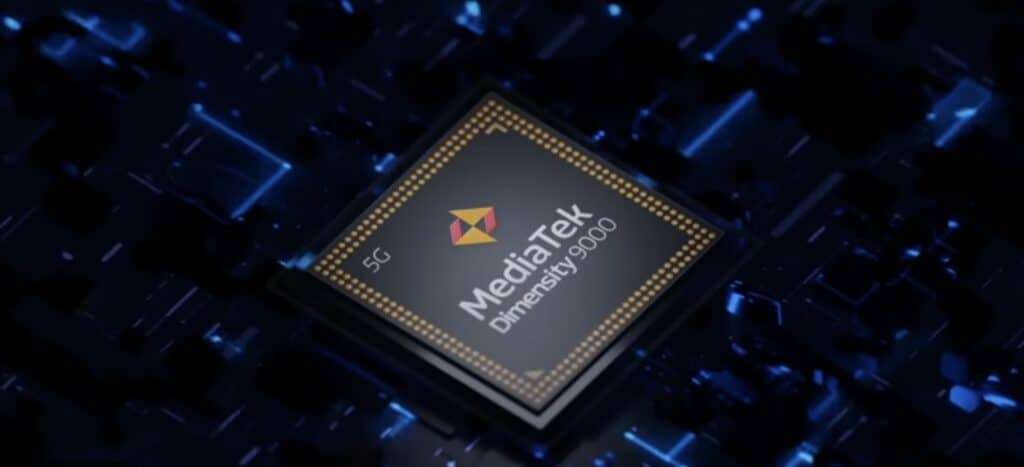
For over a decade, MediaTek has built its reputation around a massive and demanding business: smartphone chips. But the 2025–2026 cycle is pushing the industry toward another center of gravity: data center accelerators and ASICs, tailored for AI workloads and clients purchasing in huge volumes.
In this context, various recent reports and moves point to a strategic shift: prioritizing resources and teams toward “blue ocean” products (markets with less direct competition) such as AI ASICs and silicon for automotive, even if that means the mobile division — home to families like Dimensity — loses some internal focus in the medium term.
Why AI ASICs are “the new gold” (and why MediaTek wants to be there)
The craze for training and inference of increasingly large models has fueled interest in chips designed for a specific task: ASICs (Application-Specific Integrated Circuits). Unlike a more general-purpose GPU, an ASIC usually pursues three very clear objectives:
- Lower cost per operation (when manufactured at scale).
- Energy efficiency optimized for a specific software stack.
- Supply chain control: less reliance on a single GPU provider.
Here, MediaTek sees a historic opportunity. In a earnings call, CEO Rick Tsai explained that the company expects to reach $1 billion in cloud/AI chip revenue in 2026, with projects scaling to “several billion” starting in 2027.
That figure alone explains why many companies are redistributing talent: an ASIC contract for a major client can transform the business in just a few quarters.
The key clue: Google and the leap to the 7th generation TPU
The other major indicator comes from the hyperscalers. Google has been pushing its TPU (Tensor Processing Unit) family for years, both for internal infrastructure and Google Cloud. In 2025, the company revealed Ironwood, its 7th generation TPU, with a clear message: scaling AI isn’t just about raw power, it’s also about interconnection, memory, and efficiency at the “pod” level.
Meanwhile, industry sources report that Google is relying on MediaTek for parts of its next-generation design, especially I/O modules, while TSMC would handle fabrication in 2026, in a different collaboration scheme than previous years.
In practical terms: if MediaTek dives deeper into the design of these chips, it will need top-tier engineers in areas beyond “classic mobile” (high-speed I/O, advanced packaging, data center validation, etc.). And these profiles don’t multiply magically — they are reassigned from elsewhere.
I/O and SerDes: the battlefield where ASICs are won or lost
In a modern AI accelerator, having “muscle” in computation isn’t enough. The chip must move data reliably and quickly between internal blocks, memory, and the network. Technologies like SerDes (serializer/deserializer) come into play, converting parallel data into high-speed serial streams (and vice versa) for high-bandwidth communications.
MediaTek has been emphasizing this area for some time. In a corporate release, the company detailed its IP SerDes 112G LR (long-range), “silicon-proven” in 7 nm, employing PAM4 and NRZ signaling, aimed at data centers, interconnects, and ASIC design.
These types of blocks rarely headline consumer news, but they are the “invisible parts” that determine whether an ASIC will be competitive when the customer demands low latency, sustained performance, and stability under 24/7 loads.
What does this mean for Dimensity (and the mobile market)?
Here, it’s useful to distinguish facts from strategic interpretations:
- Fact: MediaTek is strongly pushing toward AI ASICs and aims for “multi-billion” dollar revenues in the coming years.
- Fact: The AI TPU/infrastructure ecosystem is evolving, with Google unveiling a 7th-generation (Ironwood) focused on scalability.
- Plausible interpretation: if some senior talent shifts toward ASICs and automotive, the mobile division may lose some relative speed in aspects like feature iteration, aggressive optimization, or tactical responses to Qualcomm/Apple.
That doesn’t mean Dimensity will “fall apart” tomorrow. The mobile business remains huge and highly profitable if volume is maintained. But a more subtle change might occur: competitive differentiation could come down to details (ISP, NPU, peak/sustained efficiency, modem, drivers, OEM relationships), and those details require ongoing focus.
In short: it’s not so much about “abandoning mobile” as it is about reordering internal priorities during a period when AI data center contracts promise bigger, more stable deals with higher barriers to entry.
Background: the industry is splitting in two
The trend with MediaTek aligns with a broader industry pattern:
- Consumer (smartphones, PCs): fast cycles, squeezed margins, fierce competition.
- AI infrastructure (ASICs, networks, memory): enormous investments, multi-year agreements, differentiation through interconnects and efficiency.
The result is that every major chip designer is choosing where to “fight its war.” MediaTek seems to be signaling: we also want to play in the AI infrastructure league.
via: wccftech