
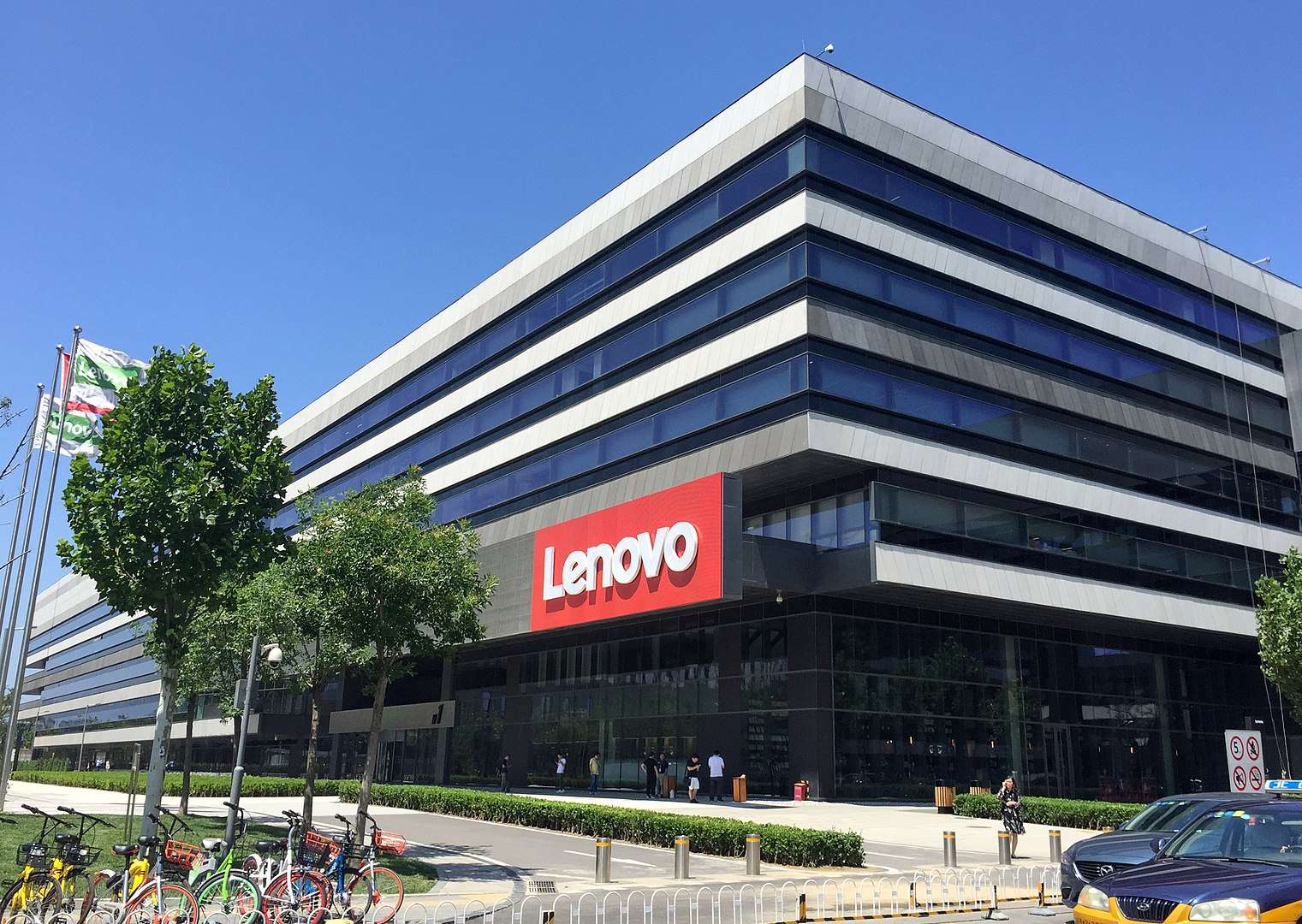
Lenovo and NVIDIA showcased at CES 2026 (Las Vegas) an idea that, in practice, sounds less like a “new server” and more like industrializing AI data center deployment: an “AI factories” program at gigawatt scale designed for cloud providers and major operators to move from design to production with less friction, utilizing validated components, lifecycle services, and a very focused approach on accelerating the “time-to-first-token” (TTFT)—the metric that aims to measure how long an investment in computing takes to start generating AI results in real-world conditions.
The message at the event was clear: value is no longer measured solely by how much power is purchased but by how quickly it becomes a deployed service. The company argues that, for many projects, the bottleneck is no longer just acquiring GPUs, but making them operational in a repeatable and manageable way: energy, cooling, networking, storage, integration, observability, and services.
“AI Gigafactories”: from Machine Room to Assembly Line
Talking about gigawatts is not just for show. It means that the data center design is approaching a “factory” model where everything is planned for scaling—from electrical distribution and rack density to logistics, construction timelines, and commissioning procedures. In this context, Lenovo presents its proposal as a fast deployment framework (they mention TTFT “in weeks”), supported by three pillars: hybrid infrastructure with liquid cooling (Neptune), access to NVIDIA’s accelerated platforms, and a layer of services to operate and maintain the entire system.
This approach is especially pertinent for the so-called “neo-clouds” of AI and for companies transitioning from pilot projects to inference and training services requiring high availability, where each week of delay can mean millions in underutilized CapEx.
Two generations of “rack-scale” systems as anchors: Blackwell Ultra today, Rubin tomorrow
The announcement centers around “rack-scale” systems not sold as standalone units but as building blocks:
- GB300 NVL72 (from Lenovo): a complete rack architecture with liquid cooling, presented as a foundation for rapidly deploying production-ready AI factories.
- Vera Rubin NVL72 (next generation): NVIDIA positions Rubin as its next “rack-scale” platform, designed for large-scale training and inference, as well as reasoning and agent workloads.
In Rubin, NVIDIA describes a highly integrated rack-level system aimed at minimizing communication bottlenecks and supporting increasingly large models with sustained data flow. This level of integration bolsters Lenovo’s argument: if the product is the rack (or cluster), the actual process is industrialized deployment.
What it means for the market (and operators)
Beyond the headline, the movement signifies a clear trend emerging in 2026: AI at scale is no longer purchased as “servers” but as productive capacity. This has several implications:
- Standardization of configurations: fewer “one-of-a-kind” architectures and more repeatable templates, reducing risks when expanding clusters.
- Liquid cooling as the norm: at high densities, air cooling is no longer universal. Lenovo promotes Neptune as a design component to sustain deployment pace.
- Operations as part of the product: monitoring, validation, acceptance testing, maintenance procedures, and supply chain management become as strategic as the GPU itself.
Additionally, Lenovo seeks to reinforce this narrative by emphasizing industrial-scale manufacturing, integration, and global services as accelerators of “time-to-production”—a promise that aligns with many providers’ desire to reduce uncertainty in large-scale deployment.
Quick reference: what each block represents in a modern “AI factory”
| Block / System | Practical Description | Ideal Workloads | Significance in a Gigafactory |
|---|---|---|---|
| GB300 NVL72 (Lenovo + NVIDIA) | Current generation “rack-scale” platform with ready-to-deploy design | Large-scale training/inference, rapid capacity expansion | Reduces integration times: the rack arrives as an operational unit |
| Vera Rubin NVL72 (NVIDIA) | Next-generation integrated “rack-scale” platform, aimed at next-level AI | Reasoning, agentic AI, large-scale training and inference | Enhances system integration and performance; demands more robust energy/network/cooling design |
| Neptune (Lenovo) | Liquid cooling and thermal engineering for dense infrastructure | Sustained high-density operation | If cooling isn’t effective, scaling is limited; without scaling, CapEx isn’t amortized |
Subtext: TTFT as a new KPI for infrastructure
Centering TTFT in the announcement is no coincidence. In a market where GPUs and energy have become strategic resources, competitive advantage may lie in who can turn hardware into a service faster: provisioning, deployment, observability, stable performance, and controlled operational costs.
In other words: Lenovo and NVIDIA are selling “industrial speed.” By 2026, with projects already planning for tens of megawatts (and aspirations to gigawatts), this speed begins to be as critical as silicon itself.
Frequently Asked Questions
What is an “AI factory” and why are gigawatts being discussed?
It’s a way to describe data centers designed as productive infrastructure for AI (training and inference) where everything—energy, cooling, networking, storage, operations—is planned for scalability. “Gigawatts” refer to complexes with massive total power consumption, not a single cabinet.
What does TTFT mean, and why is it important for companies and cloud providers?
“Time-to-first-token” measures how long an AI infrastructure investment takes to start delivering results (tokens) in production. It’s used as a proxy for deployment speed and operational return.
What does liquid cooling contribute to AI clusters?
It enables higher densities and power per rack with greater thermal stability. In large-scale AI environments, cooling often becomes a growth-limiting factor.
How does a “rack-scale” approach differ from buying standalone servers?
The rack is treated as an integrated unit (computing + networking + physical and power design), which reduces integration uncertainty and speeds up deployment, especially when deploying dozens or hundreds of racks.
via: news.lenovo