
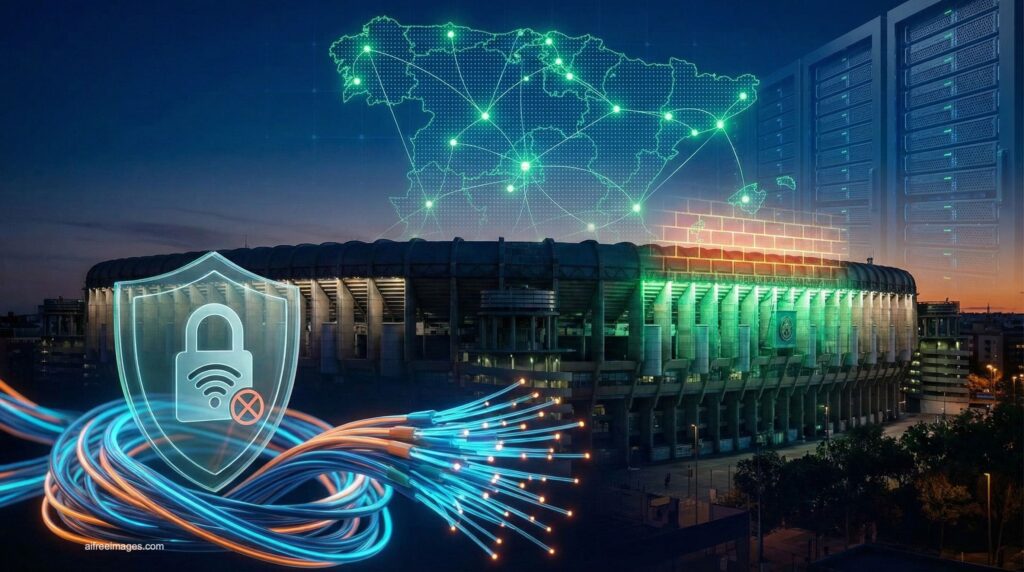
LaLiga was once again trending, and Vercel‘s CEO, Guillermo Rauch, posted an update on how the company is handling the IP blocks ordered by the Spanish judiciary against illegal football streams. Vercel states that it has verified that the URLs notified by LaLiga hosted illegal content, but rejects the broad approach of blocking shared IP addresses used by thousands of services on CDN networks, due to the “collateral damage” it causes to legitimate websites. To minimize this impact, Vercel has created a dedicated inbox, incident automation, and direct escalation to its on-call SRE for promptly reviewing each notice and isolating only the infringing hostnames when possible.

The technical dilemma: Shared IPs, SNI, and the new ECH
The core issue is that a single IP from a CDN can serve hundreds or thousands of legitimate projects. Blocking that IP to take down an illegal stream also affects sites unrelated to the infringement. Vercel’s advocated alternative is blocking the specific hostname using SNI (Server Name Indication) from the TLS handshake. However, the advent of Encrypted Client Hello (ECH) — a privacy enhancement that encrypts the SNI — prevents this inspection on some providers and reduces the possibility of granular network blocking, leading to more IP blocks and thus increased collateral damage.
Legal backing for LaLiga
The debate isn’t happening in a vacuum. In 2025, rulings from the Commercial Court No. 6 of Barcelona have supported LaLiga’s strategy of dynamic blocking requests against unauthorized streams, dismissing appeals from companies like Cloudflare. LaLiga has also presented its case to Congress and in Brussels, advocating for a transition from recommendations to a binding law against live sports piracy.
Collateral damage: from “medium internet outages” to VPN surges
Tech media and operator forums have documented service outages of legitimate services in Spain during match days when large-scale IP blocks are applied, especially affecting CDN infrastructures. Public reaction includes a massive increase in VPN usage, indicating that some users perceive these blocks as excessive censorship affecting daily navigation.
What Vercel says… and what critics point out
Rauch affirms that all notices received so far have been valid, and that Vercel has acted swiftly to limit damage to non-infringing clients. Nonetheless, some developers criticize the creation of a “precedent” (dedicated inbox and fast track for certain complainants) and argue that prioritizing hostname-based blocking mechanisms over the advances offered by ECH <—a privacy-preserving protocol—
Others warn that blocking hostnames without extreme precision could take out shared subdomains and endpoints.
What’s at stake
- Rights: protecting investment in live audiovisual rights.
- Availability: preventing anti-piracy measures from disabling legitimate services.
- Privacy: ECH encrypts connection metadata; exposing it again to improve blocking tests privacy principles.
- Internet governance: how much blocking authority is delegated to private entities and under what guarantees and transparency.
Signals to watch in the coming weeks
- Technical protocol of Spanish operators: whether they adopt more refined inspection (when possible) or continue with mass IP blocking.
- European Commission stance: LaLiga requests a binding regulation; a regulatory change could impact the entire chain (CDNs, ISPs, platforms).
- CDN behavior: effective support for hostname blocking in scenarios with ECH or alternative measures.
Frequently Asked Questions
Why does IP blocking cause so much collateral damage?
Because a CDN IP often hosts thousands of sites. Blocking the entire IP renders inaccessible unrelated projects. Blocking by hostname reduces this impact but requires the ability to see the SNI or have equivalent mechanisms.
What is ECH and why does it complicate selective blocking?
Encrypted Client Hello encrypts the initial TLS 1.3 handshake, including the SNI. It enhances user privacy, but makes inspection and blocking of only infringing domains at the network level more difficult.
What legal backing does LaLiga have for requesting blocks?
Legal rulings in Barcelona have validated dynamic blocking measures against illegal streams, and LaLiga is also seeking a stronger European framework against live sports piracy.
Has many people in Spain been affected?
Various reports point to recurring outages of legitimate services and a spike in VPN usage during match days, as signs of overblocking.
Sources: Vercel (update on blocks), Cloudflare (ECH documentation), resolutions and media coverage on LaLiga’s dynamic blocks and its regulatory push in the EU.