
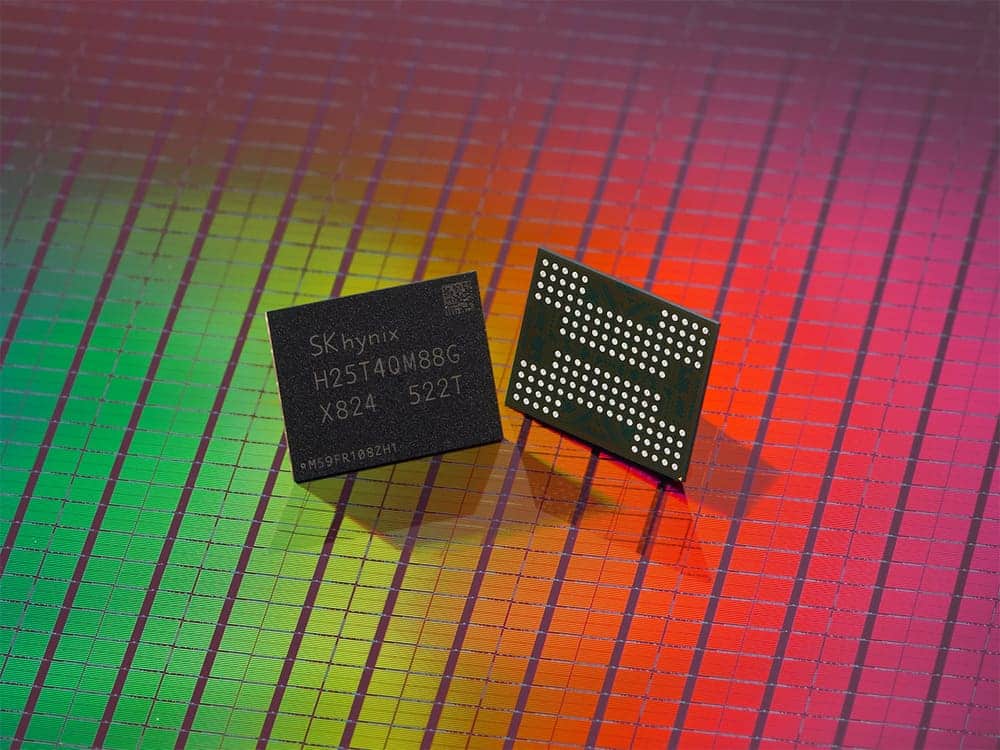
Kioxia and SanDisk have showcased their latest innovation at Future of Memory and Storage (FMS) 2026 by unveiling the tenth generation of their NAND Flash memory, BiCS10. This evolution goes beyond just increasing the number of layers. The new technology introduces a 2 Tb QLC memory per chip, featuring 332 layers and a density exceeding 37 Gb/mm². According to both companies, this is the highest density QLC memory announced to date.
A 20-second overview of BiCS10
- Kioxia and SanDisk introduce BiCS10 with TLC and QLC versions.
- The QLC version reaches 2 Tb per chip with 332 layers.
- Density surpasses 37 Gb/mm², which is 60% higher than BiCS8.
- Designed for data centers, AI, and next-generation cloud infrastructure.
This announcement arrives at a time when the growth of artificial intelligence is fueling the demand for high-capacity storage. As generative models consume increasing amounts of data and inference workloads require more efficient infrastructure, memory manufacturers seek to boost capacity without proportionally increasing physical size or power consumption.
More Capacity Using Less Silicon
The key innovation of BiCS10 is its ability to produce higher-capacity SSDs with fewer chips.
The new design increases density by up to 60% compared to the eighth-generation BiCS, allowing more data to be stored on the same silicon surface.
Notable specifications include:
| Feature | BiCS10 QLC |
|---|---|
| Capacity per chip | 2 Tb |
| Number of layers | 332 |
| Memory type | QLC |
| Density | 37.6 Gb/mm² |
| Interface | Up to 4.8 Gb/s |
This marks a significant leap over previous generations and positions Kioxia and SanDisk ahead of other recently announced solutions in terms of density.
CBA Architecture Continues to Evolve
The new generation maintains the CMOS directly bonded to an array (CBA) architecture, a key hallmark of both companies.
This design fabricates the CMOS logic and NAND array separately and then attaches the wafers via a high-precision direct bonding process.
Separating these components allows for independent optimization of each manufacturing process and better utilization of the chip’s available area.
In BiCS10, this architecture is enhanced with a new six-plane design, used for the first time in a QLC memory by this manufacturer.
This organization improves space utilization but also introduces new electrical challenges related to power delivery, interference, and internal noise. To address this, Kioxia and SanDisk have redesigned parts of the chip’s power distribution with additional metal layers and ground connections.
Performance Improvements as Well
Typically, QLC memories prioritize capacity over performance.
BiCS10 aims to narrow this gap through several internal optimizations.
Key enhancements include:
- Toggle DDR6.0 interface
- Speeds up to 4.8 Gb/s
- New LBUS Coupling Sense technology
- Separate Command Address (SCA) protocol
Thanks to these improvements, internal performance exceeds 85 MB/s per chip during write operations and shows about a 4% boost over the previous generation under certain workloads.
Designed for Artificial Intelligence
While the numbers are impressive, perhaps the most significant aspect is the target market.
Kioxia and SanDisk make it clear that BiCS10 is not meant for consumer PCs.
Its primary markets include:
- Data centers
- Cloud platforms
- AI training storage
- Inference systems
- Hyperscale infrastructures
In these environments, where thousands of SSDs can be deployed, increasing the density of each chip reduces the total number of components needed to reach the same capacity.
Enhanced Energy Efficiency
Reducing energy consumption has also been a focus of this development.
The new memories incorporate technologies such as:
- PI-LTT, aimed at reducing power during data transfer
- Bus Idle Sleep, which automatically puts unused chips in a low-power sleep mode within the same package
While the companies haven’t published full figures for the QLC version, they indicate these improvements address one of the main current challenges for data centers: energy consumption and cooling needs associated with the growth of AI.
When Will the First SSDs Arrive?
So far, neither Kioxia nor SanDisk has announced commercial products based on BiCS10 QLC.
The TLC 1 Tb version has already reached sample and initial production phases in 2026, while the QLC 2 Tb variant is progressing towards commercialization.
It is expected that the first SSDs using this technology will target the enterprise market before potentially reaching the consumer segment.
In any case, BiCS10 sets a clear direction for the industry: increasing capacity without enlarging physical size, power consumption, or costs will be a priority in the coming years, especially as AI continues to drive global storage demand.
Frequently Asked Questions
What is BiCS10?
It is the tenth generation of NAND Flash memory developed jointly by Kioxia and SanDisk, available in TLC and QLC versions.
What capacity does the new QLC memory reach?
Each chip can store 2 Tb, utilizing a 332-layer structure.
What types of devices is it intended for?
Primarily for data centers, cloud platforms, AI systems, and high-capacity storage infrastructures.
When will the first SSDs with BiCS10 be available?
While no specific release date has been announced for products based on the QLC version, some TLC variants are already in production.
