
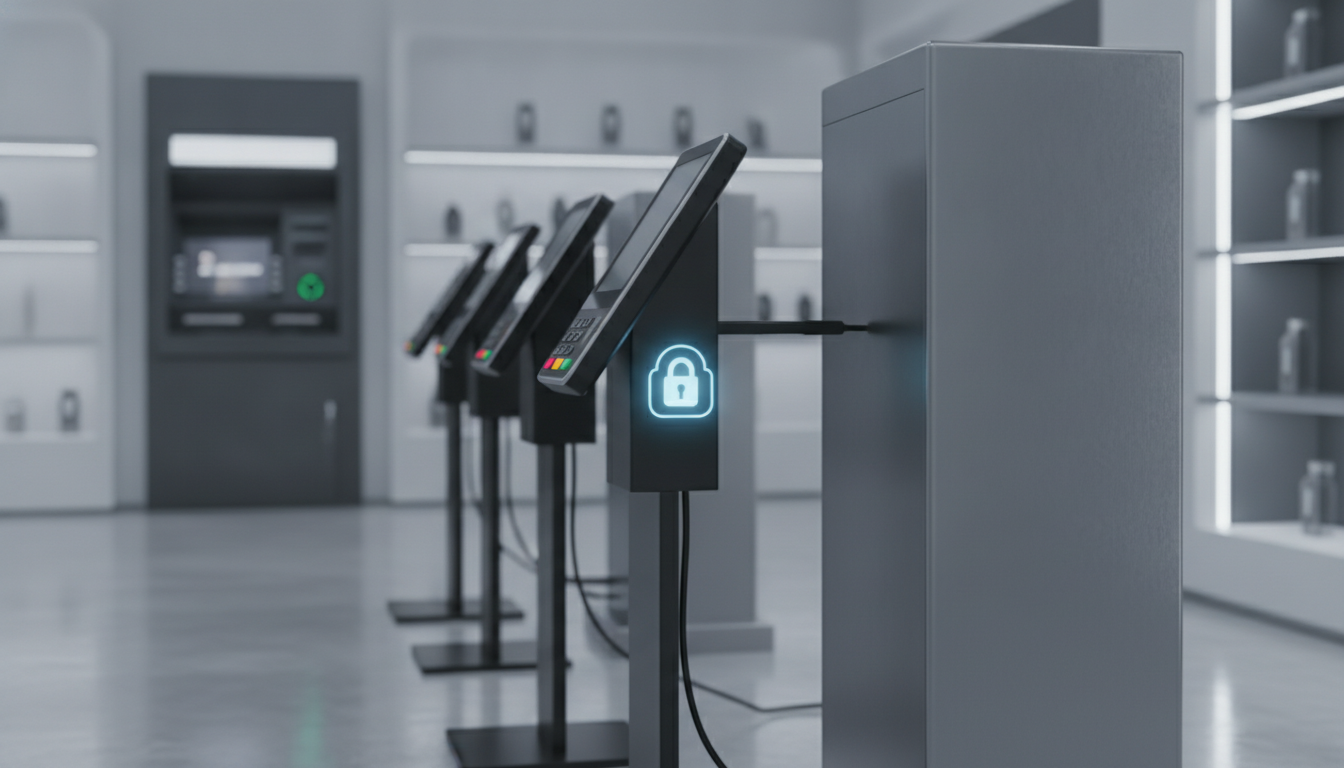
Kaspersky has added BadUSB device protection on Linux and centralized BitLocker disk-encryption management on Windows to Kaspersky Embedded Systems Security (KESS). The update, announced on November 11, 2026, is aimed at fixed-function equipment such as ATMs, payment terminals, ticket machines, and medical devices, which are typically placed in publicly accessible locations and managed remotely from a central console.
The key points of Kaspersky’s update for embedded devices, in 20 seconds
- BadUSB on Linux: blocks peripherals that pose as keyboards or mice.
- BitLocker on Windows: full-disk encryption enforced from the console.
- Goal: stop attacks that require physical access to the device.
- One in ten companies suffered USB-based attacks, according to a Kaspersky survey.
As detailed by OpenSecurity in its analysis of Kaspersky’s new protection for ATMs and POS terminals, both features target the same risk: an attacker with physical access to the device. A malicious USB peripheral can type commands or log keystrokes, and an unencrypted disk can be modified while the machine is powered off to plant malware that later affects transactions. It’s the latest move in a broader push by Kaspersky to harden its enterprise security portfolio, which in August also brought faster detection of stolen credential abuse to its managed detection and response service.
The edge is managed like a fleet, too
For infrastructure teams, the real interest of this update is centralized management. A network of ATMs or point-of-sale terminals is, in practice, a fleet of thousands of small, distributed servers, many running old software with limited compute resources. Folding BitLocker into the same console as the rest of the controls makes it possible to enforce encryption across the whole fleet without going device by device, and Kaspersky describes KESS as a modular solution so each device only loads the controls it can handle.
BadUSB protection is arriving for Linux, a system that’s becoming increasingly common on terminals and kiosks. When a device tries to pose as an authorized input peripheral, KESS intercepts it, which Kaspersky says protects against keystroke logging, malicious data entry, and local denial-of-service attacks.
What the survey says, and what’s missing
Kaspersky backs the announcement with a survey from its Market Research Center, based on 1,900 interviews across 18 countries conducted in August 2026: one in ten companies suffered attacks via connectable devices in the past year, with higher rates in public administration, defense, education, and healthcare. These are figures from the vendor itself. The announcement doesn’t specify the product version or availability terms.
With or without this tool, the lesson applies to any device deployed outside the data center: control which USB peripherals are accepted, encrypt storage, and look after the physical security of ports.
Frequently asked questions
What did Kaspersky add to KESS?
Protection against BadUSB devices on Linux and centralized BitLocker encryption management on Windows.
Why does encryption matter on an ATM?
Because it stops an attacker with physical access from modifying the disk while the machine is powered off to install malware.
What devices does it cover?
ATMs, point-of-sale and payment terminals, ticket machines, and smart medical equipment running Windows or Linux.
Sources:
- OpenSecurity: Kaspersky protects ATMs and POS terminals from BadUSB and offline tampering
- Kaspersky press release
This article is also available in Spanish: “Kaspersky cifra y blinda los USB de cajeros y terminales de pago,” on revistacloud.com.
