
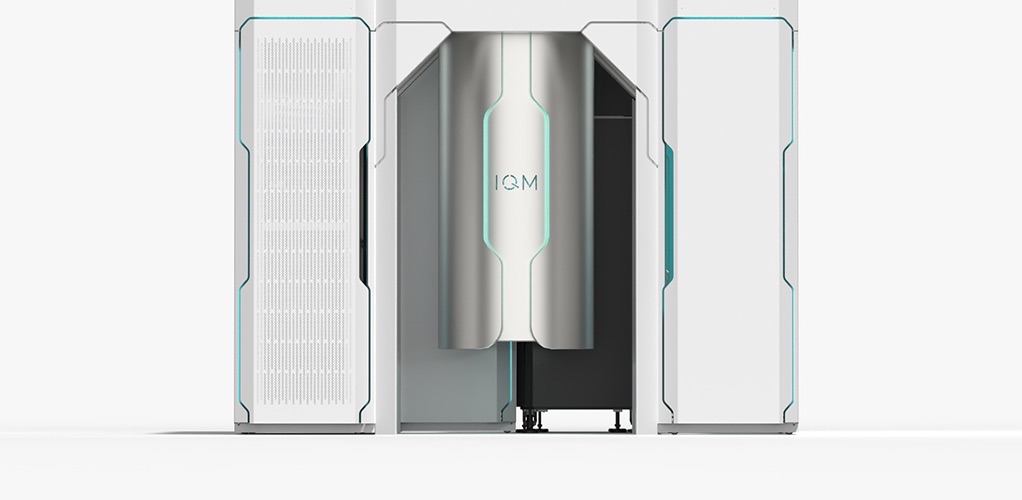
Quantum computing has been promising a paradigm shift for years, but its actual industrialization has always bumped into two barriers: the high costs of building complex systems and the need for patient capital to turn prototypes into products. In this context, IQM Quantum Computers, the Finnish company founded in 2018, has announced a step that could mark a before and after for the European sector: going public in the United States via a merger with a SPAC, Real Asset Acquisition Corp. (RAAQ), already listed on Nasdaq.
The deal values IQM at a “pre-money” valuation of $1.8 billion and aims to make it the first European quantum company to be listed on public markets. It’s not a trivial move: the market has already seen several U.S. quantum firms choose the SPAC route to access capital more quickly, with mixed stock market results, but with a clear advantage: financing and visibility to propel the next phase.
A SPAC to accelerate the timeline
The approach is familiar on Wall Street: a SPAC (Special Purpose Acquisition Company) is created to raise funds initially, then merges with a target company, which becomes publicly traded more rapidly than in a traditional IPO. For an industry like quantum—where product cycles are long and investors demand both narrative and execution—the method has become a common shortcut, though not without scrutiny.
In IQM’s case, the company expects that, after closing, it will have more than $450 million in cash. The breakdown announced combines about $175 million from the SPAC’s trust account, $134 million from a PIPE financing (private investment in public equity), and around $24 million from the exercise of warrants prior to closing, in addition to the cash already on its balance sheet. In other words: a substantial cushion to support R&D, hiring, and commercial expansion without relying solely on venture capital pace.
“It’s not just a scientific project”: IQM emphasizes real clients and systems
The announcement comes with a carefully crafted message: IQM stresses that quantum computing is no longer a laboratory experiment but an industry with customers who buy, operate, and build on quantum systems. CEO and cofounder Jan Goetz sums it up with a strong statement: “not someday, now.”
The company claims to have sold 21 systems to 13 clients and to have manufactured around 30 systems in total, figures that aim to differentiate its narrative from competitors that focus more on cloud access or laboratory demos. It also highlights its “full-stack” positioning and focus on on-premises deployments, an important nuance in current debates: many institutions and organizations don’t just want “quantum minutes” as a service, but control over the system, integration with HPC, and technological sovereignty.
IQM also operates quantum data centers in Finland and Munich (Germany) to offer remote access to its equipment, and has delivered systems to supercomputing centers and institutions in countries like South Korea, Poland, Italy, and Taiwan. The clear thesis: if quantum will go into production, it will first do so in environments where advanced computing culture and infrastructure budgets already exist.
Mirror of already-listed quantum companies
IQM’s Nasdaq listing adds to a long list of sector companies that have gone public via SPAC: D-Wave, Rigetti, IonQ, Infleqtion, or the trajectories of other firms that explored the same route. The pattern repeats: quantum needs capital and, at the same time, needs to demonstrate commercial traction.
But the market has also learned to be tough. Listed quantum companies have gone through periods of high volatility and times when expectations outstripped reality. For IQM, therefore, the deal is both an opportunity… and a public test: investors will demand clarity on its roadmap, margins, production capacity, recurring contracts, and especially, the path toward more robust and scalable systems.
Europe aims to play a key role in technological sovereignty
Beyond IQM, the move has geopolitical and strategic implications. Europe has been seeking “champions” in semiconductors, cloud, security, and quantum. A European quantum company listed in the U.S. highlights a delicate issue: where will the funding occur to scale critical technologies? It also opens a debate about future listings in Europe: the announcement itself suggests IQM might explore additional market options in the medium term.
In the short term, the practical goal is straightforward: turning financial muscle into a competitive advantage to accelerate deployments, strengthen products, and solidify partnerships with institutions and companies. In the medium term, a tougher question arises: can quantum leap beyond the “promises” phase into “infrastructure”?
IQM believes so, and the path involves tackling the hardest challenge: building systems that not only work but can be installed, maintained, integrated, and generate value in real environments. Going public doesn’t solve this challenge by itself. But it fuels the journey.
Frequently Asked Questions
What does it mean for IQM to go public through a U.S. Nasdaq SPAC?
It means IQM won’t do a traditional IPO but will instead merge with an already-listed company (RAAQ) created for this purpose. After the merger, IQM will trade as a public company.
What is a “pre-money” valuation of $1.8 billion in a SPAC deal?
It’s the valuation of the company before adding the new funds raised in the transaction. Post-close, the valuation depends on the final structure, cash, and other adjustments.
Why does IQM emphasize “on-premises” systems in quantum computing?
Because in advanced research and HPC, many organizations prefer to operate hardware within their facilities—due to reasons like integration, performance, security, data sovereignty, or regulatory requirements.
What are the risks for investors and the company when going public via a SPAC in the quantum industry?
The primary risks include volatility and pressure to meet public milestones in an industry with long development timelines. Market expectations generally demand transparency, commercial growth, and a credible roadmap toward more capable systems.