
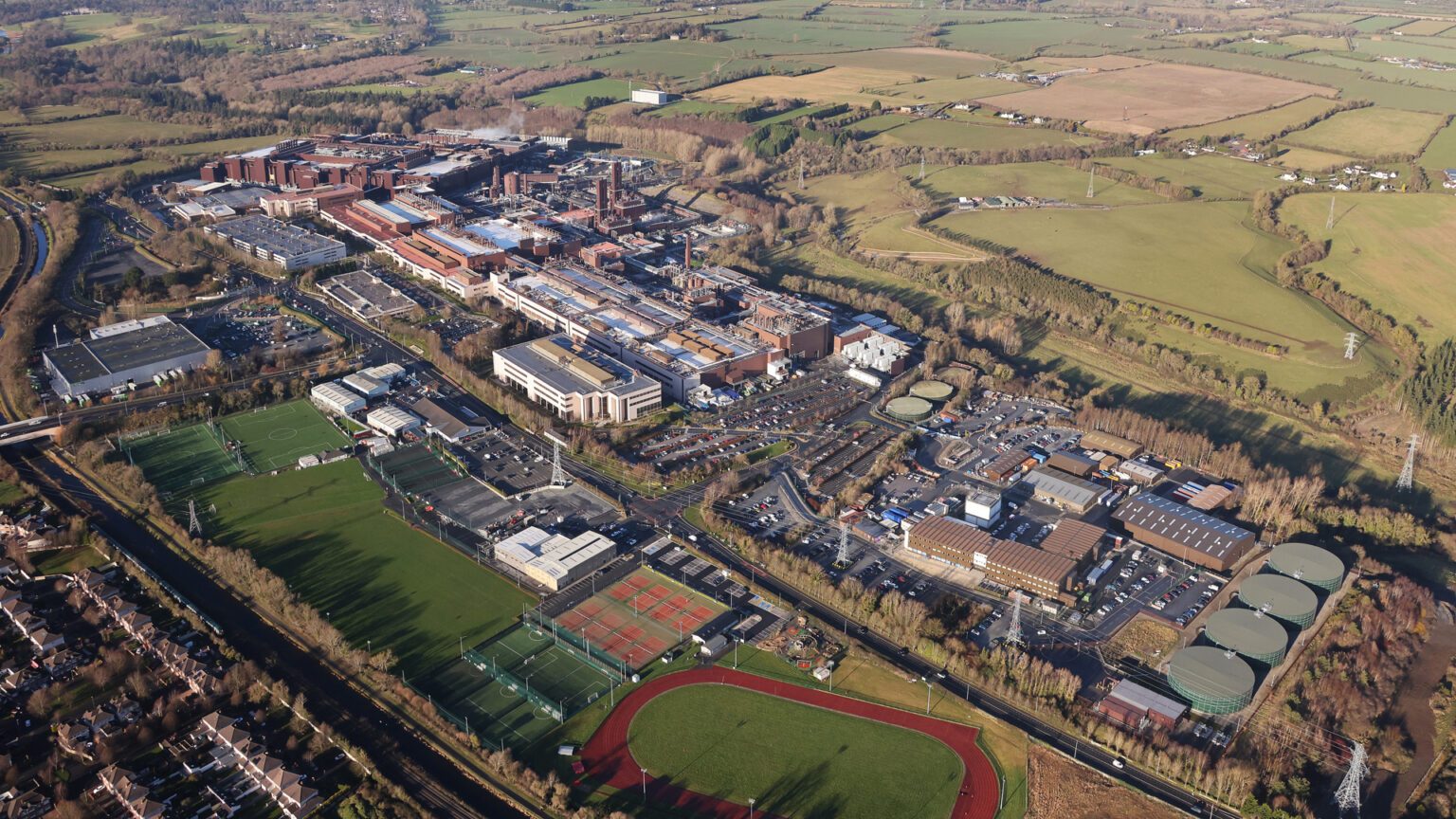
Intel has announced a €5 billion investment at its Leixlip campus on the outskirts of Dublin to expand the manufacturing of processors for servers, artificial intelligence, and high-performance computing. The project does not involve building a new factory from scratch but rather equipping and better connecting existing facilities to increase their production capacity.
The American company will use the funds to install new machinery, expand its automated wafer transportation systems, and utilize available space within the Irish complex’s cleanrooms. The work began in early 2026, and most of the investment is expected to be completed before the end of 2027.
Key Points of Intel’s Investment in Ireland
- Intel will allocate €5 billion to the Leixlip campus.
- The project will expand existing facilities without constructing a new factory.
- Production will focus on Xeon processors made with Intel 3 process technology.
- The investment addresses growing infrastructure needs for AI and HPC.
- The campus currently employs around 4,900 people.
- Intel plans to create several hundred permanent jobs.
- It will also require specialized personnel for construction and equipment installation.
- Most of the program is expected to be completed before the end of 2027.
- Intel has invested over €30 billion in Ireland since 1989.
- Leixlip is one of Europe’s most advanced semiconductor facilities.
The €5 billion represents nearly 30% of the approximately $17 billion Intel plans to allocate for capital investments in 2026. The scale of the project demonstrates the company’s continued focus on utilising existing operational facilities and established manufacturing processes rather than opening new complexes with longer timelines and higher costs.
More Capacity for Xeon 6 and Intel 3 Process Technology
This expansion will boost production of Xeon 6 and future processor families for data centers fabricated with Intel 3 technology. This process is used in products like the server families Sierra Forest and Granite Rapids, which are oriented respectively toward core density and performance per core.
Xeon processors remain a significant component within AI infrastructure, although public attention often focuses on GPUs. CPUs handle operating systems, virtualization, databases, storage, networking, and the data preparation feeding accelerators.
They can also perform inference and certain machine learning workloads using specialized instructions. In an AI cluster, GPUs do not operate in isolation—they require full servers with CPUs, memory, PCIe devices, network interfaces, and management software.
Intel describes AI data centers as “AI factories”—data centers designed for training, adapting, and running large-scale models. The growth of these facilities is increasing demand for server processors, even though the accelerator market is primarily led by Nvidia, with alternatives from AMD and other custom chip manufacturers.
The Irish plant produces wafers with Intel 3, a node part of the company’s effort to regain industrial competitiveness after several years of delays. Intel is also working with more advanced processes like Intel 18A, but this does not automatically render earlier lines obsolete.
Data centers typically maintain different generations of hardware for years. Each node caters to different products, costs, and volumes. A semiconductor facility can continue producing large quantities with mature technology while other plants prepare newer processes.
Leixlip’s investment aims precisely to increase the performance of assets already in place. Intel will install new manufacturing tools and expand its automated wafer transport system within the campus.
These transport systems operate overhead in cleanrooms, moving sealed containers among hundreds of equipment pieces. Their coordination affects plant capacity: a tool may be available, but production won’t happen if wafers do not arrive at the right time and order.
Integrating different modules into a unified manufacturing environment should reduce delays and enable the facilities to operate as a more connected factory. It’s not just about adding machines but improving material flow during the many stages needed to produce a processor.
Ireland’s Role as Europe’s Industrial Hub for Intel
Intel set foot in Ireland in 1989 and has since invested over €30 billion in the country. More than half of that was spent between 2019 and 2023 to expand available capacity, according to the company. The campus now employs about 4,900 people.
Leixlip hosts Fab 34, a facility that introduced Intel 4 manufacturing to Europe using extreme ultraviolet lithography. The complex also produces Intel 3, an evolution of that process aimed at boosting performance and efficiency.
The new investment comes shortly after Intel agreed to buy back 49% of the Fab 34 joint venture from Apollo Global Management for $14.2 billion. Apollo initially invested $11 billion in 2024 through a financial structure that allowed Intel to raise capital without losing operational control of the plant.
This buyback restored full financial control of one of its key European facilities to Intel. The €5 billion program reinforces this decision and positions Leixlip as a central piece in its manufacturing strategy.
This contrasts with the reduction or cancellation of other European expansion plans announced previously. Intel had planned new plants in Germany and assembly operations in Poland, but reorganization led to reevaluations of investments requiring large capital and several years to generate revenue.
In Ireland, the situation is different. Existing factories, trained personnel, and some infrastructure can be leveraged without bearing the full cost of building a new complex. This approach allows for faster capacity expansion, although installing new chip manufacturing equipment remains a lengthy technical process.
The company expects to hire several hundred permanent workers, in addition to specialized staff for construction and machinery installation. Intel has not yet disclosed the final employment numbers or how they will be distributed among manufacturing, engineering, maintenance, and R&D.
For Ireland, this investment expands its industry sector, providing skilled jobs and supporting a network of suppliers for construction, gases, chemicals, engineering, and maintenance. It also increases the country’s exposure to decisions made by a multinational and to semiconductor market cycles.
Implications for European Technological Sovereignty
Intel frames this expansion as a contribution to the EU’s technological sovereignty. The facility increases the capacity to produce advanced processors within the EU, partially reducing reliance on plants located in Asia or the US.
However, this perspective has nuances. Intel is an American company, so a factory in Ireland is not fully European-controlled. Production also relies on lithography equipment, materials, design software, intellectual property, and suppliers from various countries.
Industrial sovereignty does not necessarily require every component to originate in Europe. It can also be measured by the available manufacturing capacity within the region, workforce skills, supply chain resilience, and the ability to maintain critical infrastructure during international disruptions.
Intel’s investment helps preserve advanced manufacturing know-how and maintains a processor production facility in Europe. Yet, it does not address European dependencies on GPUs, advanced memory, packaging, or process technologies managed by a small number of suppliers.
The installed capacity is not the same as guaranteed output. Chip demand shifts rapidly, and factories need high utilization levels to recover costs. Intel must convert AI growth into sustained orders for Xeon and secure external customers for its foundry business.
Leixlip’s project enables increased production without waiting for a new factory, shortening timelines. However, it concentrates much of Intel Europe’s efforts on a specific technology—Intel 3—while still working to establish more recent processes like 18A.
The €5 billion investment isn’t solely about boosting AI. It’s also an effort to strengthen Intel’s manufacturing capacity, regain server market share, and demonstrate that its industrial network can compete with Asian foundries.
Frequently Asked Questions
What will Intel manufacture at Leixlip?
The campus will expand production of Xeon 6 and future server platforms based on Intel 3 process technology.
Will Intel build a new factory in Ireland?
No. The program focuses on modernizing current facilities, installing new machinery, and utilizing available cleanroom space.
When will the expansion be completed?
Work began in 2026, and most of the investment is expected to be completed before the end of 2027.
How many jobs will the project create?
Intel anticipates hiring several hundred permanent employees, along with specialized staff during construction and equipment installation.
via: newsroom.intel
