
Intel is strengthening Vietnam’s role within its global manufacturing network by shifting part of its assembly, packaging, and testing operations from Costa Rica to Saigon Hi-Tech Park in Ho Chi Minh City. The move affects lines related to server chips for data centers and next-generation connectivity systems, according to information provided by the tech park’s managing authority to local Vietnamese officials.
This decision is not isolated. It is part of a broader reorganization at Intel, which had already announced intentions in 2025 to concentrate its assembly and testing operations in larger facilities in Vietnam and Malaysia. The new aspect now lies in the industrial details: Vietnam is not only handling higher volumes but also taking on more advanced packaging and testing functions—areas increasingly critical for competing in data center processors, accelerators, and chips with multiple silicon blocks.
Vietnam Gains Ground in Intel’s Supply Chain
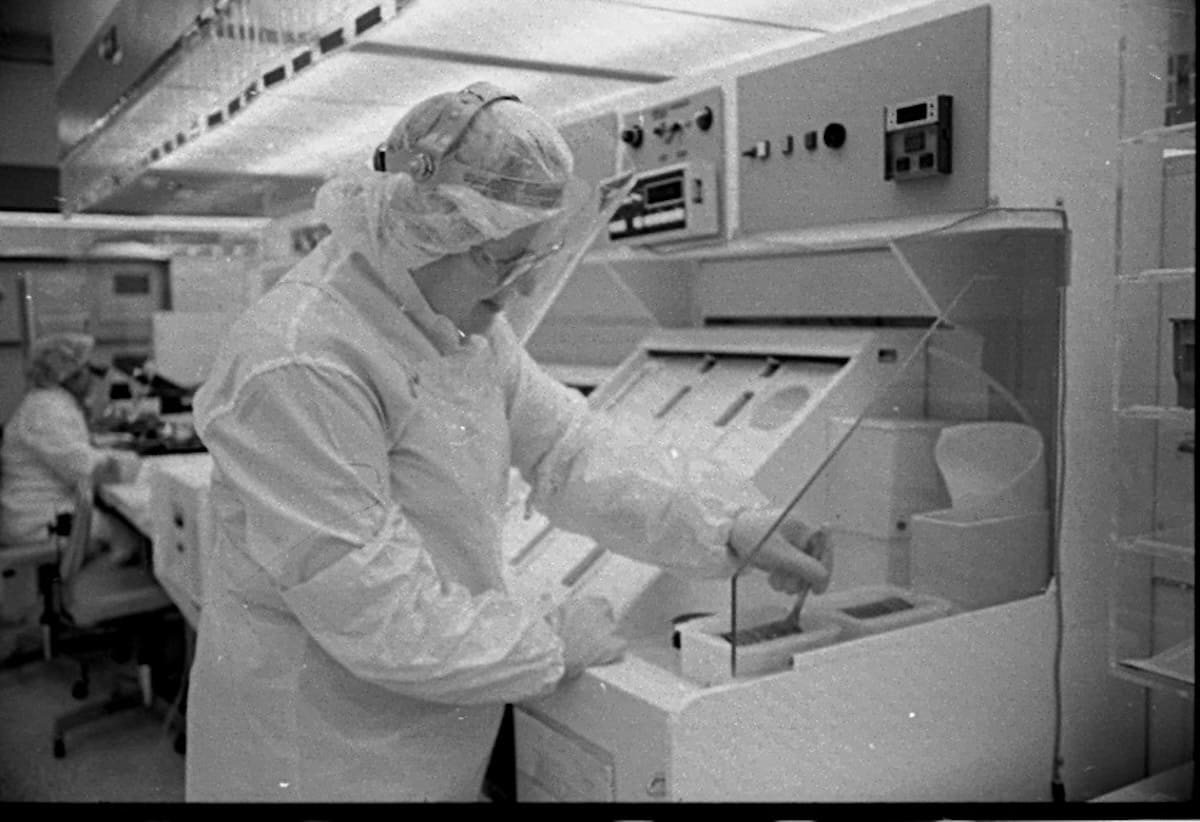
Intel’s Vietnam Products Center, located in Saigon Hi-Tech Park, has become one of the company’s most significant industrial assets outside the United States. The facility spans 46.6 hectares and has a committed investment of $4.115 billion, according to Vietnamese media citing a report sent to Ho Chi Minh City’s People’s Committee. It is described as Intel’s largest global assembly and testing center.
Understanding the volume helps explain the decision. Between 2010 and 2021, the plant produced over 3 billion units. By the end of Q2 2025, Intel Products Vietnam had exported more than 4 billion units with a cumulative value exceeding $100 billion, based on data published in Vietnam. The facility employs over 6,000 people and accounts for more than half of Intel’s global assembly and testing production of this kind.
The shift from Costa Rica reflects a logic of consolidation. Intel aims to reduce fragmentation of its industrial network, improve plant utilization, and align investments with actual customer demand. This was precisely one of the directives outlined by Lip-Bu Tan, Intel’s CEO, when explaining in July 2025 that the company would not proceed with projects planned in Germany and Poland, consolidating assembly and testing operations in Vietnam and Malaysia instead.
Costa Rica is not off the map for Intel. The company noted at the time that the country would remain an important center for engineering and corporate functions. However, manufacturing activities related to assembly and testing are shifting toward larger-scale Asian facilities.
Advanced Packaging Becomes Central to Strategy
The critical aspect of this move is not only the volume of units Vietnam can produce but also the types of processes it can handle. Local sources indicate that Intel is increasing investment and transferring advanced packaging and testing technologies to boost production capacity in the country. Products mentioned include Panther Lake and Wildcat Lake, associated with the Intel 18A node, though these details should be treated cautiously as they originate from local reports rather than a specific technical datasheet published by Intel for this operation.
Advanced packaging has become a core component of the semiconductor business. For decades, the focus was on creating ever-smaller transistors. While this remains important, modern chips no longer rely solely on the manufacturing node. They also depend heavily on how multiple chiplets, memories, IO blocks, accelerators, and specialized components are interconnected within a single package.
This is where EMIB—Embedded Multi-die Interconnect Bridge—comes into play. Intel describes EMIB as a technology that connects heterogeneous chips within the same package via small embedded silicon bridges in the substrate, avoiding the need for a full silicon interposer. Practically, it allows high-density connection between different silicon blocks, offering lower latency and more flexible design options compared to traditional monolithic chips.
Intel states that EMIB has been in production since 2017 and positions it alongside other advanced packaging technologies like Foveros and Foveros Direct 3D. The company also discusses EMIB 3.5D, an integration of EMIB with 3D stacking, enabling more complex systems with various die types in a single package. This capability is increasingly valuable for data centers and AI applications, where processors and accelerators need to move large data volumes between cores, memory, and specialized blocks efficiently, without excessive power consumption or latency.
According to TrendForce, Intel is accelerating its global EMIB capacity expansion, with Oregon as a key base and Vietnam as another growth center. The same report indicates significant orders to Taiwanese suppliers, with deliveries expected in the second half of 2026. While notable, this information does not constitute a direct confirmation from Intel regarding volumes, clients, or exact timelines.
A Restructuring with Geopolitical and Industrial Implications
This trend fits into a broader industry shift: semiconductor companies are relocating parts of their assembly, testing, and packaging operations to Southeast Asian countries. Vietnam has been gaining prominence due to lower costs, industrial capacity, trade agreements, and a geographical position that allows firms to diversify their supply chains away from China without leaving Asia.
For Intel, the challenge is twofold: regain competitiveness in data centers, where it has lost ground to rivals in CPUs, accelerators, and AI infrastructure; and expand its foundry business by attracting external customers—not only through advanced nodes like Intel 18A but also through providing advanced packaging services. In this market, the ability to connect chiplets and high-bandwidth memories has become a bottleneck for many high-performance designs.
Consolidating in Vietnam may help Intel scale efficiently and reduce costs, but it also increases the industrial focus on Asia at a time when the US and Europe are seeking to bolster semiconductor autonomy. While the company maintains significant investments and capacities in the United States, its recent decisions reflect a more disciplined capital approach, focusing on aligning its network with specific products, customers, and volume commitments rather than announcing new factories indiscriminately.
For Vietnam, this move underscores a national ambition to ascend the value chain in chip manufacturing. The country aims to go beyond basic electronics assembly, building skills, attracting suppliers, and gaining capabilities in testing, packaging, and assembly. Intel’s contribution to the Saigon Hi-Tech Park training center, with a dedicated line for packaging and testing equipment, supports this goal.
The shift from Costa Rica to Vietnam alone does not alter the global semiconductor balance sheet but reinforces a fundamental trend: the value of chips is increasingly determined by how they are assembled, tested, and interconnected—beyond just the most advanced lithography. This reflects a broader industry focus on the entire process chain that underpins data centers, networking, and AI infrastructure.
Frequently Asked Questions
What operation is Intel moving to Vietnam?
Intel is relocating part of its assembly, packaging, and testing operations from Costa Rica to Saigon Hi-Tech Park in Ho Chi Minh City, focusing on server chips for data centers and next-generation connectivity systems.
Is Intel abandoning Costa Rica completely?
No. Intel announced it would consolidate assembly and testing in Vietnam and Malaysia but also confirmed that Costa Rica will remain an important hub for engineering and corporate functions.
What is EMIB and why does it matter?
EMIB is an advanced packaging technology from Intel that connects multiple silicon blocks within a single package using embedded silicon bridges. It enables more complex chiplet designs, which are useful for processors, accelerators, and high-performance systems.
Why is Vietnam important for Intel?
The Intel Vietnam Products Center is the company’s largest global assembly and testing facility, employing over 6,000 people and having exported billions of units since its opening.
