
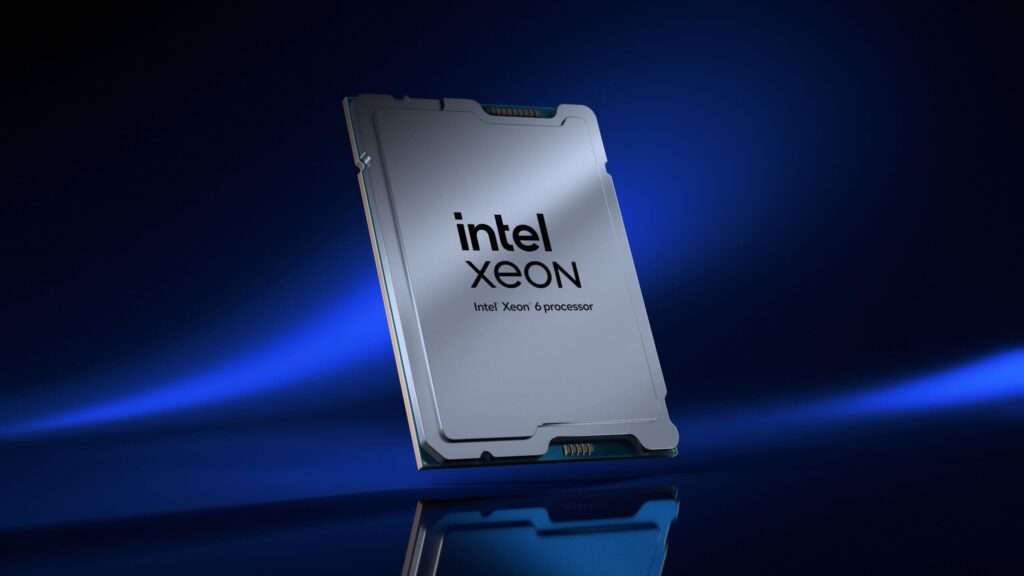
The PC market adds a new source of pressure in 2026. According to the South Korean newspaper ETNews, on March 19, 2026, Intel has notified its main clients that it will raise the price of its PC CPUs by approximately 10% starting in late March. If fully confirmed across the entire supply chain, this move would increase tension for manufacturers already dealing with much more expensive memory and a supply environment increasingly constrained by the expansion of AI infrastructure.
This news does not arrive in isolation. The British distributor Distec had already issued a notice to customers on February 9, 2026, indicating that Intel would adjust prices across a wide range of client processors starting from March 29, 2026. The final details would be communicated through usual quotation channels. Although this communication did not publicly specify a single percentage for the entire range, it reinforced the idea that Intel was preparing a price revision in its CPU catalog for consumers.
The key point is that this increase is part of a much broader underlying issue: the tech supply chain is being absorbed by AI demand. Reuters reported on February 6, 2026, that Intel and AMD had notified Chinese clients of server CPU shortages, with Intel mentioning delivery times of up to six months and price hikes of more than 10% on some data center products in China. This information shows that pressure is not limited to GPUs or memory but is also starting to affect traditional CPUs.
Weeks earlier, Intel had already acknowledged that it was not fully meeting demand for its AI-related server processors. In its January financial report, as reported by Reuters, the company admitted that its factories were operating at full capacity, but the surge in demand in this segment was surprising, and it needed time to better adapt its production. This helps explain why the market believes the current scenario: when industrial capacity is finite, manufacturers tend to prioritize products with higher margins and more urgent demand.
For PCs, the impact could be especially significant in laptops. TrendForce warned on March 10, 2026, that the notebook market faces a double pressure: rising memory and CPU prices. The firm estimates that, to maintain margins, a conventional laptop that used to sell around $900 could see an accumulated increase of nearly 40%. Additionally, the combined cost of memory and CPU could account for up to 58% of the device’s material costs. The consultancy also indicates that CPU supply volatility is already beginning to affect entry-level platforms across various brands.
This context also explains why the impact might be more pronounced in consumer PCs than in the premium segment. When costs rise sharply, manufacturers often try to protect margins by pushing higher-value devices and reducing promotional pressure in the low-end range. Reuters already reported in February that Lenovo was feeling the impact of memory shortages in its PC shipments and had to raise prices to offset component cost increases. If the client CPU also enters this spiral, OEM margins will have even less room to maneuver.
Strategically, the message is clear: AI is increasing tension throughout nearly the entire hardware value chain. First it was GPUs, then HBM and other memory types, followed by storage, and now the market is starting to see how pressure affects CPUs, power components, and generally any critical parts whose manufacturing directly or indirectly competes for industrial capacity, materials, or commercial priority. ETNews also reported on March 18, 2026, that several mature-node foundries are preparing price increases close to 10% for other semiconductors, reinforcing the idea that this isn’t an isolated adjustment but part of a broader trend of rising costs.
For now, the most concrete data remains the one published by ETNews: a 10% increase in PC CPUs starting from late March. It remains to be seen how much this revision applies uniformly across the entire catalog and how it translates to final retail prices and OEM configurations. Even without waiting for the full channel impact, the signal is already quite clear: in 2026, building or buying a PC depends not only on the desired chip but also on how AI fever is redistributing capacity, costs, and priorities across the entire semiconductor industry.
Frequently Asked Questions
Has Intel officially announced this 10% increase publicly?
The most concrete information comes from ETNews, which on March 19, 2026, mentioned a 10% increase in PC CPU prices communicated to customers. Additionally, Distec had already warned in February about price adjustments for client processors starting on March 29, 2026.
Why are consumer CPUs increasing?
The underlying reason is supply chain pressure driven by AI expansion. Reuters reported on CPU shortages for Intel and AMD in China and also noted that Intel has been struggling to meet demand for server chips used in AI data centers.
What impact could this have on laptops?
TrendForce estimates that if memory and CPU prices rise simultaneously, a standard $900 laptop could see an accumulated increase approaching 40% to preserve margins for brands and channels.
Is this only an Intel problem?
Not entirely. The pressure affects more parts of the ecosystem. Reuters already reported delays and tension in AMD server CPUs as well, and the market has been seeing rising memory and other key component prices driven by AI demand for months.
via: ETnews