
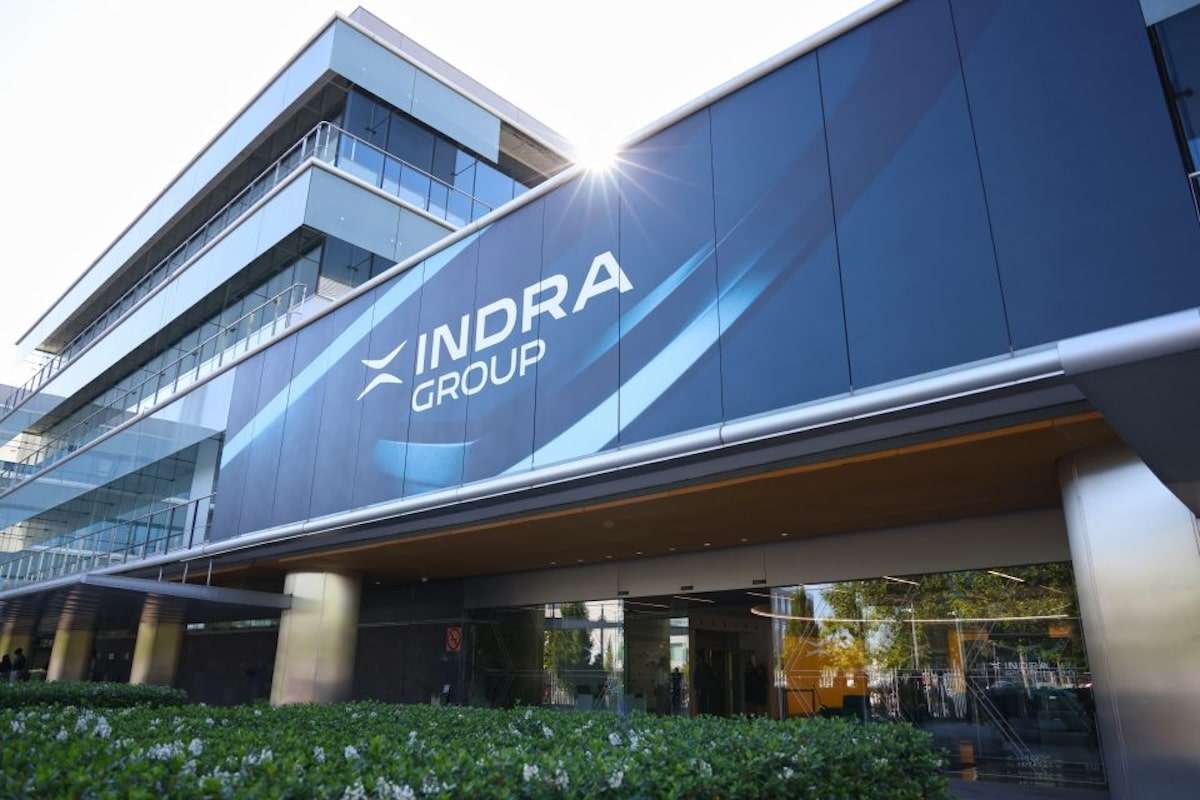
Indra Group has taken another step forward in its technological expansion strategy in the region with the inauguration of NovaIA, a Artificial Intelligence (AI) Center of Excellence (CoE) that is born with a clear applied focus: researching, training talent, and transferring AI solutions to key sectors of the economy in Latin America and the Caribbean. The center is launched in partnership with Technológico de Monterrey and the Pedagogical and Technological University of Colombia (UPTC), with support from ProBoyacá, and will operate from Tunja (Boyacá, Colombia).
The initiative presents itself as an innovation and prototyping laboratory aimed at covering the entire cycle: from the ideation of use cases to secure deployment in real environments. Additionally, it will be backed by global cloud computing and data management providers for businesses like AWS, IBM, Microsoft Azure, and SAP, a detail that directly points to scalability and integration with existing corporate ecosystems.
A regional “hub” focused on real use cases
Unlike other announcements that remain at the institutional overview level, NovaIA is defined as a Center of Excellence (CoE) designed to accelerate solutions with impactful results in sectors where AI is no longer just a promise but a competitive tool: energy, oil and gas, public administrations and healthcare, financial services, manufacturing and consumer goods, and telecommunications and media.
From Indra, its Latin America director, Marcelo Bernardino, describes the center as a meeting point between applied science and operational needs of the real economy, aiming to boost productivity and practical adoption. At the same time, ProBoyacá emphasizes the project’s territorial dimension: transforming Boyacá into an innovation hub with regional impact.
Five rooms covering the entire AI lifecycle
The structure of NovaIA is organized into five specialized spaces, designed to cover the complete “journey” of an AI project from start to finish:
- Ideation and design: cocreation of concepts, use case definition, and user-centered design.
- Technical laboratory: development, training, and validation of models (including generative AI, agent-based approaches, and intelligent automation), in collaboration with startups, technology providers, and hyperscalers.
- Visualization and demonstration: interactive presentation of prototypes, simulations, and results.
- Data and governance: governance, ethics, sustainability, and regulatory compliance; the less visible part, but the one that determines whether a project moves from pilot to production.
- Infrastructure and security: robust and scalable architectures to support AI deployments with operational continuity.
This design is significant because it reflects a reality that many organizations have learned the hard way: AI doesn’t fail because of the model, but because of data, governance, security, integration, and operations.
Training and technical skills: what IT and development teams care about
NovaIA will also include a structured training component based on four pillars: process automation with AI and cloud, cloud data with AI, metaprompting for generative AI, and applied AI (mathematical fundamentals, programming, machine learning, and deep learning). The proposal includes international certifications, dual degrees, and badges from Technológico de Monterrey, supporting a learning approach with virtual tutors and personalized assessment.
For system and programmer teams, this approach clearly outlines a path: not just “learning AI,” but learning to operate it. If the center fulfills its promise of prototyping and transfer, the real value will be in bringing AI into practices that technical teams recognize as their own: MLOps, security, observability, cost control, and compliance.
Use case examples aligned with the center’s approach
Without needing to invent specific projects, the CoE’s own design suggests typical scenarios that could be worked on there:
- Healthcare and public sector: AI generative triage assistants or citizen service chatbots, with traceability, source control, and data policies.
- Energy and industry: predictive models for maintenance and early fault detection, integrated with telemetry and SCADA/ERP systems.
- Financial services: document automation and risk analysis with strict governance and decision auditability.
- Telecommunications and media: operation optimization (capacity, incidents, quality) and content personalization tools with metrics and control.
Governance: the key condition to avoid just pilot projects
Another crucial aspect is the governance model: NovaIA will operate at strategic, tactical, and operational levels, involving academia, institutions, and businesses. In practice, this boils down to fundamental points: prioritization of use cases by sector, responsible evaluation, and a clear pathway to ensure prototypes don’t stay “in the lab.”
At a time when the region is accelerating investments and AI programs, NovaIA enters the scene with an ambitious goal: transforming university-business-territory partnerships into a factory for applied experimentation, focusing on impact and deployment.
Frequently Asked Questions
What is an Artificial Intelligence Center of Excellence, and what purpose does it serve in a company?
It is a framework (team, processes, and technical environment) designed to accelerate AI use cases, standardize best practices, and transition pilots to production with governance, security, and metrics.
Where is NovaIA located, and which countries does it serve?
It operates from Tunja (Boyacá, Colombia) with a regional focus on Latin America and the Caribbean.
Which technical profiles benefit most from a program like NovaIA?
Data engineers, system administrators, DevOps/MLOps, backend developers, and security specialists, because the real challenge is deploying AI reliably, securely, and cost-effectively.
What is the difference between running an AI pilot and deploying AI “for real” in production?
In production, requirements include data management, traceability, compliance, cybersecurity, monitoring, operational continuity, and system integration—precisely areas the center aims to cover.