
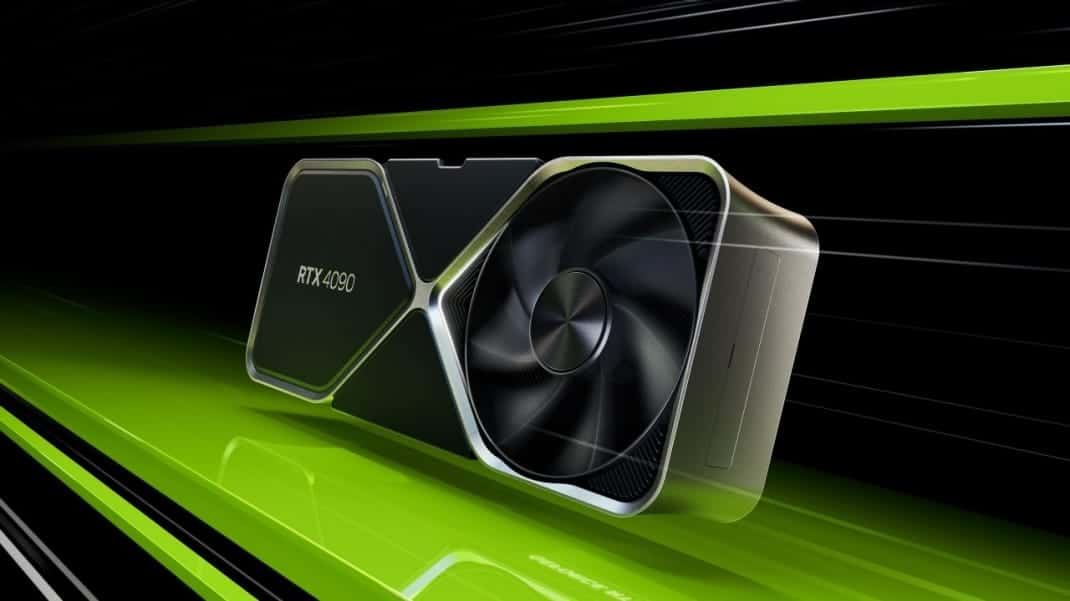
The memory hunger in the Artificial Intelligence race is pushing the industry—and the gray market—towards increasingly inventive solutions. The latest: GeForce RTX 5080 cards that, according to reports from specialized media and habitual hardware leakers, are being sold in China with a “vitaminized” configuration of 32 GB of VRAM, double the original specification of the model.
The news doesn’t come from an official NVIDIA announcement or a recognized manufacturer. Instead, it originates from the modders ecosystem and local distributors who, in other generations, have adapted consumer GPUs for more workstation-like uses: inference, light fine-tuning, workloads with large models or extensive contexts… tasks where VRAM matters more than raw performance.
What exactly is being sold?
According to the published information, these supposed “32 GB” RTX 5080s are being marketed with a blower-style (turbine fan) design—the classic “turbo” format designed to expel hot air out of the case, which makes sense if the goal is to fit these cards into dense towers, multi-GPU chassis, or environments prioritizing channelized airflow.
The most striking aspect is in the “how.” The report attributes the jump to GDDR7 modules of 3 GB each, a type of chip (24 Gb) that memory industry has been preparing for some time to increase densities without dramatically increasing the number of chips per card.
It’s worth tempering expectations: there is no solid independent confirmation that these units are stable, mass-produced, or standardized, nor that all follow exactly the same chip scheme. In other words, the phenomenon is plausible—because similar things have been seen with other cards—but the specific details may vary between batches, workshops, and revisions.
Why has VRAM become the new frontier?
In gaming, 16 GB is usually a reasonable threshold for high-resolution play with some longevity. But in AI, the situation is different: each extra gigabyte of VRAM opens new doors.
- Handling larger models without splitting the workload as much.
- More comfortable batch sizes.
- Less “juggling” with offloading to system RAM.
- More room for long contexts and multi-stage pipelines.
That’s why “boosted” consumer cards are attractive: they are, essentially, an intermediate path between gaming (more accessible) and datacenter hardware (more expensive, controlled, often more restricted).
And this is where geopolitical and supply chain contexts come into play: China has had clear incentives to maximize local hardware, especially as some of the most advanced AI hardware operates under restrictions, licenses, and export controls that change frequently.
The collateral effect: pressure on GDDR7 modules
If the market begins to absorb higher-density GDDR7 modules for these “conversions,” the impact isn’t just a niche curiosity. It could become a minor (or significant) source of tension:
- Sourcing competition: GDDR7 is at a stage where demand could rapidly grow due to new generations of GPUs.
- Inventory draining: if workshops and suppliers hoard modules, availability for regular channels diminishes.
- Market signals: if more VRAM can be sold in consumer segments, manufacturers receive a message: “There are buyers.”
The detail about 24 Gb (3 GB) chips is especially interesting because they have been positioned as the pathway for future configurations with more VRAM without radical redesigns. SK hynix, for instance, has showcased advances in 24 Gb GDDR7 chips that fit with this density-increasing logic.
Is it safe to buy such a GPU?
From the end-user perspective, the right question isn’t “Does it work?” but “What am I actually buying?” Because a modified GPU of this kind usually involves some (or many) of these elements:
- Memory rework (chip replacement, specialized soldering).
- Custom BIOS and settings to ensure the system recognizes the new configuration.
- Potentially different power consumption and temperatures from the original design expectations.
- Warranty and support: in practice, often nonexistent or very limited.
- Long-term reliability: what survives short tests might not withstand months of 24/7 sustained load.
The report itself notes the uncertainty regarding durability: increasing memory and pushing the card to continuous loads may stress VRM, cooling, and stability.
Implications for NVIDIA and the market
The demand for “RTX with more VRAM for AI” isn’t new, but it’s becoming more visible. For NVIDIA, these stories serve as a reminder of two trends:
- There is a segment willing to pay for extra VRAM, even on cards not designed for professional workstations.
- AI is pushing the consumer market toward dynamics typical of professional environments: memory density, thermal stability, and module availability.
Meanwhile, for technical users (sysadmins, MLOps, developers building local inference setups), the takeaway is pragmatic: VRAM is becoming the most expensive bottleneck in many configurations, prompting lookouts for alternatives—from second-hand professional GPUs to hybrid solutions and, in some markets, unofficial modifications.
Frequently Asked Questions
Does a modified RTX 5080 “32 GB” perform better for AI than a 16 GB one?
In many scenarios, yes, because more VRAM allows loading larger models and working with fewer limitations. But the improvement depends on the type of workload (inference, fine-tuning, model size) and the actual stability of that modification.
What are the risks of using a modified GPU for 24/7 AI workloads?
Primarily thermal reliability, electrical stability, degradation over continuous use, and lack of warranty. In AI, failures may appear after hours of sustained load.
Could this gray market approach drive up GDDR7 memory prices?
It could add pressure during tight supply periods, especially if higher-density modules are hoarded. Still, overall prices are dictated by manufacturer volumes and official GPU demand.
Why is VRAM prioritized so much in AI instead of just GPU power?
Because VRAM determines which models you can load and the operating margins. When VRAM is insufficient, you have to resort to techniques that penalize performance (offloading, partitioning) or switch to a different GPU.