
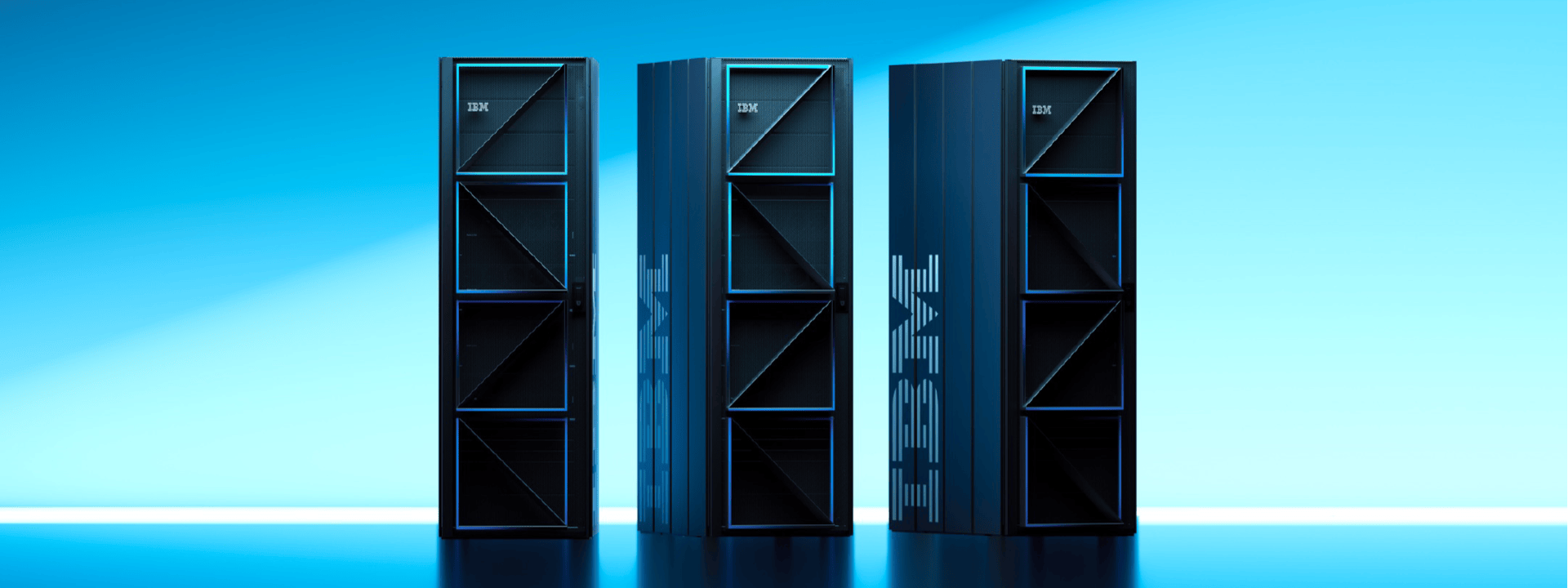
IBM took advantage of Think 2026 to announce the general availability of IBM Sovereign Core, a software platform designed for companies, government agencies, and service providers to build and operate sovereign environments prepared for Artificial Intelligence. The announcement arrives at a time when digital sovereignty has shifted from being solely about data residency to a much broader issue: who controls the infrastructure, who operates the systems, where models are run, and how compliance is demonstrated to regulators, auditors, and boards of directors.
The company aims to position Sovereign Core as a control layer for hybrid environments where sovereignty depends not only on contractual declarations but also on verifiable mechanisms. In the European context, IBM highlights specific services for the European Union through IBM Sovereign Support, with support provided by authorized personnel located within the EU and operational and support data kept within the sovereignty boundaries defined by the client.
Beyond storing data in a specific region
For years, much of the debate on digital sovereignty focused on data location. The question was straightforward: where is the data stored and under which jurisdiction. With the adoption of Artificial Intelligence, that question is no longer sufficient. An organization can have its data in a given region and still lose control if operations, keys, logs, models, or agents depend on externally auditable processes.
IBM conceptualizes digital sovereignty around four pillars: operational sovereignty, data sovereignty, technological sovereignty, and AI sovereignty. The first refers to control over how environments are managed. The second covers data at rest, in use, and in transit. The third aims to prevent vendor lock-in through open and modular architecture. The fourth focuses on controlling where models are executed and how inference governance is maintained.
This last point is especially relevant today. Companies are not just migrating databases to the cloud or deploying containerized applications. They are connecting language models, agents, inference systems, internal tools, and sensitive data. When these components influence business processes, sovereignty must include traceability, permissions, execution limits, and compliance evidence.
Senior IBM Software Vice President Dinesh Nirmal sums up the direction of the announcement: AI has transformed sovereignty from a statement of intent into an operational requirement. This is an astute interpretation. In regulated sectors, it is no longer enough to claim data is protected; companies must demonstrate how it is protected, who can access it, which system makes each decision, and under what controls it operates.
A sovereign control plane for hybrid environments
IBM Sovereign Core combines control plane, identity, security, compliance, and AI inference functions within a single deployment model. The idea is for the client to retain authority over configuration, operations, and lifecycle management, rather than relying on an opaque operation fully managed by a third party.
Its features include a control plane operated by the client, identity services, encryption, and data within the sovereign perimeter, continuous compliance monitoring, evidence generation for auditing, pre-installed regulatory frameworks, and AI execution governance. It also includes an open standards-based architecture aimed at portability and reduced dependence on a single provider.
The most compelling promise is not just an additional management dashboard but transforming compliance into an ongoing process. Many organizations still approach regulatory compliance as a snapshot: periodic audits, manual reviews, and documentation prepared for specific dates. Sovereign Core seeks to shift this model toward dynamic supervision, with anomaly detection and evidence available within the sovereign boundary itself.
This approach is particularly relevant in banking, public sector, healthcare, telecommunications, defense, energy, and critical infrastructure—areas where AI adoption can bring automation and analytical capacity but where losing control over data, models, or operations can have legal, reputational, and strategic repercussions.
The platform also addresses governance of models, agents, and inference loads within predefined boundaries. Practically, this means an organization could deploy a model or enterprise agent and maintain control over where it processes data, which data it accesses, how it updates itself, Decision-making processes, and documentation of its activities.
Ecosystem, open source, and flexible deployment
IBM Sovereign Core features an extendable catalog that organizations can customize with their own applications or with validated software and services from IBM, third parties, and open-source projects. Partners mentioned include AMD, ATOS, Cegeka, Cloudera, Dell, Elastic, HCL, Intel, Mistral, MongoDB, and Palo Alto Networks.
The inclusion of Mistral is notable because it reinforces the concept of AI models deployed within client-defined trust boundaries. Marjorie Janiewicz, Mistral AI’s Head of Revenue, states that Sovereign Core provides a ready foundation for their models to operate within those boundaries from day one, maintaining control over data. This aligns with growing European demand to leverage powerful models without relinquishing operational or legal control.
IBM also indicates that inference environments on CPU, GPU, and AI accelerators can be deployed through standardized templates and automated configuration profiles. This is crucial because sovereignty cannot rely on handcrafted, hard-to-reproduce projects. If an organization operates across multiple regions or with various providers, it must deploy workloads consistently, with comparable policies and evidence.
The hybrid approach aligns with IBM and Red Hat’s long-standing position. Many regulated firms are unlikely to move everything to a single public cloud or want to keep all data centers without external innovation. The most probable scenario combines infrastructure types: on-premises, private cloud, regional providers, public cloud, and specialized AI environments. Sovereignty must encompass this mix, not just a single component.
Why it matters for Europe
Europe is engaged in intense discussions around technological dependence, data control, regulatory compliance, and digital sovereignty. The advent of AI has expanded this debate. It’s no longer just about where a database is hosted but also which models are used, where they are executed, which provider operates the environment, who has access to support, how agents are governed, and how audit evidence is maintained.
In this context, the specific support services for the EU are a significant part of the announcement. IBM states that clients will be able to receive enterprise support provided exclusively by authorized personnel based in the European Union, with uploaded data within the designated sovereign boundary and support operational data managed under EU-based controls.
For governments, regional cloud operators, and companies handling sensitive workloads, this separation can be as crucial as the underlying technology. An environment hosted in Europe may be secure, but if support, logs, or operations are exposed outside the designated perimeter, true sovereignty can be compromised.
IBM targets three customer segments: companies that need to run regulated applications and AI workloads within controlled environments; governments and public sector entities responsible for critical services; and regional cloud providers wanting to deliver sovereign cloud and AI services at scale.
The solution doesn’t solve all issues of digital sovereignty alone. No product can. Sovereignty also depends on contracts, architecture, internal governance, training, vendor management, encryption, business continuity, and regulatory criteria. Nonetheless, IBM seeks to encapsulate a significant part of that complexity within an operational, auditable platform.
The real test will be execution. Organizations need tangible ways to demonstrate control, not just rhetoric. If IBM Sovereign Core can make the operation of data, models, and agents observable and verifiable within hybrid environments, it could become a key part of the next phase of enterprise cloud—regulated, traceable, and client-controlled AI.
Frequently Asked Questions
What is IBM Sovereign Core?
It is an IBM software platform designed to build and operate sovereign environments prepared for AI, with continuous control, compliance, and verification in hybrid settings.
How does IBM define digital sovereignty?
IBM organizes it into four pillars: operational sovereignty, data sovereignty, technological sovereignty, and AI sovereignty—covering control over operations, data, architecture, and model execution.
What benefits does it offer for European companies?
IBM highlights specific services for the European Union with support provided by authorized personnel based in the EU and operational data managed under EU-based controls.
Who is IBM Sovereign Core aimed at?
Regulated companies, governments, public agencies, service providers, and regional cloud operators seeking more control, traceability, and compliance in AI and application deployment.
