
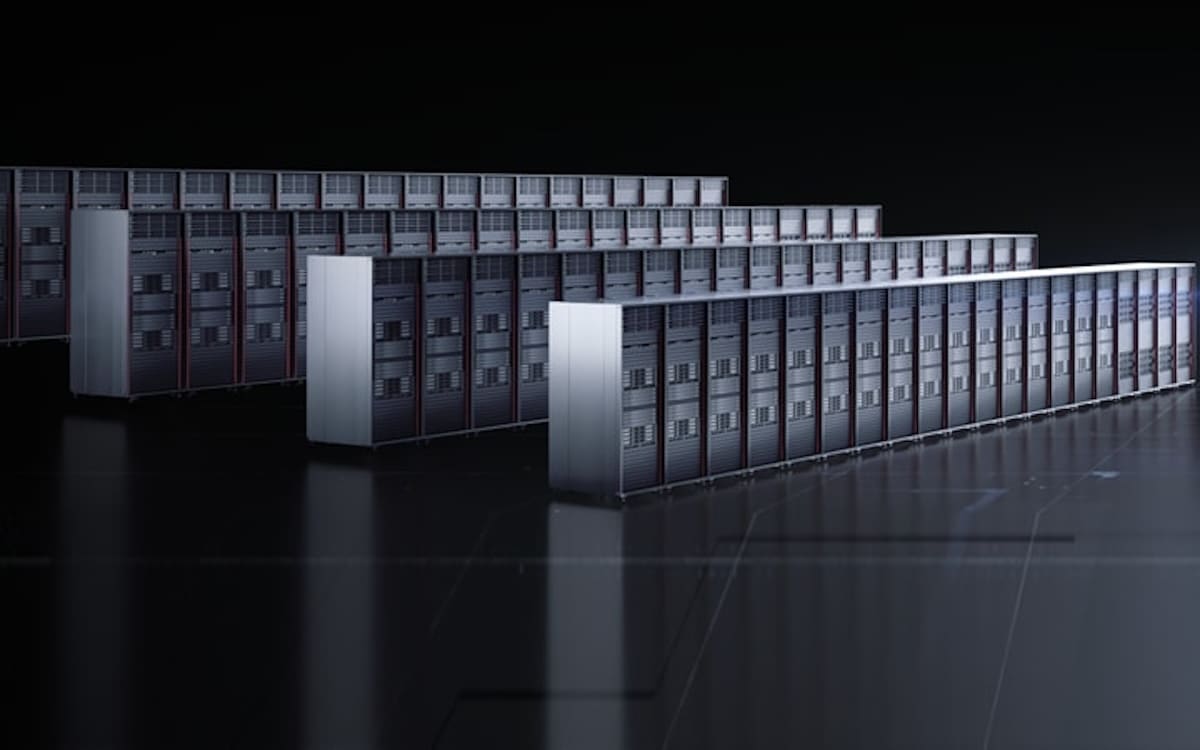
Huawei is reportedly participating in the construction of a large DRAM memory factory in Shenzhen alongside SwaySure Technology and organizations linked to the Chinese government. The project, which has not yet been officially confirmed, would have the capacity to process up to 140,000 300-millimeter wafers per month and would begin with mature technologies, far from the advanced HBM memories used in AI accelerators.
This initiative aligns with Huawei’s strategy since U.S. trade restrictions limited its access to processors, manufacturing equipment, and foreign components. The Chinese company already designs CPUs, mobile chips, and AI accelerators through HiSilicon. Now, it aims to reduce another dependency: the memory needed for its phones, servers, telecommunications equipment, cars, and enterprise systems.
Key points of the possible DRAM factory in 20 seconds
- Huawei would be collaborating with SwaySure Technology on a 12-inch wafer plant in Shenzhen.
- The expected capacity could reach 140,000 wafers per month, a significant figure that has not been publicly confirmed.
- The initial production would utilize a process described as 28 nanometers.
- This technology would serve for conventional and specialized memories, not immediately competing with the latest HBM developments.
- SwaySure has already been associated with Huawei and supplying memory for consumer electronics and automotive applications.
- Huawei denies that SwaySure is an affiliated company, although various investigations have indicated technical and personnel links.
- Samsung, SK Hynix, and Micron together control nearly 90% of the global DRAM market.
- The contractual price of conventional DRAM increased between 90% and 95% during the first quarter of 2026.
- The factory would help China secure memory for conventional products and reduce exposure to future sanctions.
- The main challenge will be achieving sufficient yields to produce reliably and profitably.
The information comes from industry sources and should be considered as a non-confirmed project. Neither Huawei nor SwaySure have publicly announced a new plant with that capacity and timeline. Details such as the planned investment, start of production, or specific types of memory that would come from the lines remain unknown.
What is documented is that SwaySure operates a memory facility in the Guanlan district of Shenzhen, within a network of factories connected through various investigations to Huawei’s semiconductor development. The Chinese company has denied that SwaySure, SiCarrier, or other related companies are subsidiaries, although industry sources claim Huawei has shared personnel, technology, and support to secure financing.
A huge factory, but not necessarily for advanced memory
A capacity of 140,000 wafers per month would place the facility among the largest memory plants in the industry. However, this does not mean that it would immediately produce chips competitive with the latest offerings from Samsung, SK Hynix, or Micron from day one.
This figure represents the maximum number of wafers the plant could process once fully equipped and operating at full capacity. Achieving that level usually involves multiple construction phases, machinery installations, and process improvements.
The mention of 28 nanometers should also be interpreted with caution. In DRAM manufacturing, process node names do not directly compare to those used for processors. Major producers now refer to generational nomenclature such as 1x, 1y, 1z, 1a, 1b, or 1c, all within the commercial 10-nanometer category.
A 28-nanometer process would be several generations behind. It could be suitable for lower-density DRAM, integrated memories, or specialized products with long life cycles, but not for immediately producing cutting-edge DDR5, advanced LPDDR, or HBM for AI GPUs.
| Memory Type | Main Applications | Initial Fit for the Factory |
|---|---|---|
| Mature Conventional DRAM | Industrial equipment, electronics, budget devices | High |
| DDR3 and certain DDR4 | Legacy systems, networking, integrated electronics | Possible |
| LPDDR for mobile | Smartphones, tablets, automotive | Limited initially |
| High-performance DDR5 | Servers, recent PCs | Unlikely at the start |
| HBM | AI accelerators, GPUs | Very unlikely |
| DRAM for automotive | Infotainment, control, assisted driving | High |
| Specialized Memory | Telecom, IoT, proprietary systems | High |
Huawei doesn’t need to start with the most advanced technology to gain an advantage. Its devices contain numerous memory chips that do not require the smallest process node available. Network equipment, base stations, routers, industrial systems, and automotive modules can use components manufactured with mature processes for many years.
Domestic production would also allow reserving the most advanced imported memories for products that need them most.
AI has made memory a strategic component
The potential investment comes at a tense time in the memory market. The expansion of AI data centers has driven up demand for HBM and server DRAM.
Manufacturing HBM consumes more capacity than conventional memory. It requires multiple layers of stacked DRAM, demanding selection processes, and advanced encapsulation. Leading manufacturers are shifting equipment and investments toward these products because they offer higher margins and major cloud clients sign long-term supply contracts.
As a result, there is less capacity available for memory for computers, phones, and consumer electronics. TrendForce revised its forecast for the first quarter of 2026, estimating that contractual prices for conventional DRAM would increase by 90% to 95% compared to the previous quarter.
Samsung, SK Hynix, and Micron continue to dominate the market. Latest estimates place their market shares at approximately 38%, 29%, and 22%, respectively. Together, they account for nearly 90% of the global DRAM business.
This concentration leaves companies like Huawei with little room to maneuver. When supply is tight, producers prioritize buyers willing to pay higher prices, reserve large volumes, or sign multi-year contracts.
A factory linked to Huawei would not need to compete immediately in the open market. It could rely from the start on domestic demand from smartphones, servers, base stations, storage systems, automotive electronics, and AI systems.
SwaySure, Huawei, and a deliberately unclear relationship
SwaySure is a Chinese memory company that has maintained a low profile. In 2025, the Financial Times reported that it operated a facility in Guanlan and supplied chips to Huawei for automotive and consumer electronics. The factory is located near other plants related to China’s national effort to produce processors and manufacturing equipment domestically.
Huawei states that SwaySure is not affiliated with the group. While this corporate distinction may be real, it does not rule out close collaboration. Companies can share projects, suppliers, technical knowledge, or funding without a formal ownership relationship.
This model also allows dispersing investment among public funds, specialized firms, and industrial clients. It further complicates automatic sanctions application against Huawei’s entire supply chain.
The U.S. has already scrutinized this network. SwaySure appeared among Chinese companies analyzed by Washington for potential links to Huawei, along with manufacturers like Shenzhen Pensun and Qingdao Si’En.
Restrictions make it difficult to acquire U.S. equipment for deposition, etching, metrology, and testing. China has advanced its domestic machinery, but DRAM manufacturing still depends on a broad combination of tools, materials, gases, chemicals, cell design, and intellectual property.
Building the factory may be the most visible part of the project. Achieving reliable, large-quantity memory production will be considerably more challenging.
CXMT already produces DRAM in China, but Huawei wants more control
China is not starting from zero. ChangXin Memory Technologies (CXMT) is the leading domestic DRAM manufacturer, having advanced from DDR4 and LPDDR4X to DDR5 and LPDDR5 memories.
CXMT is now the fourth-largest global manufacturer and is rapidly expanding its capacity. Its products have begun to receive validation on high-performance computer platforms, signaling that Chinese memory is approaching markets traditionally dominated by the three major producers.
Yangtze Memory Technologies (YMTC) plays a similar role for NAND Flash, used in SSDs and storage. It’s important to distinguish the two: CXMT mainly manufactures DRAM, while YMTC specializes in non-volatile NAND memory.
Huawei could purchase components from CXMT, but owning a nearby factory aligned with its needs would give it greater control over capacity, specifications, and timelines.
It would also prevent consolidating all national demand into a single supplier. China needs increasing amounts of memory for servers, cars, mobile phones, and telecom equipment. Adding another producer would reduce the risk that a failure, sanction, or delay affects the entire supply chain.
Making profitable DRAM requires more than just machinery
Memory production is one of the most challenging segments in the chip industry. Each wafer contains numerous identical chips, and profit depends on maximizing the number that function correctly.
A new plant can technically produce DRAM, but may lose money if it yields too few valid chips per wafer. Improving yields involves months or years of adjustments to lithography, materials, etching, deposition, and defect control.
Memory must also meet stringent stability requirements. A seemingly small failure can lead to data corruption, system errors, or security issues. Manufacturers test each chip and classify them by frequency, power consumption, and reliability.
Using mature processes reduces some risks. Machinery is more accessible, designs are well-understood, and China has more compatible domestic tools. It also enables targeting markets where cost and availability matter more than maximum density.
Business risk lies in the cycle changing before the factory achieves its expected performance. Memory cycles periodically shift from shortages to oversupply. Current high margins could deteriorate if new factories start producing in large volumes, causing prices to fall.
Huawei has an advantage over independent firms: it could consume a significant portion of its output internally. It wouldn’t need to sell all wafers at the highest price or compete solely on cost.
This project would be less about entering the conventional memory business and more about establishing an industrial policy hedge against future restrictions.
Available information does not definitively confirm that Huawei will become a direct DRAM manufacturer. The most accurate description is that it would support a new capacity linked to SwaySure within the semiconductor network developed in Shenzhen.
If the factory is confirmed, its importance will not lie in competing immediately with SK Hynix or Samsung’s HBM. Instead, it will be in securing millions of conventional chips Huawei needs to sustain operations even if trade rules change again.
Frequently Asked Questions
Has Huawei officially confirmed a DRAM factory?
No. The 140,000 wafers per month capacity and initial 28-nanometer process information come from industry sources and are not officially confirmed.
Would the new plant produce HBM memory for AI?
Not in its initial phase. A mature process would mainly target conventional DRAM and specialized memories.
Is SwaySure owned by Huawei?
Huawei denies affiliation. However, investigations have highlighted personnel, funding, technology, and supply links between the companies.
Does China already have memory manufacturers?
Yes. CXMT produces DRAM, and YMTC makes NAND Flash. The new facility would increase capacity and reduce dependence on a limited number of suppliers.
