
The digital transformation of electrical grids isn’t just about sensors, software, or control centers. It also requires a communication infrastructure capable of transporting data with low latency, higher bandwidth, and sufficient isolation between critical services. This is where Huawei’s project with Yunnan Power Grid comes into play, partnering with the electric utility of Yunnan Province, China—a key region for transmitting clean energy in the southwestern part of the country.
The company has deployed SPN technology (Slicing Packet Network) to build a next-generation communication backbone network that is gradually replacing legacy SDH infrastructure. According to Huawei, this deployment extends across 16 cities and aligns with the evolution outlined in Yunnan Power Grid’s 14th and 15th five-year plans, aiming to establish a communication foundation for the next two decades.
An electric grid that is also a data network
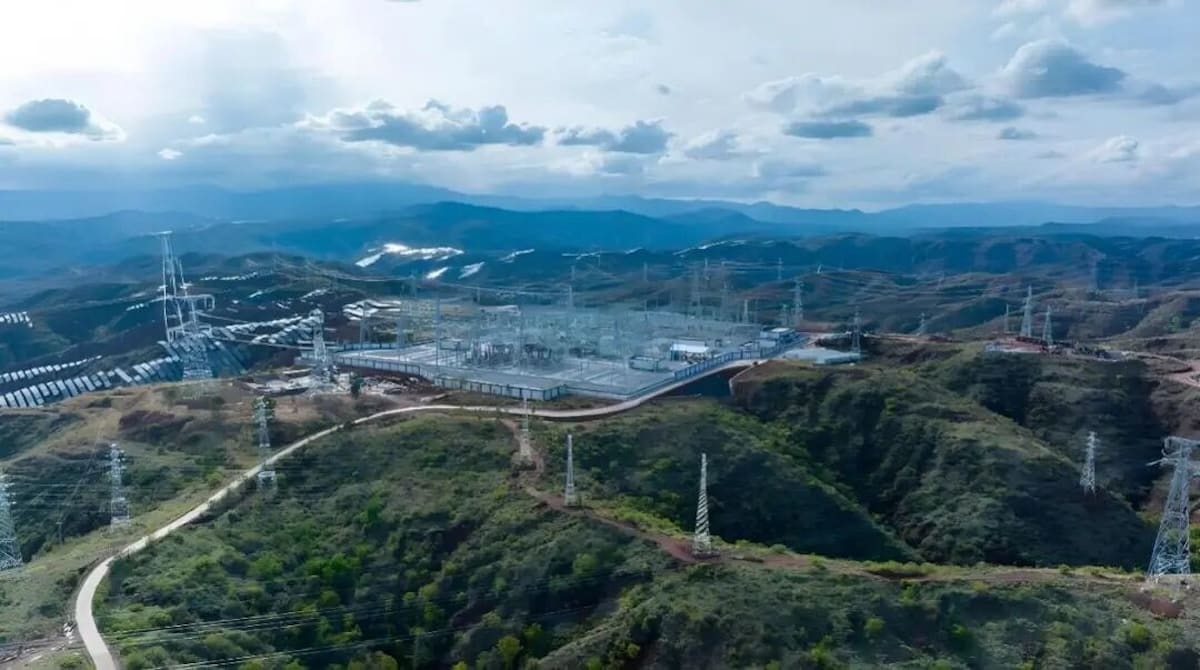
Yunnan isn’t an easy territory for an electric operator. Its mountainous geography, long transmission lines, and the growth of digital services tied to the grid demand the transport of more data with greater reliability. Today’s modern electrical network no longer just moves energy; it also generates and consumes information at substations, power plants, customer centers, surveillance systems, teleprotection, line monitoring, dispatch, and control of distributed resources.
The previous communication infrastructure of Yunnan Power Grid was built around 2006 using SDH technology—a architecture once common in critical networks but now showing limits in capacity, flexibility, and spare parts availability. Huawei argues that the explosion in data production and the increasing complexity of service scenarios make it urgent to upgrade to a network capable of supporting the digitalization of the power grid.
The move to SPN addresses precisely this bottleneck. The new network increases the capacity available for services previously limited by lower-bandwidth links. At the access layer, where substations, power plants, and customer centers connect, SPN devices deliver bandwidths up to 1 Gbps. At aggregation and core layers, capacity can scale to 50 Gbps or 100 Gbps depending on the site size and deployed services.
The improvement isn’t just about moving more traffic. In an electric network, not all data has the same priority. Teleprotection signals or low-latency dispatch services can’t compete equally with video streaming. That’s why the solution incorporates segmentation via FlexE, enabling rigid and flexible separation between services to isolate critical traffic and reutilize bandwidth wherever possible.
Less inspection time and more predictable maintenance
One of the most striking data points from the project relates to daily operations. Huawei reports that at the Qujing power plant, inspection times for individual assets dropped from 30 minutes to just 3 minutes, while full-cycle maintenance time reduced from over 7 hours to 21 minutes. The operations and maintenance center is also said to have begun detecting significant faults up to 15 days in advance thanks to predefined monitoring points.
In six months, site visits decreased from 112 to 61—a 45.54% reduction, according to Huawei’s data. This is significant because it highlights part of the return on investment for such projects: fewer travel requirements, faster fault location, and more continuous supervision of assets across a complex region.
Real-time SLA monitoring, with metrics like latency and packet loss, enables the detection of degradations before they become serious incidents. For an electric grid, this has direct implications. More stable communication simplifies network control, improves failure response, and reduces reliance on manual interventions in the field.
There’s also a long-term cost perspective. Huawei states that SPN will enable evolution towards speeds from 25 Gbps up to 400 Gbps through cost-effective updates, avoiding repeated infrastructure rebuilds. This should be interpreted as a technological roadmap—not an automatic guarantee of savings—but it aligns with utilities’ clear need to invest in scalable, future-proof networks.
From smart grid to source-grid-load-storage model
The digitalization of China’s electric sector is moving toward more complex models where generation, distribution, demand, and storage must coordinate in near real-time. Increasing renewable integration, electrification of consumption, and the rise of distributed resources mean the grid needs more visibility and control capacity.
In this context, SPN is more than just an enhancement for telecommunications. It can become a transport layer for industrial IoT services, transmission line monitoring, integration of source-grid-load-storage, and flexible network control. Huawei emphasizes its compatibility with dual-stack IPv4/IPv6, simplifying access for new devices and systems in environments where legacy and modern technologies will coexist for years.
The Yunnan Power Grid case exemplifies a trend likely to influence many electric networks outside China. The energy transition demands more sensors, automation, and system coordination. Without a robust communication layer, the intelligent layer remains limited. The ability to carry critical data with low latency and reliable isolation will be as important as deploying new meters, cameras, analytics platforms, or predictive algorithms.
The project also underscores Huawei’s reinforced role in critical infrastructure—a strong position in China and other markets, albeit constrained in Europe and the US by regulatory and geopolitical issues. Nonetheless, from a technological perspective, the message is clear: utilities are beginning to treat their communication networks as an integral part of the power grid, not just auxiliary systems.
The Yunnan Power Grid modernization demonstrates that smart grids are built from the ground up. Installing advanced software in a control center isn’t enough if the transport layer remains limited by architectures designed for another era. Intelligence starts with the ability to connect distributed assets, prioritize critical services, and respond to failures proactively before they impact supply.
Frequently Asked Questions
What is SPN in an electrical network?
SPN, or Slicing Packet Network, is a backbone network technology that enables the transport of different services over the same infrastructure, with segmentation, low latency, higher bandwidth, and isolation for critical traffic.
Why did Yunnan Power Grid need to upgrade its network?
The previous network was based on SDH and was built around 2006. Data growth, digitalization, and Yunnan’s complex geography demanded more capacity, monitoring, and flexibility.
What improvements does Huawei’s SPN bring?
Huawei claims the solution increases access bandwidth to 1 Gbps, supports aggregation and core layers of 50 or 100 Gbps, improves fault detection, and reduces inspection and maintenance times.
Why does this matter for renewable energy?
Networks with more clean energy and distributed resources require more data, better control, and improved coordination among generation, grid, consumption, and storage. A more capable communication network facilitates that operation.
via: prnewswire
