
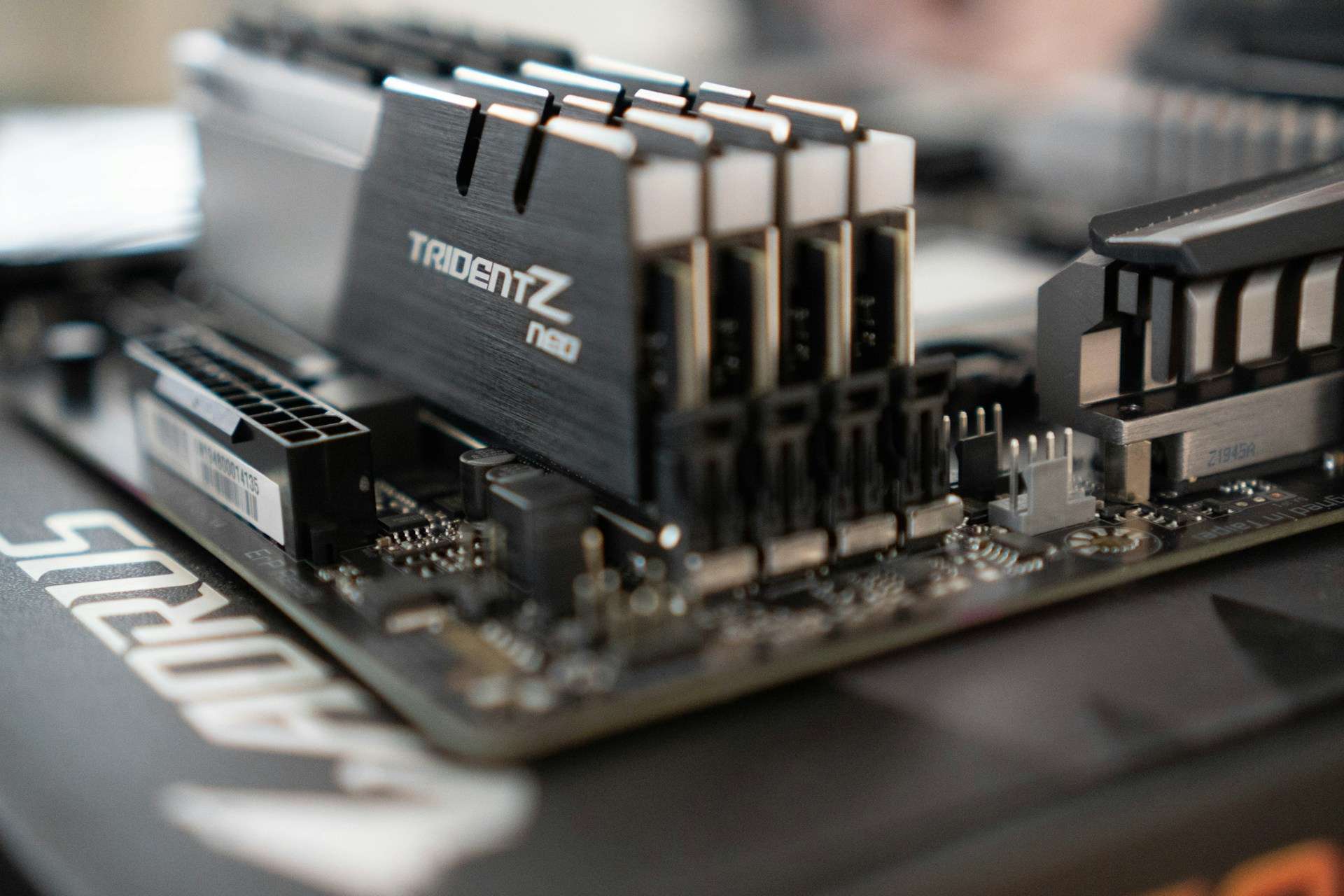
The DDR4 memory market, which had been climbing steeply for weeks (or months)—a rally difficult for many buyers to justify—is showing signs of fatigue at one of the most sensitive points of Asian tech trade: Huaqiangbei (华强北), the massive electronics district in Shenzhen. There, where wholesalers, retailers, integrators, and spot vendors operate at nearly daily turnover, prices have started to “oscillate” and decrease in some key formats.
The prevailing interpretation among distributors and analysts is not of a sudden crash but rather a phase of adjustment within an already high range: occasional dips, selective discounts, and increased negotiating margins—especially in 8 GB and 16 GB DDR4 modules, which drove the last upward boost.
Visible decreases in 8 GB modules and adjustments in 16 GB
Early February has seen several market players observe that 8 GB DDR4, previously trading around 260–270 yuan, has likely bottomed out near 180–190 yuan, with “reference” prices approaching 200 yuan in some cases. At the same time, 16 GB DDR4 has also started to loosen, with prices once at the 700–800 yuan range now fluctuating around 650 yuan at certain cash sales points.
The nuance here is important: not all storefronts show the same prices, nor do all transactions follow this pattern. In such a fragmented and reactive market as Huaqiangbei, prices are more a moving picture than a fixed label. Still, the fact that this retracement is visible and discussed by various profiles—from chip sellers to equipment assemblers—has reignited a latent debate: was this a “real” rally or just hype driven by expectations and speculation?
The Chinese New Year factor: liquidity, inventory, and urgency to close deals
One common sector explanation points to a classic dynamic: liquidity and inventory needs ahead of the Chinese New Year. As the seasonal slowdown approaches, many distributors prefer to convert stock into cash, even if that means sacrificing margins. This pressure to rotate stock can trigger a domino effect within days: if several sellers lower prices to sell quickly, others feel compelled to follow suit to avoid being “stuck” with expensive inventory.
In this context, the correction isn’t necessarily a structural trend shift but a temporary flexibility within the high-end range, driven by the urgency of capital circulation. In the electronics market, cash flow is oxygen: it allows repurchasing, risk coverage, and quick responses if prices surge again after the holiday.
Is the narrative of a “deficit” breaking or just a reshuffling?
The other key point in the debate concerns actual supply. While shortages are still discussed, some voices in the market question whether there is a “true” scarcity across all segments. Many veteran observers believe part of the phenomenon relies on “building expectations”: not an absolute product shortage but a game of anticipation, flow control, and induced buying behavior.
From this perspective, not all categories are equally tight. Some analysts indicate that average and low-capacity modules—such as 2 GB, 4 GB, or 8 GB in certain formats or channels—are not necessarily in severe shortage, and that the market has amplified the scarcity perception through retention tactics, phased deliveries, or simple speculation. Huaqiangbei, with its fast pace and intermediary ecosystem, often acts as a signal amplifier: when margins are perceived, prices move faster than in corporate channels.
Why DDR4 remains a battleground
Beyond daily price fluctuations, DDR4 remains a critical component because it still supports a large installed base: PCs, workstations, and servers that aren’t upgraded overnight. In many organizations and IT environments, memory isn’t bought for fashion but for compatibility and total cost of ownership. And in the real economy—workshops, small businesses, integrators, education, refurbished gear—DDR4 is still “the workhorse memory.”
Adding to this, a well-known phenomenon: when the industry accelerates adoption of newer generations (like DDR5), part of the supply chain tends to recalibrate investments and priorities. This can leave previous generations in a delicate position, where any production adjustment, unexpected demand, or purchase concentration causes volatility. If the market also slips into “expectation mode,” the combined effect can cause prices to diverge sharply from what buyers consider reasonable.
The risk of sudden volatility: when “big players” dump inventory
One of the concerns among sellers and buyers is sudden moves if market discipline erodes. Within the Shenzhen ecosystem, it’s rumored that if a large stockholder suddenly dumps inventory in one go, prices could drop quickly, dragging smaller traders along who are forced to adjust to avoid being “left out.” This is the dark side of a margins-driven, rapid decision environment: when the balance relies on “who can hold the stock,” any shift in stance can create sharp swings.
Thus, despite recent declines fueling headlines about a potential “bubble,” many actors prefer to remain cautious: a correction is not a cycle change, and DDR4 continues to operate amid a landscape of real tensions, aggressive commercial strategies, and an unpredictable speculative component.
What professional buyers should watch for
For integrators, sysadmins, and procurement departments, Huaqiangbei offers several useful clues. First: the spot market can fluctuate sharply and doesn’t always set the tone for more stable contracts. Second: if the decline is due to pre-holiday liquidity needs, it might be a temporary window rather than a lasting trend. And third: in operational continuity environments, what matters isn’t just price but also replenishment capacity: buying cheaply is pointless if supply tightens again once market sentiment shifts.
In short, Huaqiangbei continues to serve as a “hardware barometer”: when it shows turbulence, the industry listens. And for now, what’s being felt isn’t a collapse but a more nuanced signal: DDR4 no longer rises effortlessly, and the market is starting to question—loudly—how much of recent demand was real and how much was narrative.
Frequently Asked Questions
Why does DDR4 price in Huaqiangbei decrease just before the Chinese New Year?
Because many distributors prioritize liquidity, selling inventory to cash out before the seasonal slowdown, which introduces discounts and competitive pressure.
Does this correction mean DDR4 will “collapse” in 2026?
Not necessarily. The market views it more as an adjustment within high price levels rather than a definitive trend change. Structural tensions are still mentioned.
What impact might this have on DDR4 8 GB and 16 GB modules for integrators?
It could open windows for better purchase prices temporarily, but the risk is volatility: if inventory flows change, prices can rebound quickly.
How can we tell if DDR4 price movements are due to real shortages or spot market speculation?
A clue is if declines are accompanied by accelerated sales and rotation, especially concentrated among certain vendors or channels, rather than uniform across the market.
via: ctee.com.tw