
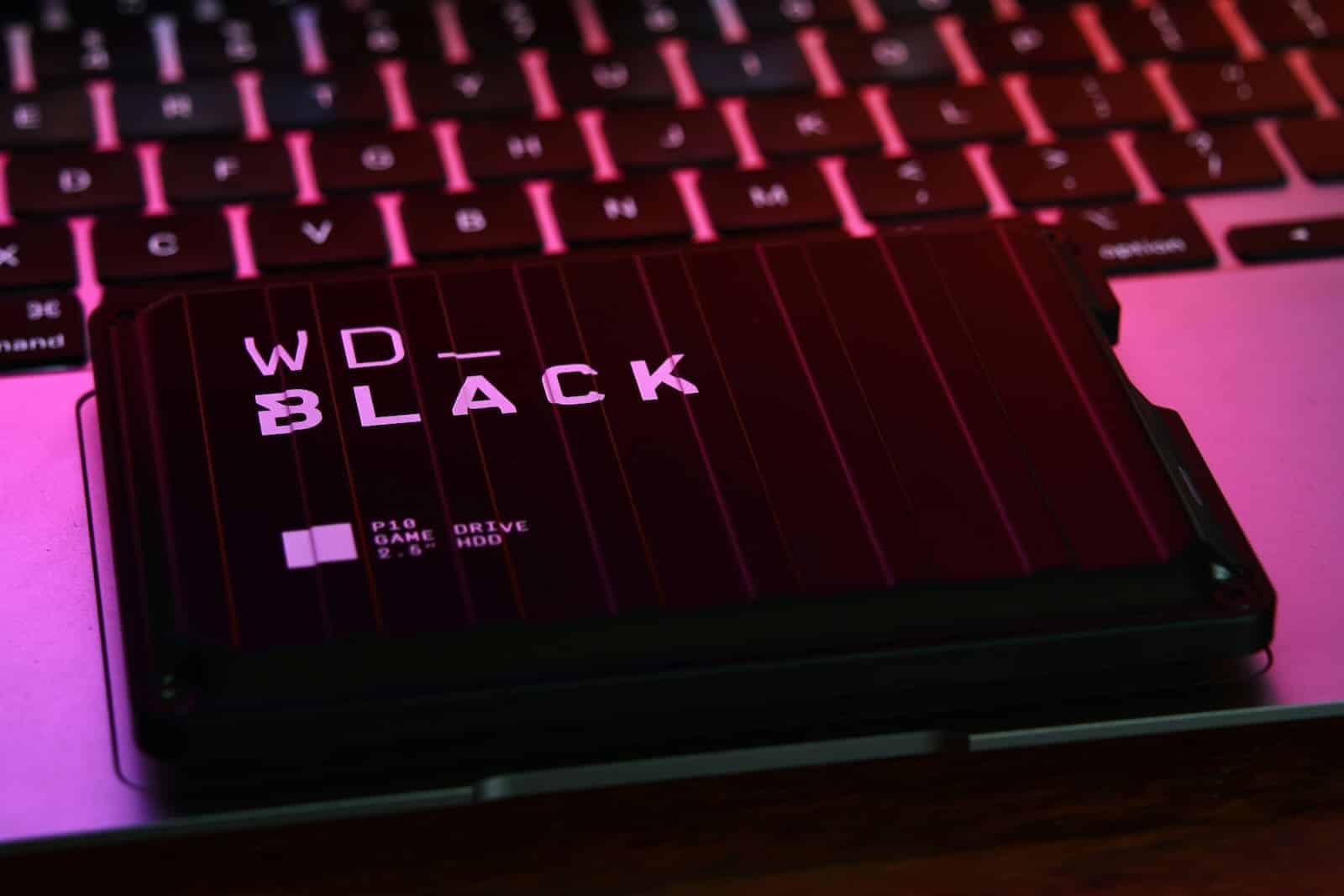
The worldwide craze for Artificial Intelligence is not only straining the GPU, memory, or advanced chip markets. Now, it has also impacted a component many considered “mature” and stable: hard drives. Western Digital, one of the largest manufacturers globally, has informed investors that it has nearly exhausted its HDD production capacity for the entire 2026 calendar year—a warning that suggests increased pressure on prices and delivery times in the storage industry.
The statement, made during the company’s Q2 2026 earnings conference, paints a clear picture: major corporate clients—especially cloud operators and hyperscalers—are securing multi-year purchase agreements to ensure supply. Western Digital’s CEO, Irving Tan, noted that the company is “practically sold out for the 2026 calendar year” and already has firm orders from its seven main customers. Additionally, it has signed long-term supply agreements (LTAs) with two clients for 2027 and another for 2028, combining volume commitments measured in exabytes with pricing terms.
Behind this statement lies a profound market shift: storage, traditionally a “predictable” part of data centers, is becoming a strategic element. AI platforms require massive data sets for training and fine-tuning models, and they also generate a new wave of production data: inference logs, telemetry, processed datasets, backups, internal repositories, and extensive data lakes ready for re-training. In this landscape, HDDs remain hard to replace when the goal is to store enormous quantities at the lowest possible cost.
The shift to cloud: 89% of the business is now “cloud”
Western Digital’s own figures help clarify why the company is focusing more on enterprise clients. In its second fiscal quarter of 2026, the firm reported revenues of $3.02 billion, up 25% year-over-year, with a non-GAAP gross margin of 46.1%. During that period, the “cloud” segment contributed about 89% of revenues, while the consumer business shrank to roughly 5% (with traditional consumer accounts making up the remaining single digits). In other words: the balance has nearly tipped entirely toward data centers.
This concentration isn’t accidental. After its planned spin-off of the flash memory division in 2025, Western Digital now focuses mainly on HDDs. With data centers for AI expanding rapidly, the priority is serving customers buying by the exabyte and signing multi-year commitments. The company also reported deliveries of 215 exabytes in the quarter—a figure illustrating the true scale of current demand.
Why AI “devours” hard drives (and why SSDs aren’t enough)
It might seem counterintuitive to the general public that, in 2026, a product with decades of history faces shortages. But the industrial reasoning is straightforward: even in an ecosystem flooded with ultra-fast SSD units, HDDs still offer a far superior capacity-to-cost ratio for certain uses. Major cloud service providers typically combine layers: SSDs for performance, HDDs for massive storage, “hot” or “cold” data, backups, and retention.
AI accelerates this need in two ways. First, it necessitates maintaining enormous collections of data—often redundant, versioned, and traceable—for audits, improvements, and re-training. Second, it increases the volume of derived data: results, quality logs, refined datasets, and observability material stored over increasingly longer periods. When storage is measured in exabytes, any change in availability becomes quickly noticeable.
Signs of tension: multi-year agreements and a domino effect on prices
When a manufacturer announces it is “sold out” a year in advance, it’s not an isolated case: it’s a sign that the market is operating with closed forecasts and long-term contracts—typical during supply chain bottlenecks. In this context, the threat isn’t just “not finding” units; the sector tends to renegotiate prices and priorities—first the large contracts, then the rest of the channel.
Several analysts and specialized media already predict price increases, especially if data center demand continues to grow at the current pace. The typical pattern: when supply is allocated by contract, the consumer market—more sensitive to price and less stable in volume—tends to feel the tension first. Also, if storage becomes more expensive for large cloud providers, some of that cost may be passed on, directly or indirectly, to enterprise services that rely on massive data retention.
Western Digital isn’t alone. Competitors like Seagate are also reporting capacity constraints, with allocations locked in for 2026 and discussions already extending into 2027 and 2028. The collective message is clear: “cheap and infinite” storage stops being a given just when AI needs it the most.
FAQs
Why is AI driving up demand for hard drives in data centers?
Because AI requires storing and reusing massive amounts of data: training datasets, processed versions, backups, data lakes, and production logs (inferences, traces, telemetry). For exabyte-scale volumes, HDDs remain one of the most cost-effective options.
What does it mean that Western Digital is “sold out” for the 2026 calendar year?
It means, according to their management, that HDD manufacturing capacity planned for 2026 is already committed through orders and agreements with major clients. Practically, this could translate into less flexibility for handling demand spikes outside contracts and a market more prone to price increases and long lead times.
Could consumer hard drive prices rise in 2026?
That’s a real risk when capacity is first allocated to enterprise contracts. If retail supply becomes tighter or more expensive, consumers might notice higher prices, reduced availability, or fewer model options at certain times.
What are LTAs (long-term agreements) and why do they matter in the cloud HDD market?
LTAs are multi-year contracts that define volume commitments—often measured in exabytes—and commercial terms. They are important because they guarantee supply in a strained market and simultaneously can reduce the “free” capacity available to the rest of the market.
via: wccftech